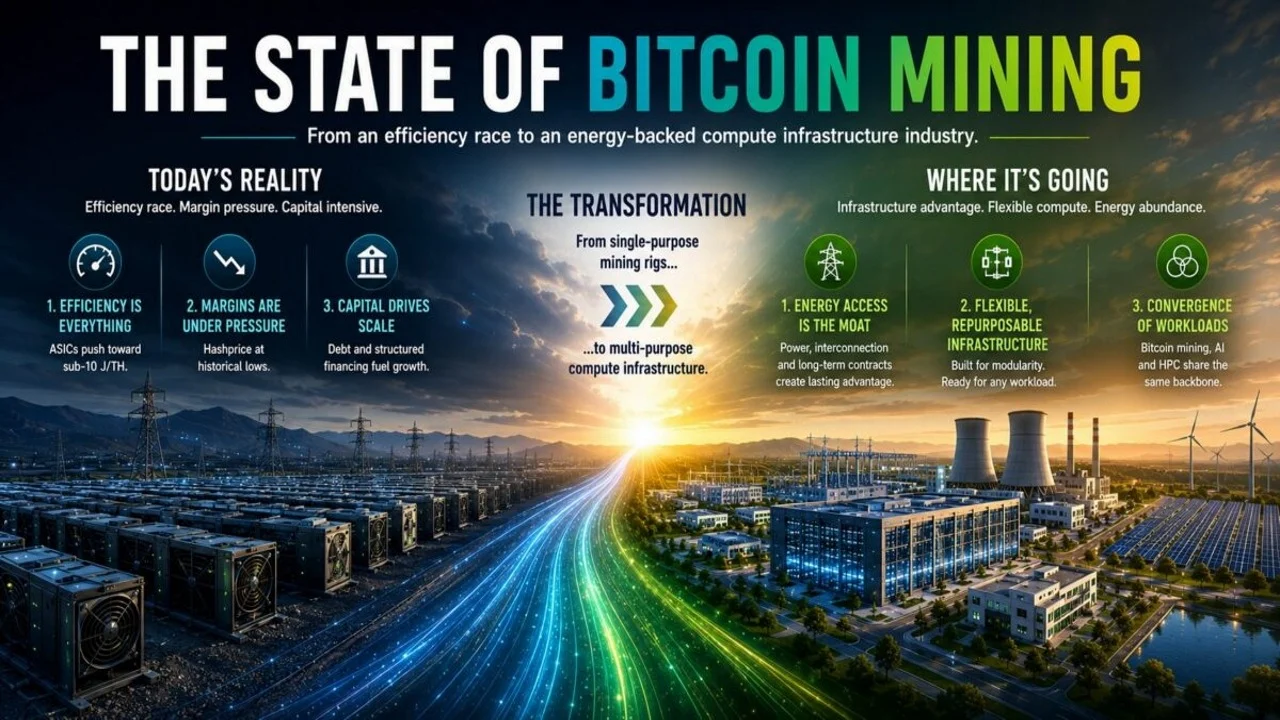
By the year 2036, Bitcoin mining looks nothing like it did five years ago, much less ten. Long gone is the model of Bitcoin miners that dominated the landscape of the early to mid-2020’s. These large, often publicly traded, mining companies looked for large tranches of cheap power in mostly first-world countries they could monetize at scale. These corporations did not generate their own energy, nor did most design and manufacture their ASICs. They looked for a confluence of attractive power terms from an electric utility, available land near substation infrastructure, and timed the purchase of ASICs for as short a payback period as possible.
The compressing margins had already strained this business model by the middle of the decade. Then the explosion of artificial intelligence and high-performance compute (AI/HPC) data centers created a more profitable use of grid connected electricity. This effectively ended the availability of power for public Bitcoin miners in the markets they had adapted for. Many simply took their model and altered it slightly to accommodate the AI/HPC data center buildout. The process was similar, and the companies who successfully pivoted were rewarded by their shareholders. The opposite was true for those public mining companies who failed to build more traditional data centers