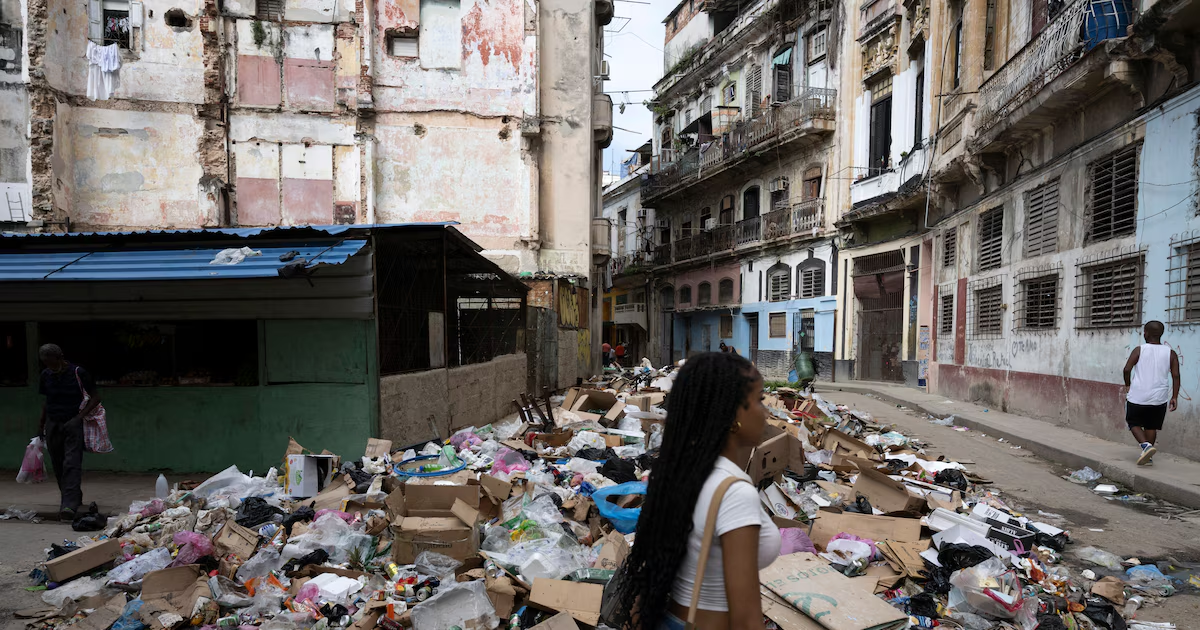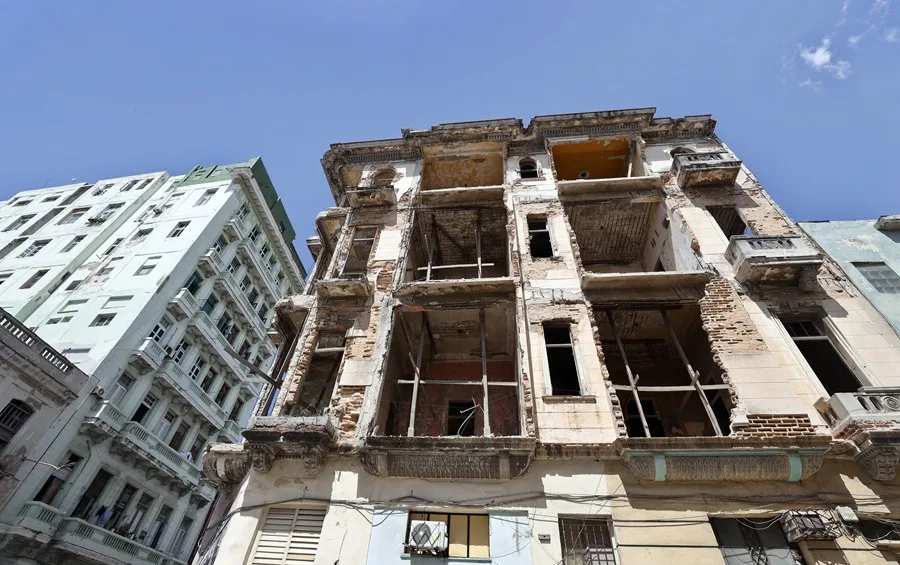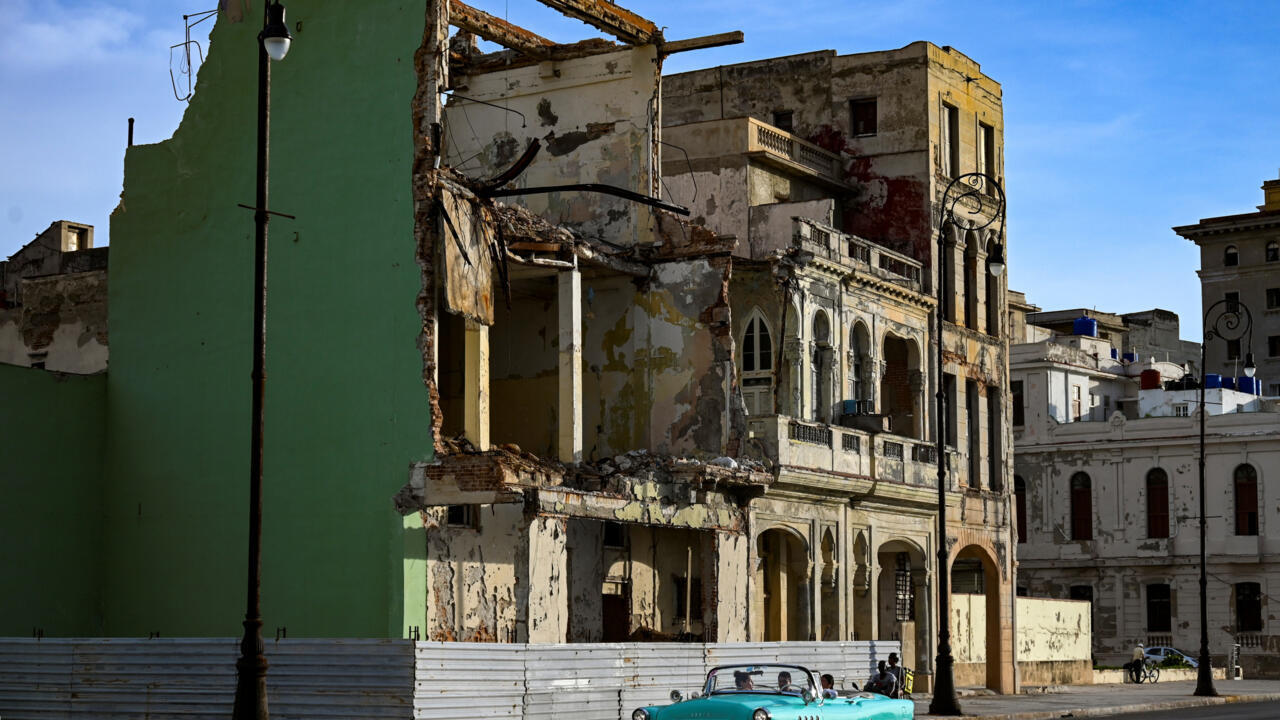
The ornate stone balconies of the decaying colonial townhouses jutting above your head are liable to collapse at any moment.Tens of thousands of people housed in these monuments to pre-revolutionary Cuba, which were subdivided into apartments after Fidel Castro took power in 1959, live on the edge, literally.In the densely populated Centro Habana district, a storm brought down the stone staircase, leading from the ground to the upper floors, in the neo-classical pink 1920s tenement where Marnie Estevez lives.Estevez, her husband, two daughters, mother and 97-year-old grandmother were left perched on the third floor, with no way out."The fire service had to come and get my grandmother down with a crane," Estevez told AFP in the tiny two-roomed apartment that she, her husband and children have moved into on the first floor.Her mother and grandmother are still living in a hostel seven years later -- just two of the many thousands of people evacuated from ruined buildings to cramped temporary lodgings.
Athletes train at a boxing gym where nine families who were evacuated from a collapsed building in Havana have been living for three years © YAMIL LAGE / AFP
In nearby Habana Vieja, the historic city center, nine families who decamped from a collapsed building three years ago are still living in a boxing gym.Each family lives between four walls of cardboard surrounded by sheets held up by wires and sticks for privacy.With Cuba's economy buckling five months into a US-imposed fuel blockade, and the national housing deficit running to over 900,000 units, authorities say a quick fix is unlikely."It looks very difficult, given the situation," said Dayana Garcia, a mother who is raising three children in the gym.'No money to fix anything'