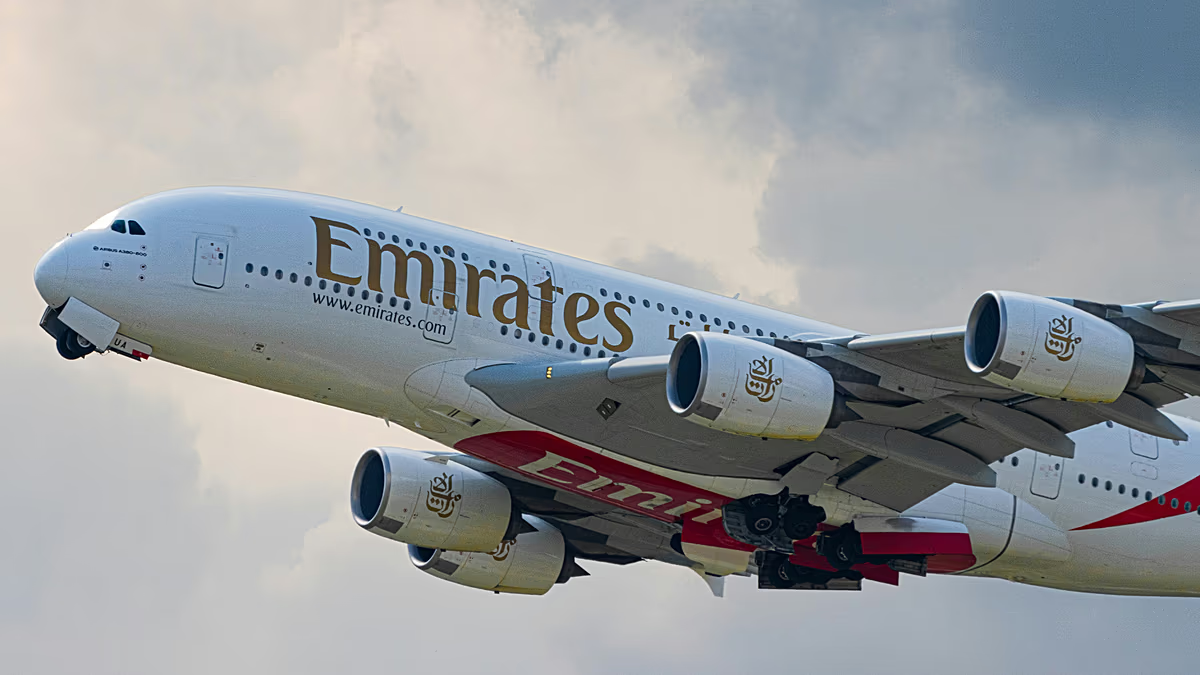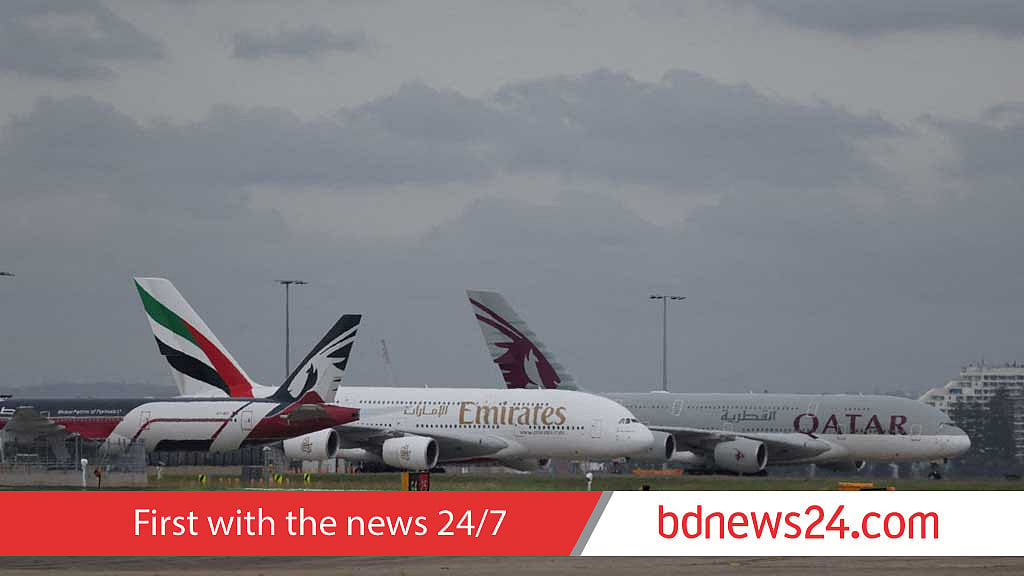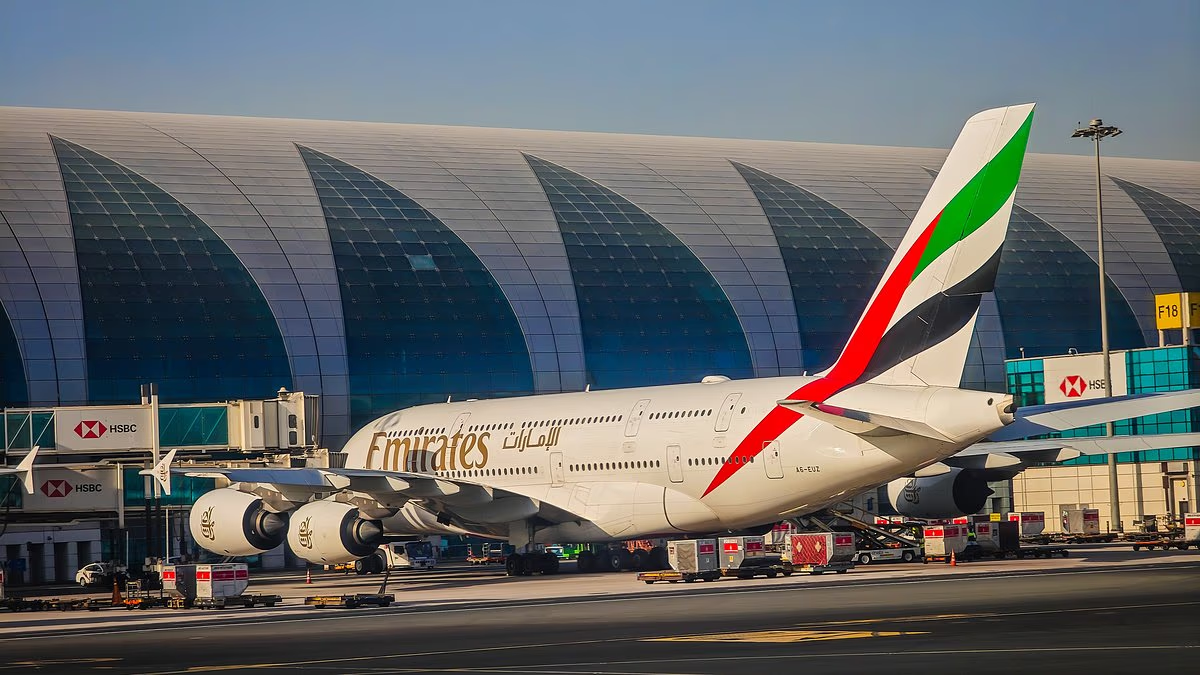
Emirates, Etihad, flydubai, Air Arabia have been restoring networks after the warLast updated: June 17, 2026 | 05:006 MIN READIndustry leaders believe the ceasefire will not immediately erase the impact of the conflict, but it could mark the beginning of a gradual recovery — restoring confidence in the UAE as one of the world’s most important aviation hubs ahead of the summer travel rush.DXB The agreement, if signed as planned, could provide relief for Emirates, flydubai, Etihad Airways and Air Arabia, which have faced weeks of operational disruption caused by regional tensions, airspace restrictions and weaker demand.A US-Iran deal aimed at ending the four-month conflict will be signed at Switzerland’s mountainside Burgenstock resort on Friday, AFP reported.“In short, if the deal is signed this Friday as planned, then airlines like Emirates and flydubai, along with Air Arabia and Etihad are immediately going to see a robust and huge uptick in demand for travel again,” said Saj Ahmad, Chief Analyst at London-based StrategicAero Research.He said the UAE’s position as a global aviation gateway means passenger confidence could return quickly once stability improves.“Before the conflict, the UAE’s position as the world’s number one gateway for travel means that passenger confidence will see the resumption of almost all network restoration and very shortly, a decline in air fares as oil prices come down as confidence in the ceasefire and extended talks kicks in,” Ahmad said.UAE aviation resilienceTravel and aviation consultant Anita Mendiratta said the crisis has highlighted the Gulf’s critical role in global connectivity but also demonstrated how much more resilient aviation has become.“What this latest crisis has exposed is the importance of the Gulf region to global air travel and trade,” she said.“Sitting at the heart of global aviation, connecting Europe, Asia, Africa and Australasia through some of the world’s largest and most sophisticated aviation hubs, any escalation therefore raises understandable concerns around airspace, fuel markets, insurance costs and traveller confidence.”However, she said airlines are better equipped to manage disruption.“The aviation and tourism sectors no longer respond to crises with panic. They respond with planning,” Mendiratta said. She added that reliability has become central to rebuilding demand.“One of the most important lessons aviation learned during the recovery period was that reliability creates trust, and trust creates demand.”Airspace reopening could accelerate recoveryFor airlines, one of the biggest benefits of a ceasefire would be more predictable operations and the potential reopening of more efficient routes.During the conflict, carriers faced cancellations, longer flight paths and increased operating costs due to airspace restrictions. Ahmad said UAE airlines could quickly work to restore connectivity through Iranian airspace if conditions allow.“Iranian airspace is key for shorter flight times and distances to Europe and the Americas — and Iran benefits from navigation fees, so it’s a win-win for both sides,” he said.Get updated faster and for FREE: Download the Gulf News app now - simply click here.Dubai aviation growth remains intactWhile the disruption has affected Dubai International Airport’s growth trajectory, analysts believe its long-term fundamentals remain unchanged.“It’s too early to say whether Dubai International will eclipse 2025’s passenger figures,” Ahmad said. “But even if it doesn’t, 2026’s turmoil is nothing anyone could have predicted, so the fundamentals behind the airport’s growth remain unchanged — it just shifts out to the right a little as flights and networks and airspace opens up again.”The recovery also comes as Emirates prepares for the arrival of its first Boeing 777X aircraft next year.“Critically for Emirates, it has one eye on the arrival of its first 777Xs next year — so building up its network and capacity and opening new routes now will be vital to help integrating its new future fleet workhorse,” Ahmad said.Dubai’s flagship airline, Emirates – which was the first to resume flights days after the conflict began - is now operating to 138 destinations in 73 countries across the Americas, Europe, Africa, West Asia, the Middle East/GCC, the Far East and Australasia.Summer travel season will test airlinesThe ceasefire comes as airlines enter one of the busiest travel periods of the year, making a recovery in confidence particularly important.“In just five months’ time, Emirates’ first half financial figures are due — and there’s no doubt the conflict will have dented demand and revenue,” Ahmad said.“However, it can certainly now be clawed back on the back of this deal between Iran and the USA.”He cautioned that recovery depends on the agreement holding and diplomatic talks continuing.“On the caveat that the deal holds and diplomatic negotiations continue and bear fruit, however small, it’s clear that the UAE can once again look at its aviation hub as a catalyst for growth and build on its gateway access,” he said.Airlines focus on rebuilding trustEmirates President Tim Clark told Reuters said the airline would prioritise rebuilding traveller confidence rather than reducing fares.Clark said Emirates would offer “all sorts of incentives other than price” to encourage passengers to return.“That could be new means of ensuring their safety of operation, for instance,” he said.He added that the airline was working with governments and regulators on easing restrictions affecting Middle East airspace.“We rely on governments to be a little less restrictive in the warnings they issue about travelling across the Middle East,” Clark said.Etihad sees recovery underwayMeanwhile, Etihad Airways CEO Antonoaldo Neves said the airline had moved from managing disruption to restoring operations.The airline initially focused on passenger support, accommodation and repatriation flights before working with regulators to rebuild connectivity.“We find a way to create airways that were really safe,” Neves said.Etihad’s load factors recovered from about 55 per cent in April to 65-70 per cent in May, reaching 84 per cent more recently.Neves said the airline was operating around 85 per cent of available seat kilometres and expected capacity to reach 110 per cent of last year’s levels by June 15.“The trajectory is positive,” he told Gulf News. “We may have some ups and downs, but the trajectory is positive.” He added that flown revenue was expected to return to previous levels by August.Middle East airlines on recovery pathIATA Director General Willie Walsh said Middle Eastern airlines had been hit by both network disruption and higher oil prices, but recovery was already underway.“The Middle East airlines have been doubly hit because they’re faced with disruption to their network and the high oil price,” Walsh told Gulf News at the airline lobby's annual general meeting in Rio de Janeiro last week.“But the good news, if I wouldn’t matter where I was, I would say possibly it’s getting better.”He said the sharpest impact was seen at the start of the crisis, with Middle East airlines’ capacity down 60 per cent in March.“We’re forecasting them to be down 11 per cent for the year, which therefore says that we see progressive increase and recovery of capacity,” Walsh said.“I spoke to Antonoaldo (Neves), he’s expecting capacity this year to be higher than the same period last year. That’s lower than he had planned, but higher than last year.”Walsh said the disruption did not represent a long-term crisis for aviation.“I don’t think this is a crisis for the industry. I think there were individual airlines who are facing a crisis, but at an industry level, we still believe the industry will be profitable at lower levels than we had first expected,” he said.Fuel remains a challengeWhile demand is expected to recover, fuel costs remain a major pressure for airlines. Neves said Etihad was protected by a strong hedging position but warned that fuel prices could take time to normalise.“We have a very good hedging position. It’s not perfect, but it’s good,” he said. Fuel accounts for around 30 per cent of Etihad’s cost base, but the airline is absorbing higher costs rather than passing all increases to passengers.“As of now, we have not passed on. We’re just back to the same average fare we had before the conflict,” Neves said.Industry leaders believe the ceasefire will not immediately erase the impact of the conflict, but it could mark the beginning of a gradual recovery — restoring confidence in the UAE as one of the world’s most important aviation hubs ahead of the summer travel rush.Also In This PackageDhanusha is a Chief Reporter at Gulf News in Dubai, with her finger firmly on the pulse of UAE, regional, and global aviation. She dives deep into how airlines and airports operate, expand, and embrace the latest tech.
Can US-Iran ceasefire trigger a travel rebound for UAE airlines?
US-Iran ceasefire raises hopes for UAE airlines as Emirates, Etihad and others eye faster network recovery and renewed summer travel demand via Dubai hubs.
1,496 words~7 min read