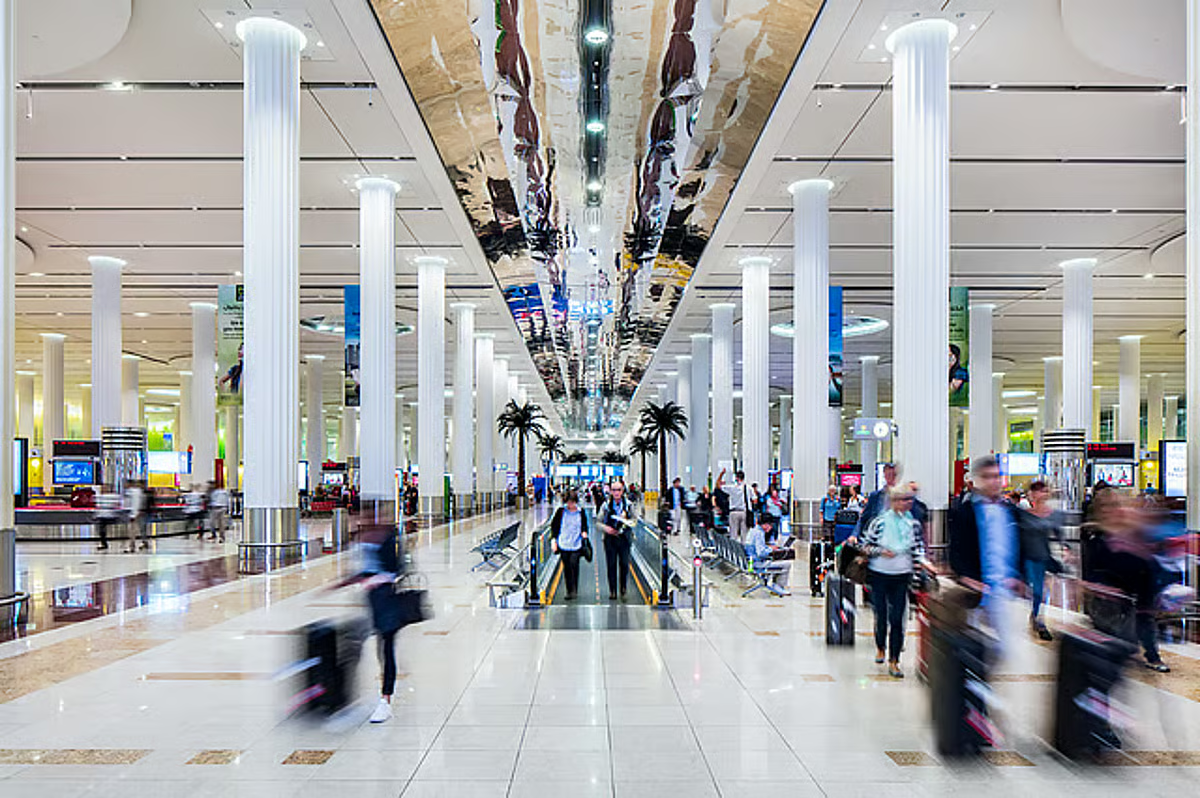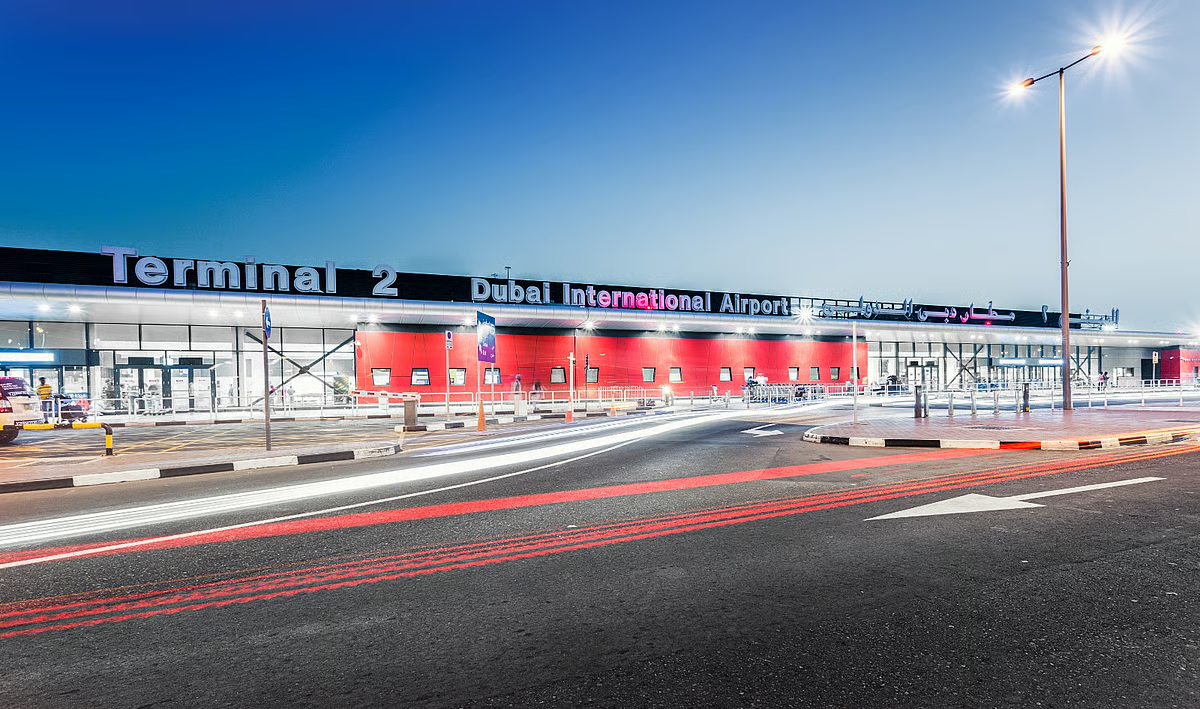
Dubai Airports was contacted for comment after the flight appeared on its arrival system but declined to comment.A return flight from Dubai to Tehran was scheduled to depart later Monday. Before the conflict, dozens of flights operated every week between the UAE and Iran. UAE operators, including flydubai and Air Arabia, are yet to resume operations between Iran and the UAE.Limited services returnWhile the route has reopened, flight availability remains limited. FlySepehran’s website showed only sporadic availability for Dubai services, with the next Tehran-Dubai flight listed for Wednesday and another scheduled for July 8.The reopening follows weeks of disruption after military strikes on Iran on February 28 triggered closure of the region’s airspace.Iran’s Imam Khomeini International Airport resumed operations on June 9, and airlines have gradually started restoring selected services as diplomatic efforts continue following the conflict.Ramin Kashefazar, head of Imam Khomeini Airport, said the Tehran-Dubai-Tehran route had been reactivated after a short break.“The necessary arrangements have been made to reopen the Tehran-Dubai route at Imam Khomeini Airport,” he said, according to Iranian state media.Airlines remain cautious across regionAlthough some routes are returning, aviation operators continue to monitor risks across the Middle East.However, the European Union Aviation Safety Agency (EASA) has advised airlines to remain cautious when operating in the region, extending its conflict-zone advisory to July 3.EASA said airlines should continue to avoid Iranian, Iraqi and Lebanese airspace, while exercising caution when operating over Bahrain, Kuwait, Israel, Jordan, Qatar, Oman, the UAE and Saudi Arabia.The agency said the risk level in the region had reduced compared with the height of the conflict, but the situation remained fragile and required ongoing monitoring.The conflict began on February 28, when the United States and Israel carried out military strikes against targets in Iran, followed by blatant Iranian retaliatory attacks on UAE, Qatar, Kuwait, Saudi Arabia, and Bahrain. The resulting hostilities affected aviation operations across the region, prompting temporary airspace restrictions and flight cancellations.Dhanusha is a Chief Reporter at Gulf News in Dubai, with her finger firmly on the pulse of UAE, regional, and global aviation. She dives deep into how airlines and airports operate, expand, and embrace the latest tech.
Dubai welcomes first flight from Tehran after Middle East conflict pauses
Dubai resumes flights from Tehran as Middle East tensions ease, marking a key step in restoring regional air travel and economic links.
455 words~2 min read