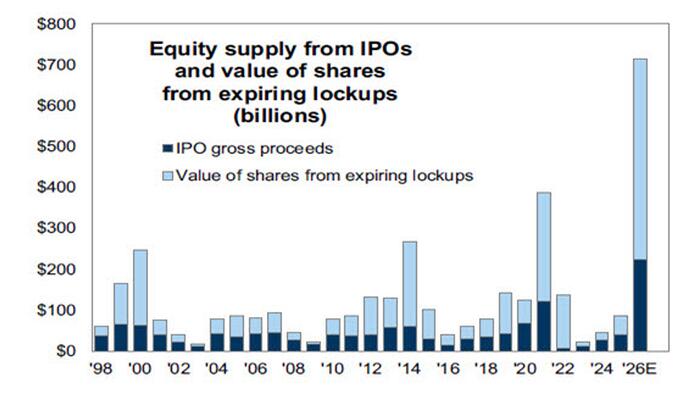
For the better part of two decades, US corporations have been vacuuming up their own shares at a pace that far outstripped new stock issuance. The result: a net negative equity supply that quietly reshaped how markets functioned. JPMorgan now says that era is over.
The bank’s strategists, led by Nikolaos Panigirtzoglou, project that US net equity issuance will hit roughly $200 billion in 2026, up from approximately zero the prior year. By 2027, that figure could surge past $1.2 trillion. The catalyst is a familiar one: artificial intelligence.
From buyback bonanza to equity flood
From 2006 to 2025, total net US equity issuance was approximately negative $430 billion. In English: companies collectively removed more shares from the market than they created, largely through aggressive buyback programs.
Now JPMorgan is saying the pendulum is swinging hard in the other direction. The shift from roughly zero net issuance to $200 billion in a single year is notable enough. The jump to $1.2 trillion the following year is something else entirely.