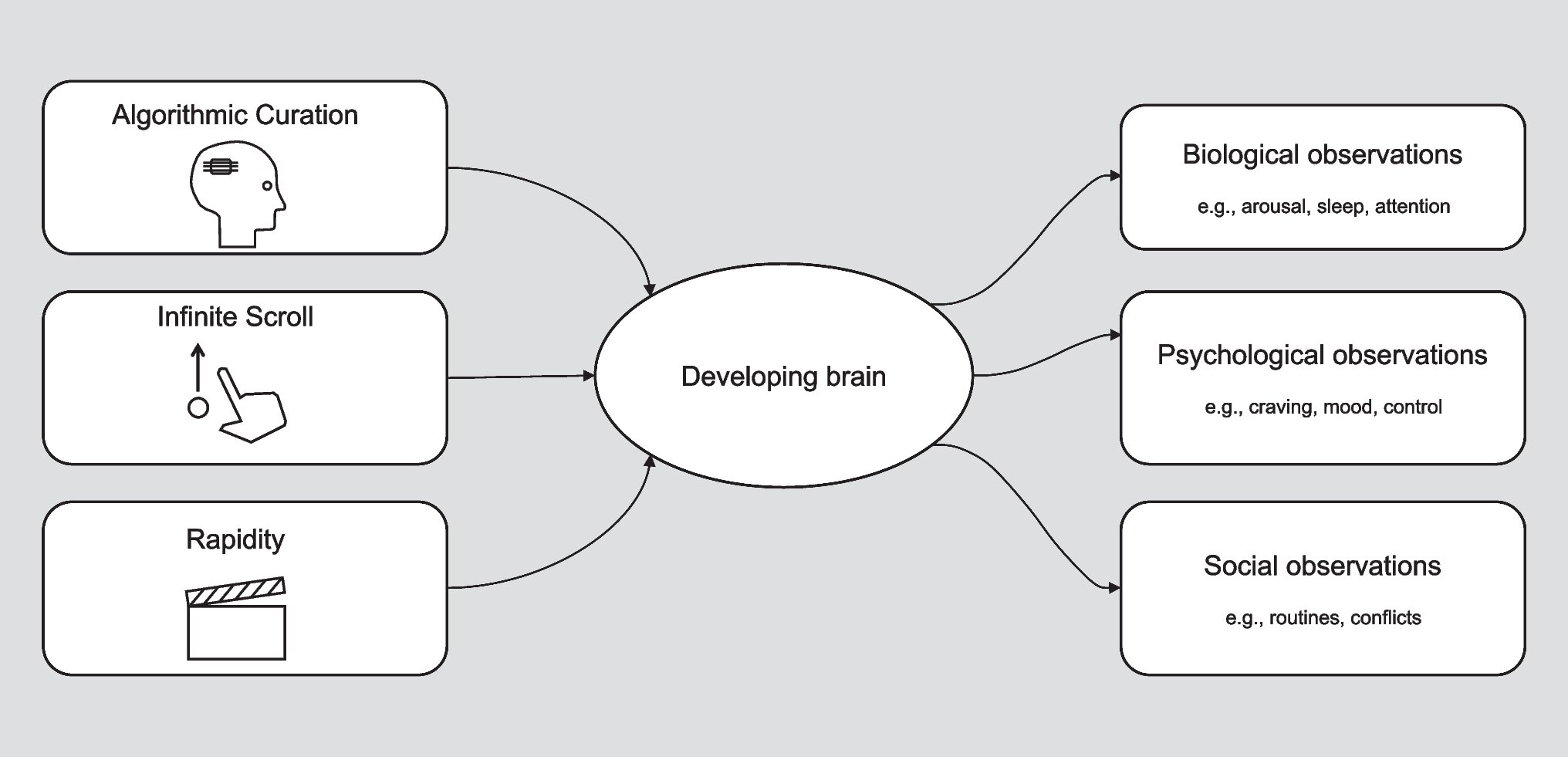
Conceptual overview of short-form video delivery mechanics, the developing brain and biopsychosocial observations. Arrows indicate hypothesised points of interaction and are intended as heuristic black boxes rather than established causal pathways. Credit: European Child & Adolescent Psychiatry (2026). DOI: 10.1007/s00787-026-03083-7
In contrast to classical digital media, short-video platforms are characterized by rapidly changing content, highly personalized recommendations and a targeted maximization of usage time. This is precisely where the study begins: It examines whether and how this specific design—and not just the content—can influence neurocognitive and emotional effects in adolescents and young adults.
"Our aim was to develop a differentiated understanding of the effects of short-video platforms based on scientifically sound findings and thereby create a foundation for moving beyond blanket statements such as 'less screen time,'" explains Marlene Ebster, graduate of the master's program in health economics at the University of Bayreuth's Institute of Medical Management and Health Sciences (IMG) and first author of the article "Taming the endless scroll," which has now been published in the journal European Child & Adolescent Psychiatry. "We wanted to understand the role played by platform design, usage routines and algorithmic mechanisms."