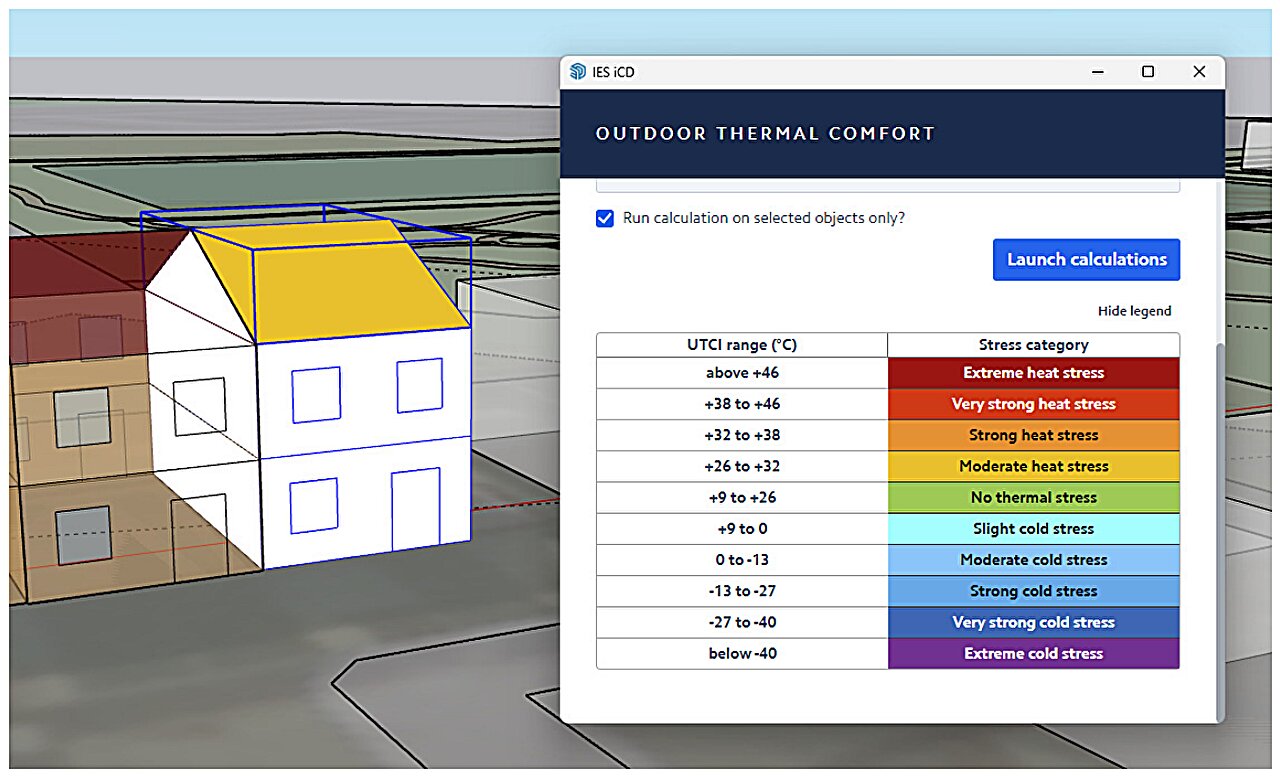
IES iCD outdoor thermal comfort experimental output—warm weather (authors’ adaptation from iCD software). Credit: Buildings (2026). DOI: 10.3390/buildings16112263
A study carried out by researchers at the University of Manchester has found that future climate change will bring a clear shift toward summer cooling requirements, with implications for grid capacity, occupant well-being and energy affordability.
The research, published in Buildings, aims to understand how the U.K.'s designs for social housing need to change as future climate change alters demand for heating and cooling in the summer and winter months, and how this change in energy demand might be addressed to mitigate environmental effects.
In 2019, heating accounted for around 45% of total energy consumption. The study argues that to reduce this consumption, a comprehensive understanding of homes and how climate change will affect their energy performance in the future is needed.
The study records a likely substantial increase in cooling demand projected for 2050 and 2080, suggesting that cooling demand will rise in 2050 by 138.69%.