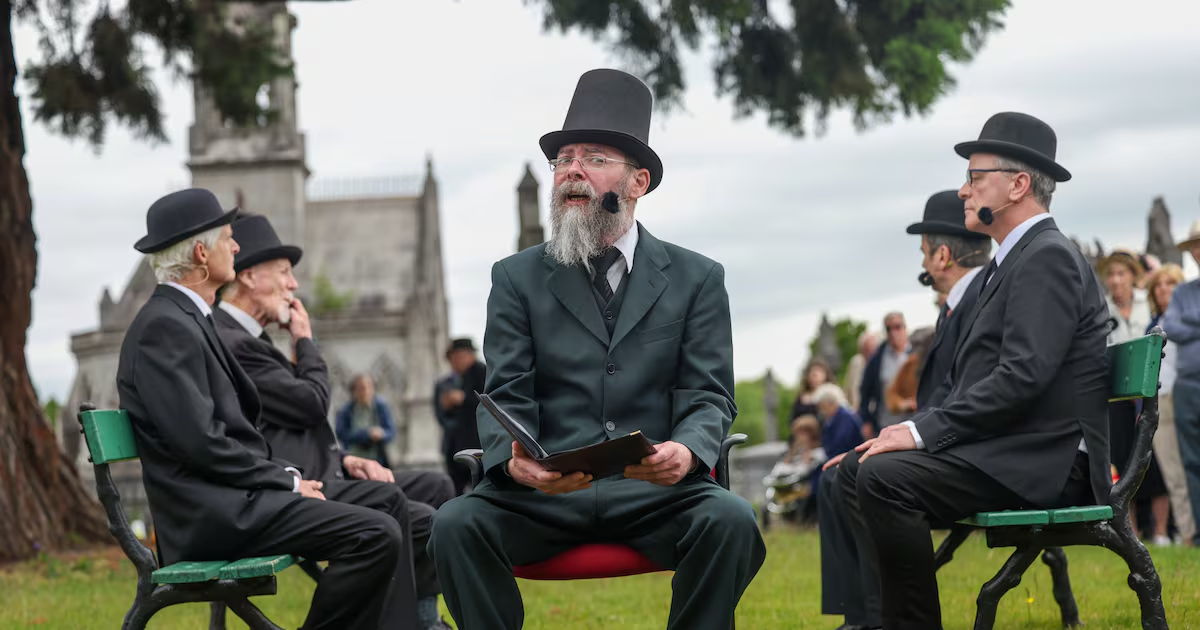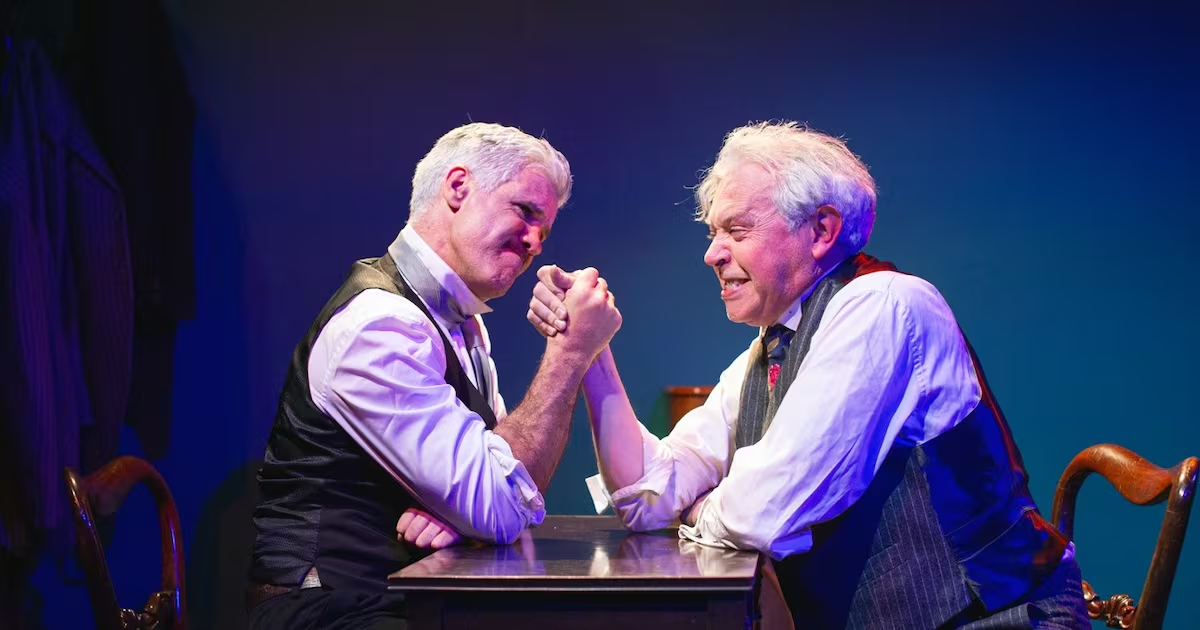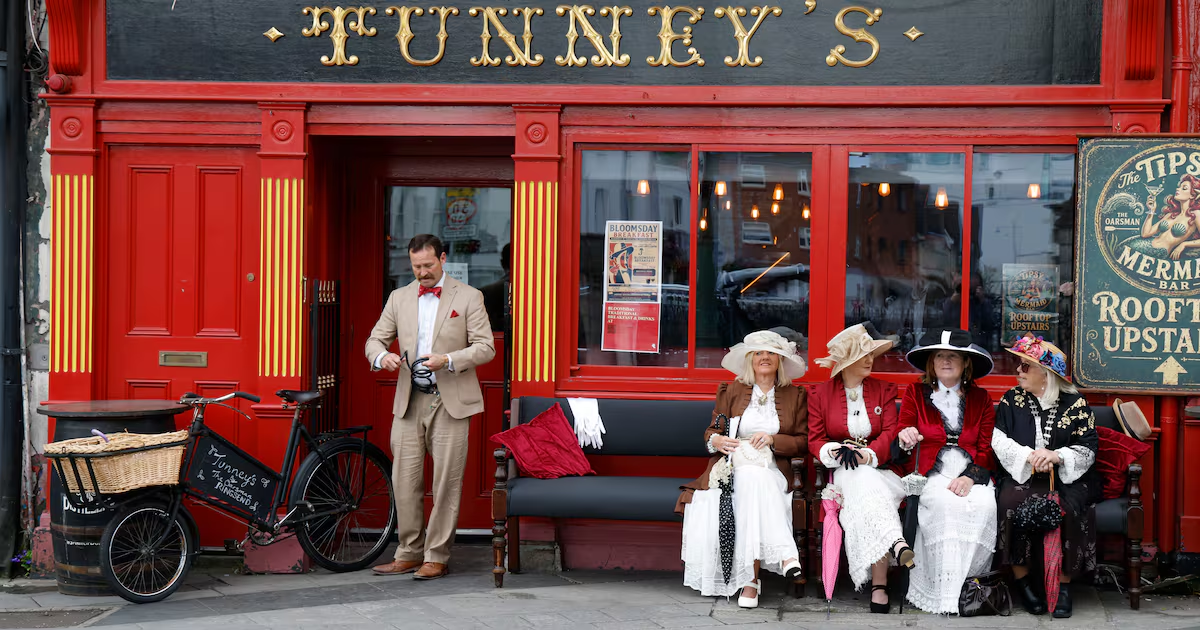
Tunney’s pub is mentioned three times in Ulysses, as was the “superior tawny sherry” bought there for the wake of Paddy Dignam, whose fictional funeral is a centrepiece of James Joyce’s masterpiece.But the venerable Ringsend establishment (better known to modern Dubliners as The Oarsman) had never got around to celebrating the Joycean connection until a canny Donegal woman moved into the area and made the bar her local.Lisa McLaughlin spent 20 years in Los Angeles, where she was central to Bloomsday and other Irish cultural events. She first persuaded the proprietors, Tom Bohan and Michelle Cullinan, to return the name Tunney’s to the front of the bar, alongside its modern alias.Jasper Kearns (with Milly the dog), Macdara Boyd, Stephen Boyd and Johnny Bell on Bloomsday. Photograph: Nick Bradshaw/The Irish Times Then, this June 16th, cashing a literary cheque that was long overdue, the pub joined the burgeoning number of businesses offering Bloomsday breakfasts or lunches, while encouraging customers to don period dress and relive the events of the original.Alas, it all came too late for the sherry, whose frequent mentions in Ulysses might, to a modern readership, suggest that Joyce was engaging in product placement. The beautifully preserved bar in Tunney’s includes several old wooden barrels behind the counter, formerly used to provide whiskey on tap. One of those had a sign attached on Tuesday promising “superior tawny sherry”. But that was just for show, admitted Bohan. “Nobody drinks it any more, unfortunately.”If the pub was new to celebrating Joyce, Ringsend in general is not. So enthusiastically has the village embraced Bloomsday commemorations that The Irish Times thought for a moment it was watching a Dignam re-enactment in the church opposite before realising it was an actual funeral.But, more than most places in Dublin, Ringsend is pivotal to Ulysses, because it was the focal point of the first date between Joyce and his future wife Nora Barnacle, whose walk there on June 16th, 1904, is immortalised in the book’s chronological setting.Local actors recreate a scene from the lives of James Joyce and Nora Barnacle in Ringsend Park on Tuesday. Photograph: Nick Bradshaw/The Irish Times They did more than walk, of course, a fact delicately brushed over during a short dramatic re-enactment in the local park. Actors playing the roles first engaged in some verbal flirtation on a bench. Then the show’s climax – in every sense – was subject to a skilful edit, whereby writer/director Shay Connolly held up a prompt reading “10 minutes later”, a phrase intoned solemnly by the audience. On which cue, the actors cut to the aftermath.In an often-quoted phase, Joyce spoke of Ulysses as a book from whose pages Dublin could be rebuilt if necessary. For Connolly, a founder and secretary of the Ringsend Historical Society, however, Ulysses is helping to rebuild an identity the coastal village was in danger of losing. Once the centre of Dublin’s docks, a way of life that was suddenly obliterated, Ringsend is now a suburb of “Silicon Docks”, where very few of its people work or, if they do, usually in the lesser-paid jobs. In Connolly’s words, the Bloomsday festival has become a “flagship” for restoring the old community’s sense of itself.But Bloomsday is now also a global festival, celebrated from Ringsend to Rawalpindi and beyond, in a Joycean empire on which the sun never sets. Events were or are being held this year in Boyle, Boston, Brisbane, Bogotá and Bangkok, to mention just the places starting with B.In Szombathely, Hungary, a festival honours the fictional Leopold Bloom’s even more fictional father, who was fictionally born there, drawing parallels with Transylvania, which celebrates the imagined creations of another Dubliner, Bram Stoker. In Islamabad, Pakistan, Joyce enthusiasts this year transformed Molly Bloom’s soliloquy into a kind of traditional Pashtun poetry, long used by women there as a private or subversive form of expression.Jim Kiernan in his 122-year-old motor car and flower trader Olivia Cleary near Davy Byrne's pub on Dublin's Duke Street on Tuesday. Photograph: Nick Bradshaw/ The Irish Times Meanwhile, in Seoul, the interestingly-named Craic House pub hosted a night of readings from Joyce’s infamously candid love letters and the more risqué parts of Ulysses with the caution “adult content – no video recording”. That must have included extracts from the Circe episode of Ulysses, set around midnight in “Monto” (or Nighttown, as Joyce called it), then one of the biggest red-light districts in Europe. But back in Dublin, ironically, the Nighttown chapter was being commemorated during the day. Reflecting the social and architectural transformations of Dublin since 1904, events there began with the unveiling of a plaque to the women of Monto. They then included a walking tour with historian Terry Fagan of the former warren of alleyways, transformed beyond recognition into a modern urban quarter of office and apartment blocks, the much cleaned-up main thoroughfare of which is now called James Joyce Street.
Bloomsday: Ringsend reclaims its Joycean heritage but, alas, no ‘superior tawny sherry’
More than most places in Dublin, Ringsend is pivotal to Ulysses, as the focal point of the first date between James Joyce and Nora Barnacle
816 words~4 min read