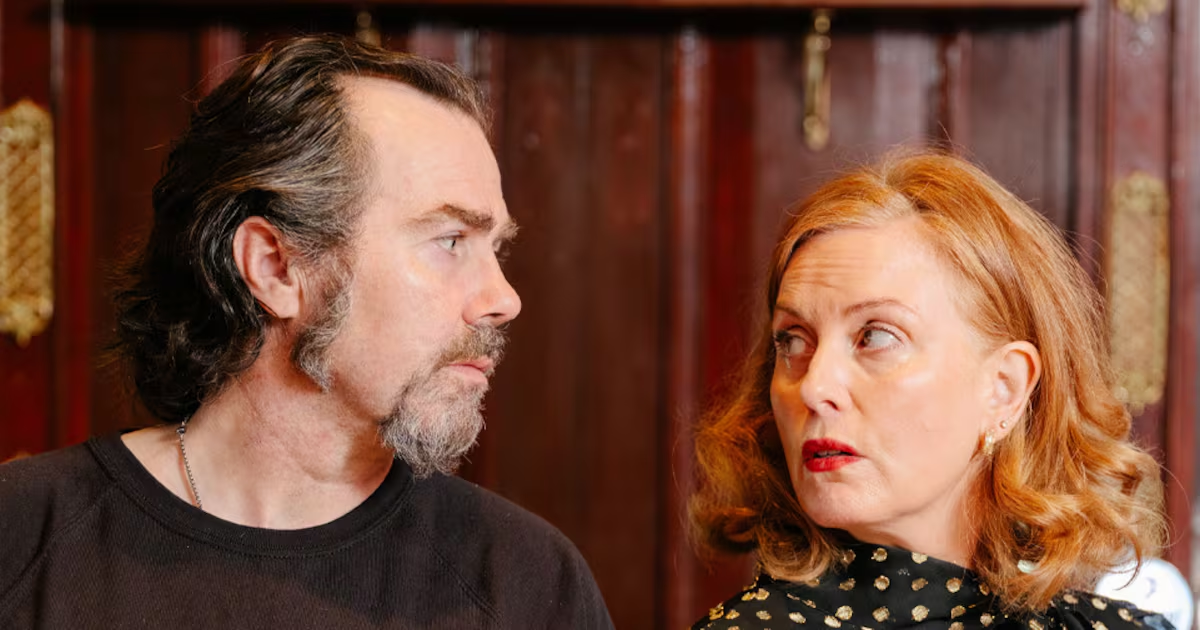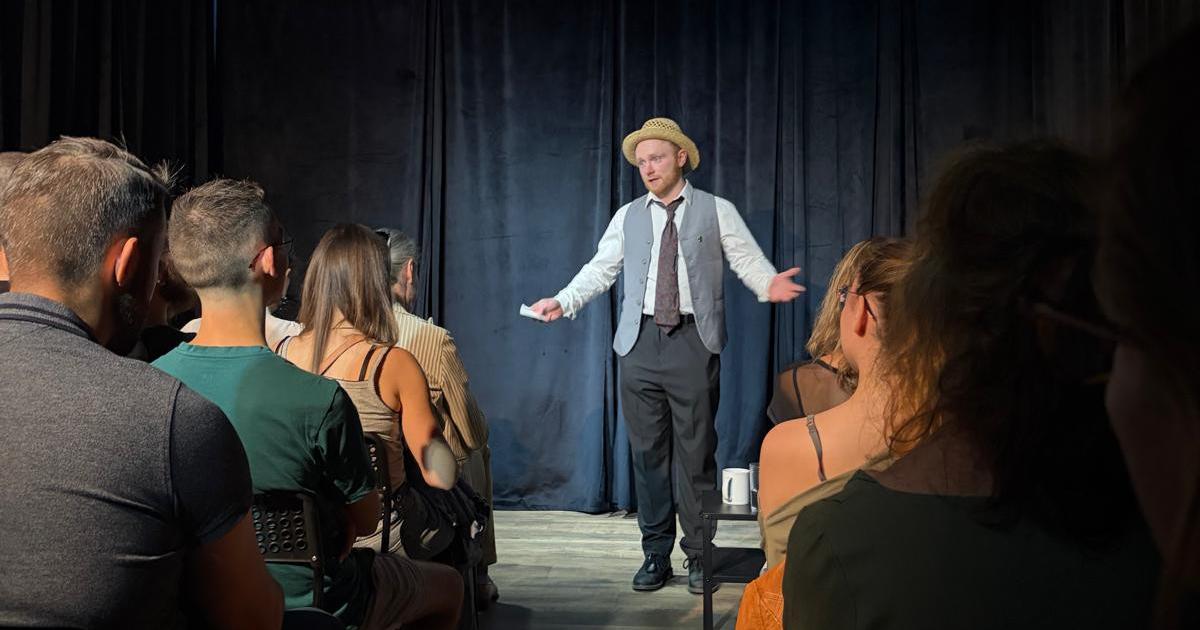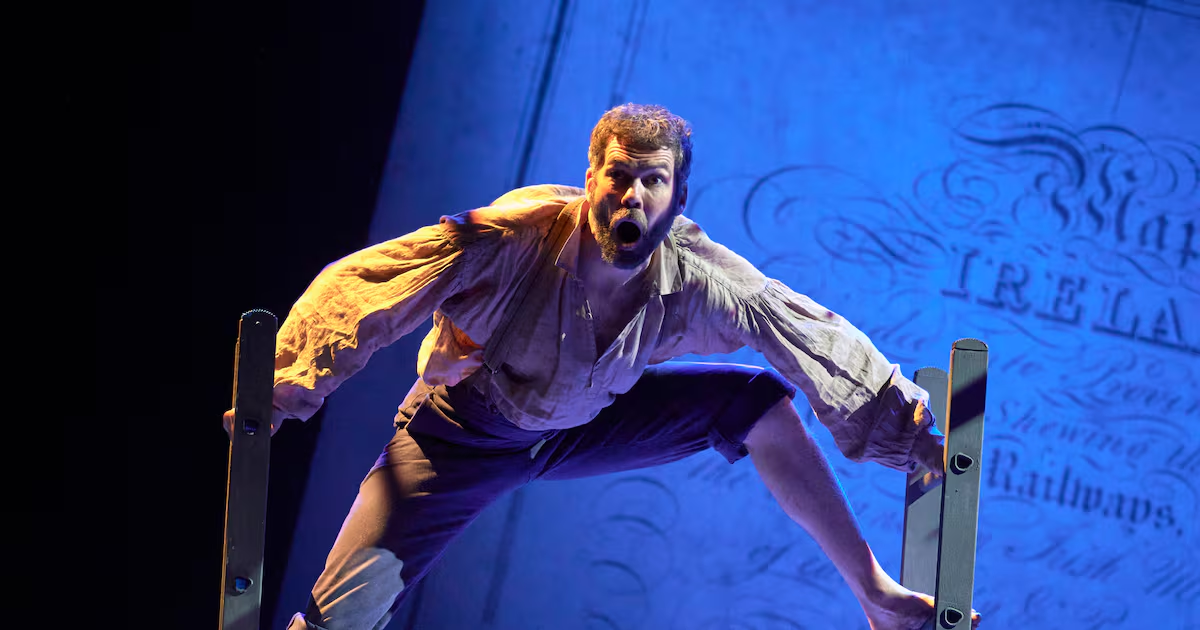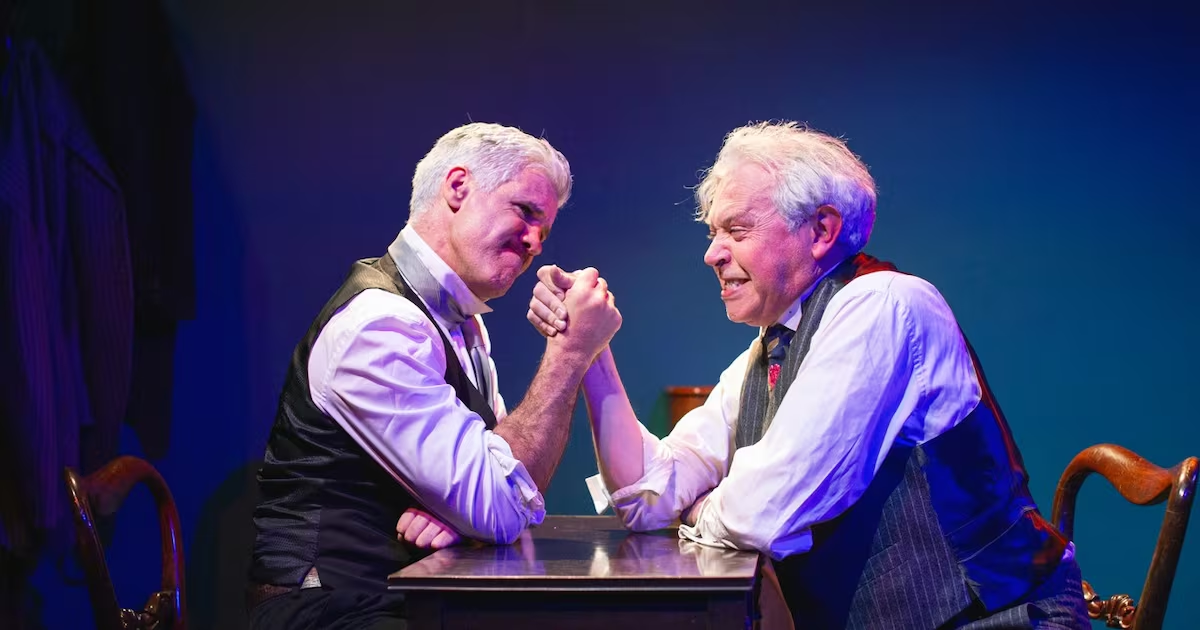
Stories from DublinersSmock Alley Theatre, Dublin★★★★☆Though they have frequently been adapted for the stage, most of the stories in James Joyce’s Dubliners are not inherently theatrical. The Dead supplies a soaring epiphany at the end. But the collection is, on the whole, defined by truncated narrative progression, circuitous dialogue and a lot of hanging around.In their adaptation of three of the stories at Smock Alley Theatre, Jim Roche and Liam Hourican meet this challenge by adding a dollop of comic energy.Their 70-minute staging opens with Two Gallants (a new addition to this Bloomsday-timed revival of a production that debuted in 2023). Wearing a Leopold Bloom-like bowler, Hourican gives Corley, one of the titular wastrels, the snarling, cocksure air of a would-be gangster as he sets out to swindle a young woman. As his sidekick, Lenehan, Roche has the pathetic eagerness of an overgrown schoolboy who is torn between idolatry and envy.Both take turns to voice the narrative sections of the text. When Hourican tells us early on that Lenehan “laughed noiselessly for fully half a minute”, Roche mines that detail with such explosive oomph that he looks like a suffocating hamster.The story nonetheless follows its original arc towards Lenehan’s melancholic self-reckoning over a plate of peas. Corley’s return bearing a gold sovereign purloined from his victim adds a concluding note of dismal excitement.A Little Cloud marks a further shift away from antic humour. Hourican here plays both parts as the timorous clerk Little Chandler meets his friend Ignatius Gallaher, “a brilliant figure on the London Press” back home on a flying visit. Initially filled with lofty expectations, Chandler is ultimately repelled by Gallaher’s condescension over drinks in a swanky restaurant.Hourican deftly exploits the tension between Chandler’s outward shyness and the frustrated ambitions of his internal life. He also brings out the strangeness of the dated cliches that litter Gallaher’s boastful patter – “put my head in the sack” being his dismissive term for marriage.Roche returns to perform a final story, Counterparts, which centres on another, more headstrong clerk. Like Lenehan in Two Gallants, his Farrington becomes a grotesque man-child, fuming with resentment at the tedium of scrivening and compulsively drawn to the “hot reeking public-house”. Here again, private longings are given vivid theatrical form as Roche jumps on to his desk to roar out the frustrations churning away inside him.Such outbursts, along with Roche’s facial tics and harrumphing, move the action back into a boisterous comic vein. His endless clashes with the chief clerk (voiced as an apoplectic Ulsterman) and an ill-conceived arm-wrestling match in the pub further contribute to an aura of high-strung chaos. But there’s also a doleful coda as Farrington returns home and inflicts his anger on his son.The one false note of this Volta theatre-company production is the musical accompaniment (with Feilimidh Nunan on the keyboard and violin and Conor Shiel on the clarinet). This helps set the dramatic tempo but is often too insistent. A score dominated by light jazz also seems out of sync with Edwardian Dublin.Stories from Dubliners is at Smock Alley, Dublin, until Saturday, June 20th
Stories from Dubliners review: Back for Bloomsday, Joyce’s stories get a dollop of comic energy
Jim Roche and Liam Hourican of Volta Theatre Company stage their adaptations of Two Gallants, A Little Cloud and Counterparts
514 words~2 min read