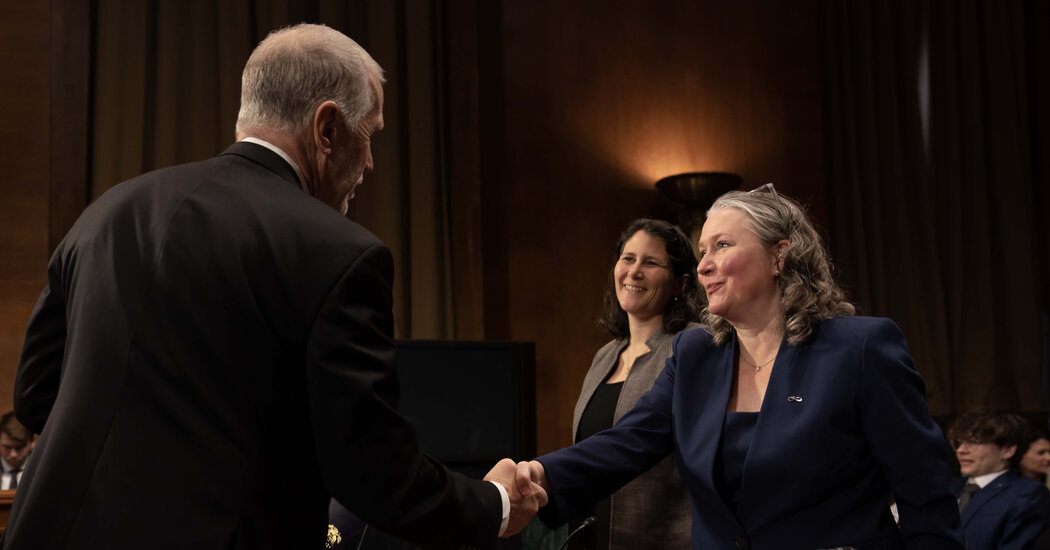
AdvertisementSKIP ADVERTISEMENTYou have a preview view of this article while we are checking your access. When we have confirmed access, the full article content will load.Six transgender residents claimed that the bathroom ban, the most restrictive in the nation, violated their constitutional rights.Listen · 5:41 min Judge Amanda K. Brailsford of the U.S. District Court for the District of Idaho, at right, in Washington, D.C., in 2023.Credit...Nathan Howard/BloombergJune 16, 2026, 2:26 p.m. ETIdaho cannot immediately enforce its new law criminalizing the use of certain restrooms that do not match an individual’s sex at birth, a federal judge ruled on Tuesday. The ruling provides a temporary reprieve for transgender people in Idaho, who faced up to five years in prison for using restrooms that match their gender identity. The state’s law, which is seen as the most restrictive measure on this issue in the country, was to go into effect on July 1.Six transgender Idaho residents brought the case, arguing that the statute violates their constitutional rights to equal protection and to shield personal information from disclosure. But Judge Amanda K. Brailsford of the U.S. District Court for the District of Idaho said it was not necessary to consider those claims, because the plaintiffs were likely to prevail on their third claim: that the law is unconstitutionally vague. In granting a preliminary injunction, Judge Brailsford, wrote that the law is likely to be unconstitutional because it requires individual officers to make subjective decisions, including an assessment of a person’s biological sex. The law “imposes criminal penalties — up to a felony for repeat violations — yet leaves critical enforcement decisions to the unguided discretion of individual officers,’’ she wrote. Judge Brailsford was appointed by former President Joseph R. Biden Jr.The decision blocks a portion of the Idaho law from being enforced while the case proceeds. The ruling allows transgender people to use single-stall restrooms that correspond to their gender identity, or multi-user restrooms when single-user restrooms are occupied or there are none available on the same floor. The plaintiffs are not challenging the portion of the law that covers locker rooms and showers.Thank you for your patience while we verify access. If you are in Reader mode please exit and log into your Times account, or subscribe for all of The Times.Thank you for your patience while we verify access.Already a subscriber? Log in.Want all of The Times? Subscribe.AdvertisementSKIP ADVERTISEMENT
Federal Judge Blocks Idaho Law Criminalizing Transgender Bathroom Use
Six transgender residents claimed that the bathroom ban, the most restrictive in the nation, violated their constitutional rights.
399 words~2 min read