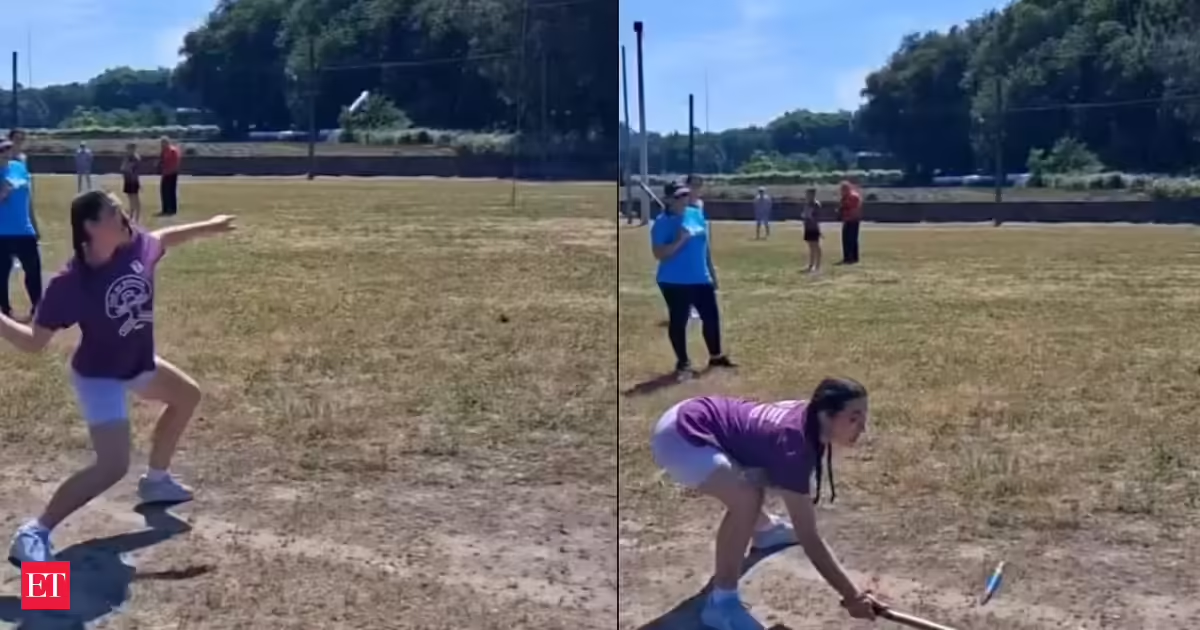
A traditional Spanish game has unexpectedly sparked nostalgia across India after videos of Billarda, a centuries-old sport played in Spain's Galicia region, went viral on social media.The clips show players placing a small stick on a larger one, flicking it into the air and striking it toward a target. For Spaniards, it's Billarda. For many Indians watching online, however, it looked exactly like gilli danda, a game generations grew up playing in streets, villages and playgrounds."The West finally discovers Gilli Danda, a game India has been playing for thousands of years," read one viral post that fueled the debate.ALSO READ: She didn't follow a strict diet, join a gym or use protein supplements. But her before-and-after photos left her stunnedSocial media reactsAs the videos spread, Indians flooded social media with comments, arguing that the Spanish sport closely resembles the traditional Indian game.One X user wrote, "Spaniards have re-branded our Gilli-Danda as Billarda. Wait till the US discovers this, they will turn it into an elite global sport and start a world championship."— BesuraTaansane (@BesuraTaansane) Others expressed concern that India has failed to preserve and promote many of its indigenous games while embracing more Western sports and entertainment.Several users also shared childhood memories, recalling how gilli danda once occupied the same space that cricket does today.What is Billarda?Billarda is a traditional game from Galicia in northwestern Spain. Historical records suggest it dates back to medieval times and appears in texts from the 13th century.The sport has seen a revival in recent years, with the Galician Federation of Indigenous Sports helping organize official competitions. Today, Billarda features league tournaments, playoffs and even international matches.India's ancient gilli dandaGilli danda is believed to be more than 2,000 years old and is often regarded as one of India's oldest traditional sports.The game requires just two sticks: a smaller "gilli" and a larger "danda." Players launch the smaller stick into the air and hit it as far as possible, making it accessible and affordable for children across the country.Historians have linked the game to ancient Indian civilizations, with references appearing in early Sanskrit and Tamil literature.
'Wait till US discovers it': Spain's Billarda goes viral; Indians say it's a 2,000-year-old game called gilli danda
A Spanish game called Billarda has gone viral on Indian social media. Many Indians recognize it as their ancient game, gilli danda. Videos show players flicking a small stick with a larger one towards a target. This has brought back childhood memories for many. Gilli danda is believed to be over 2,000 years old.
350 words~2 min read