AFP, MOMBASA, Kenya
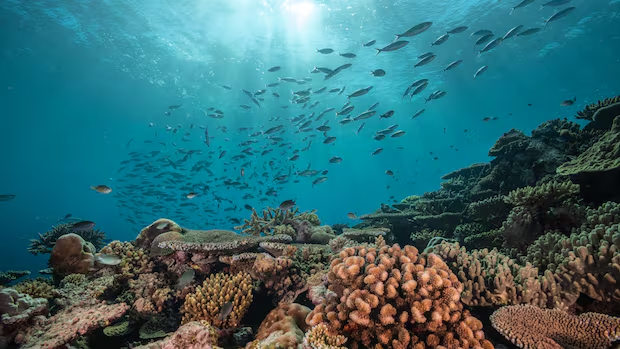
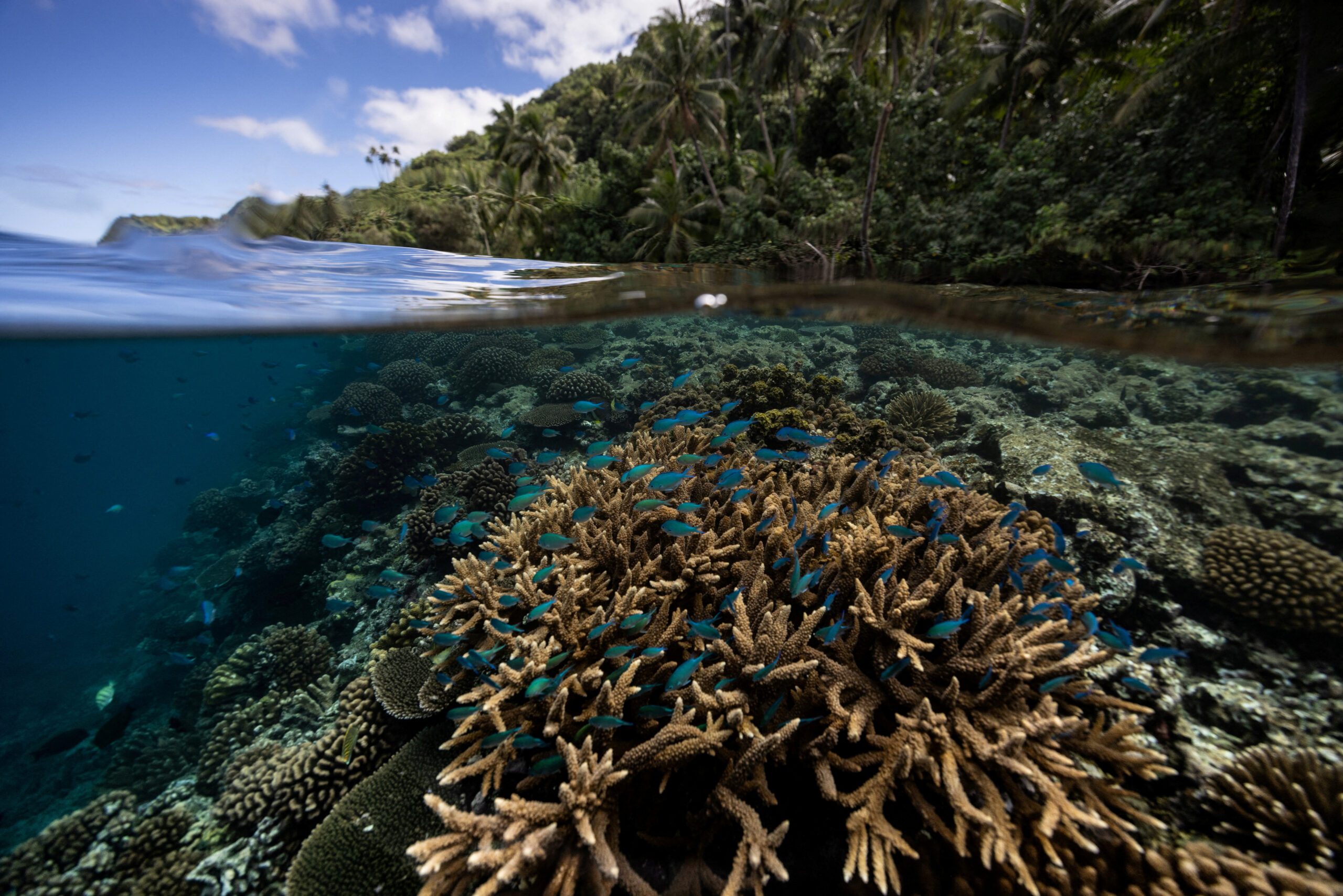
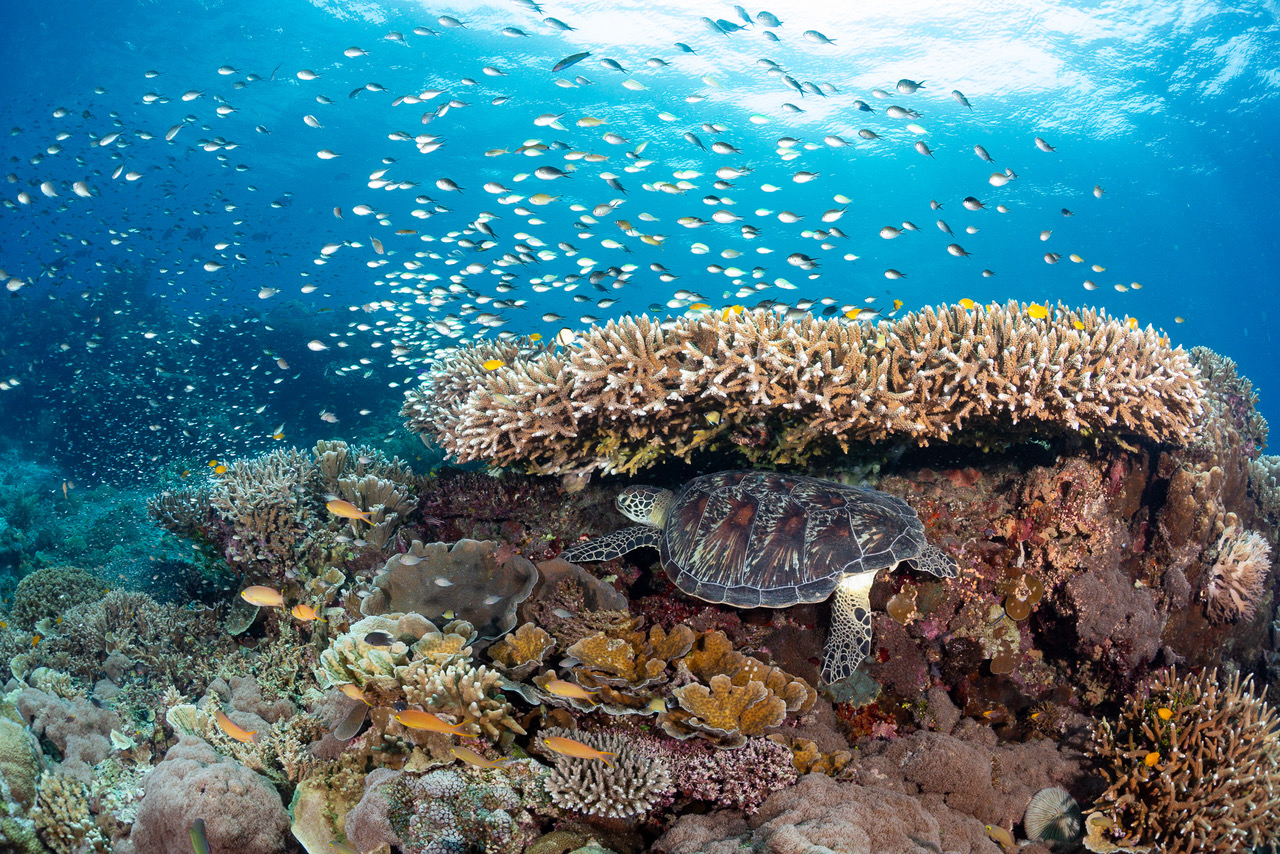
In the crystalline waters off Kenya’s coast, coral reefs are thriving — evidence of a rare good news story in the battle to protect oceans from the ravages of climate change.A new study presented at the Our Ocean Conference in Mombasa yesterday found that 166,000km2 of the world’s coral reefs — about one-third of the total — are particularly “climate-resilient,” meaning they have the potential to survive through major ocean warming events. The study by the Wildlife Conservation Society (WCS) and Macquarie University in Australia challenges the findings of the UN’s Intergovernmental Panel on Climate Change, which has said that 70 to 90 percent of coral reefs could die with global warming of 1.5<<0>>C above pre-industrial levels, and 99 percent at 2<<0>>C.
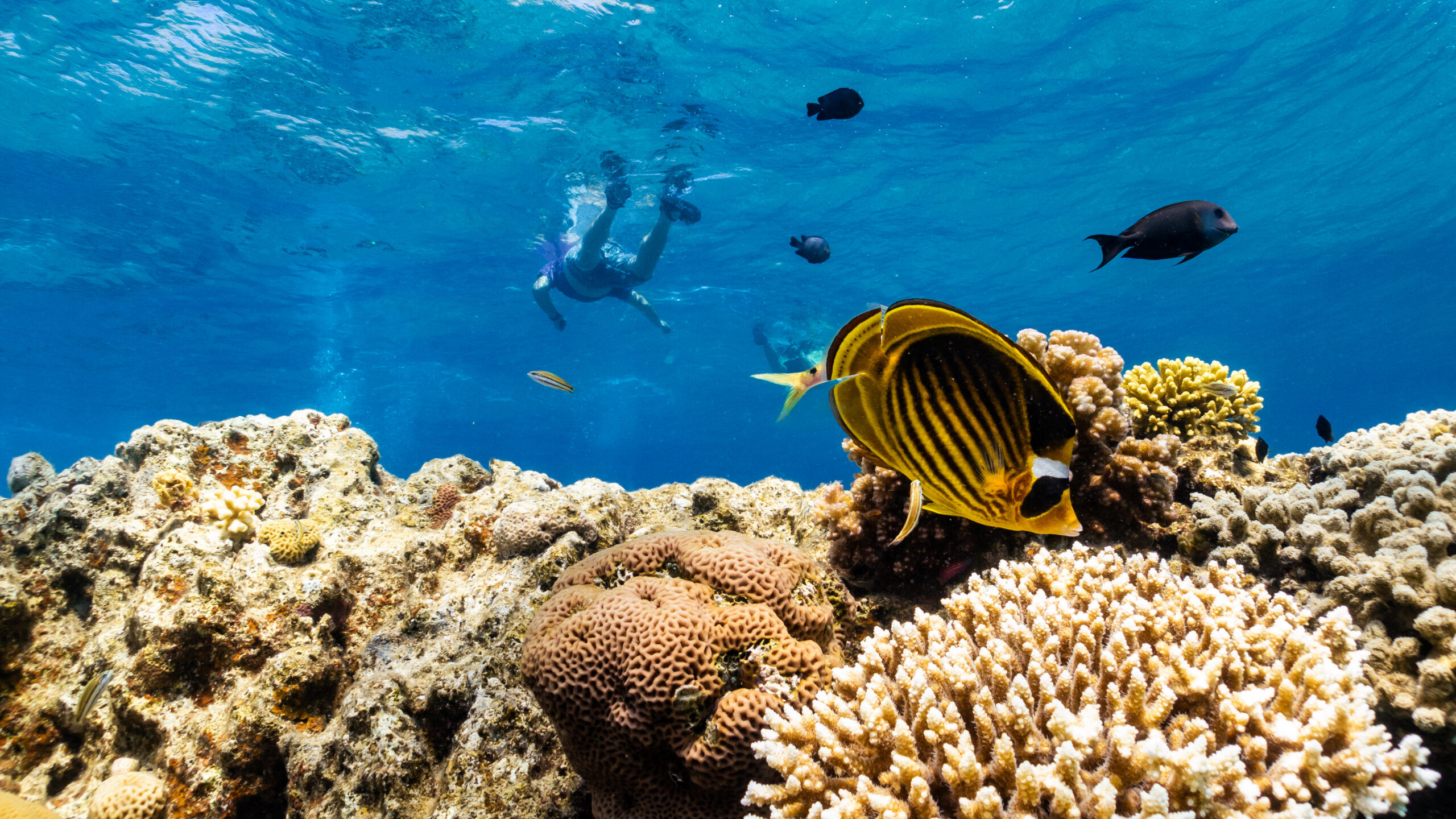
Fish swim at a coral reef inside a restricted area in Teahupo’o, Tahiti, French Polynesia, on Aug. 4, 2024.
“Our models are showing a much more hopeful future for corals reefs. We predict that there are many climate resilient reefs around the world that will persist over time,” WCS executive director for marine conservation Stacy Jupiter said.Action is still needed since only 28 percent of those resilient reefs are being actively protected. Down the coast from Mombasa, on Kenya’s paradisical Wasini-Mkwiro island, villagers are showing the way. As local fishermen bring in their catch from the beach, it is weighed, measured and logged by local data collectors in the village. Other members of the “beach management unit” patrol the waters to make sure no one is overfishing or using destructive equipment. Others plant seaweed and mangroves, and scoop out rubbish.