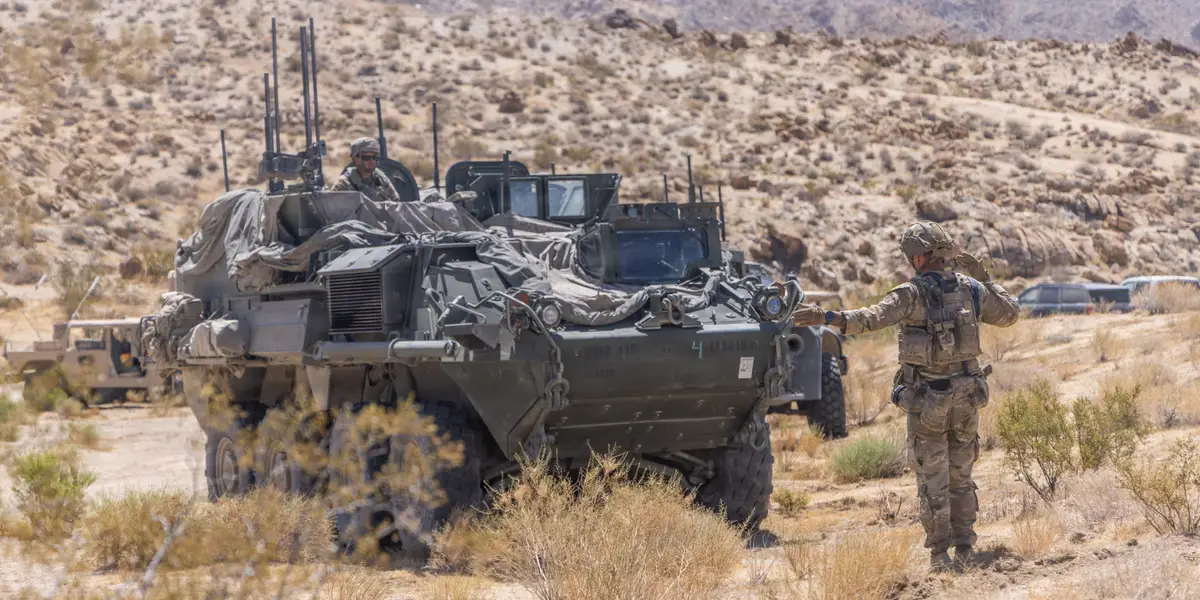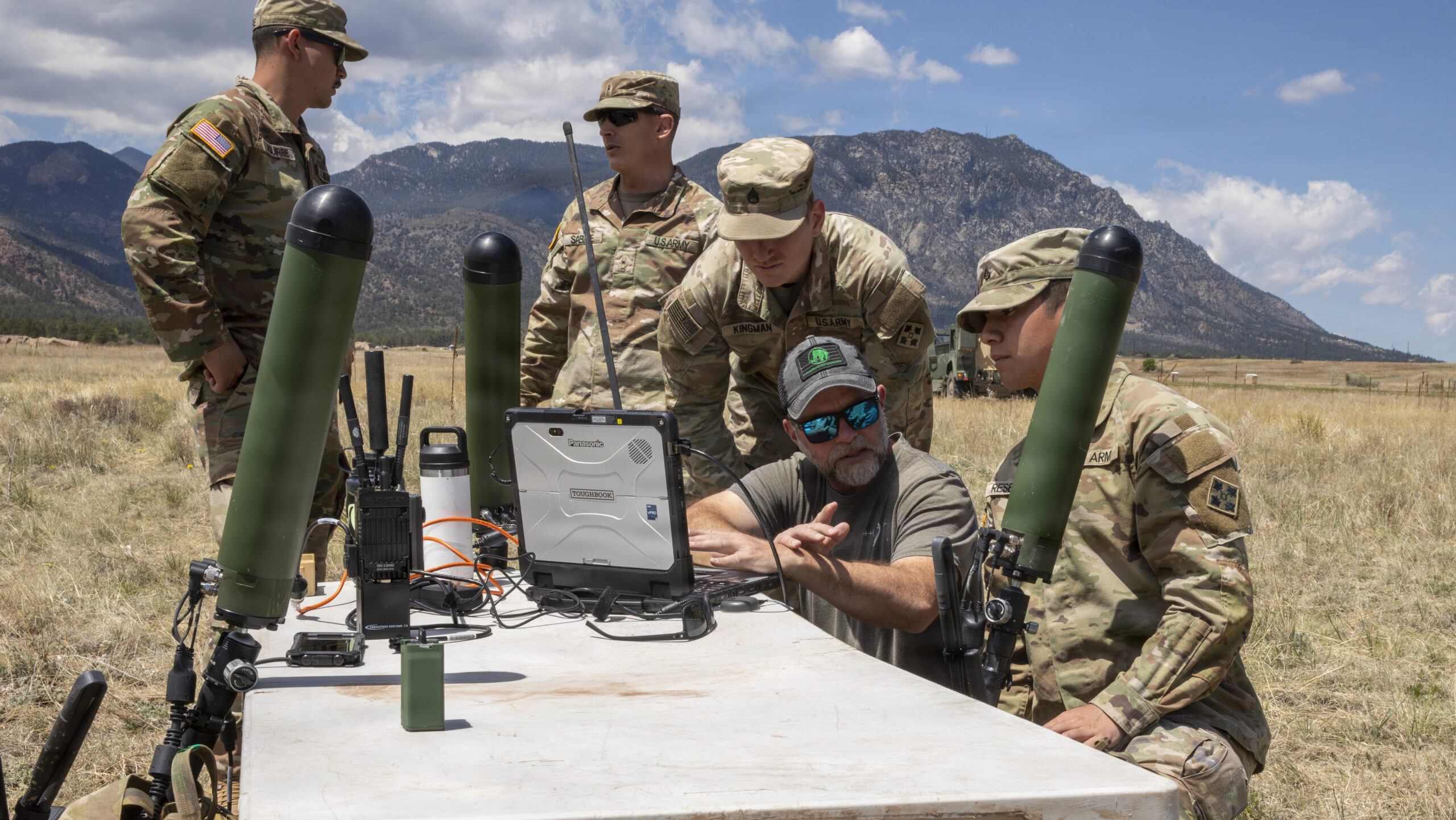
PIÑON CANYON MANEUVER SITE, Colo. — Surrounded by empty desert, a group of Army soldiers was debating a dangerous choice.
Their communications equipment wasn’t working as it was supposed to. Network connectivity and bandwidth issues aren’t foreign — it could be weather related, issues with the satellites in orbit, or user error — but can pose challenges in the middle of a fight. So, the unit sought workarounds and tried to troubleshoot their problems.
As they fiddled, the enemy unit across the battlefield silently cheered because a clever ruse had worked. They were actually jamming the soldiers’ communications, but only partially — not so drastically that the soldiers would realize it and actually employ the counter-jamming gear they had.
The decision by the soldiers of the 4th Infantry Division that they weren’t being jammed could have had fatal consequences in a real fight. Luckily for them, this was all a training scenario playing out specifically to see what electromagnetic warfare techniques work best against the US Army. And as it turns out, there was a lot to learn.
Ivy Mass, which took place for several weeks in May, was the culmination of a series of incremental events slowly scaling a prototype of the Army’s Next Generation Command and Control (NGC2) initiative to a full division. Breaking Defense was given exclusive access to the red cell efforts charged with designing the scenario and running the jamming effects against the 4th ID soldiers operating in the field.