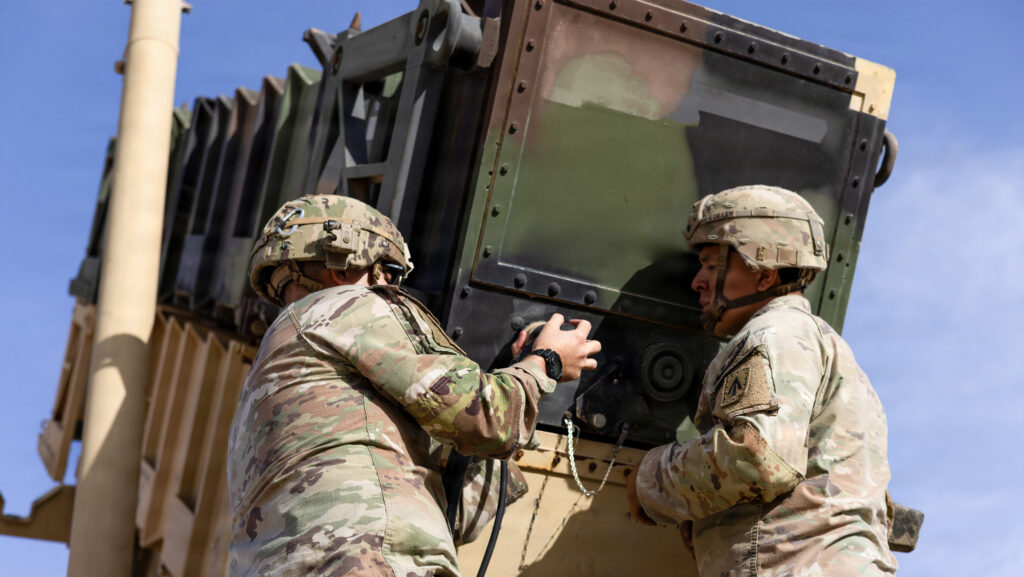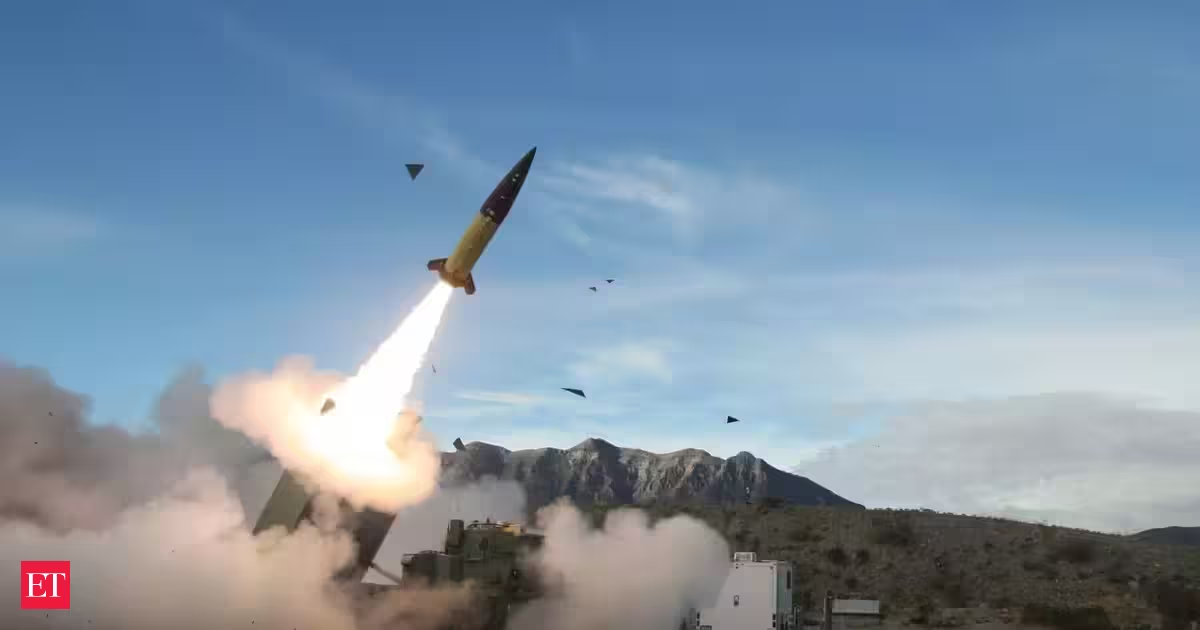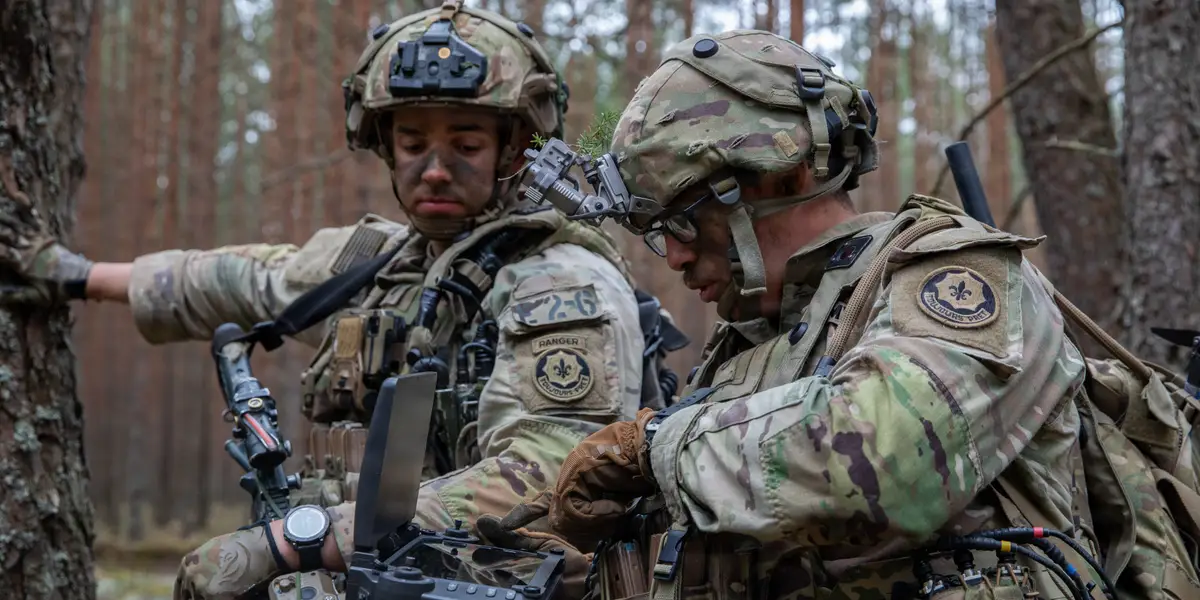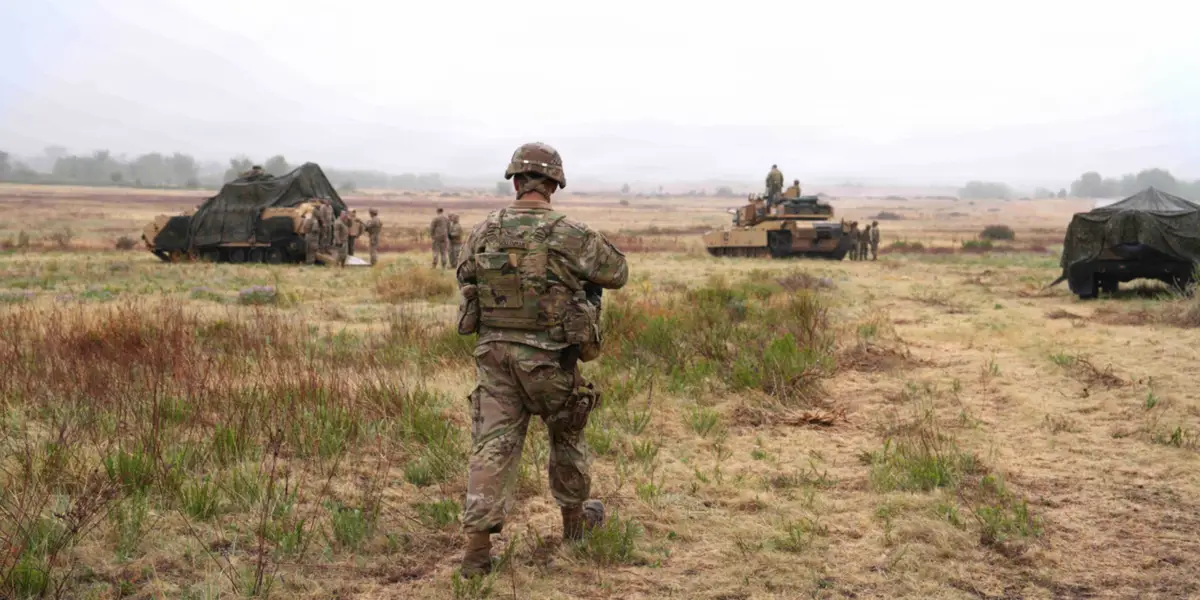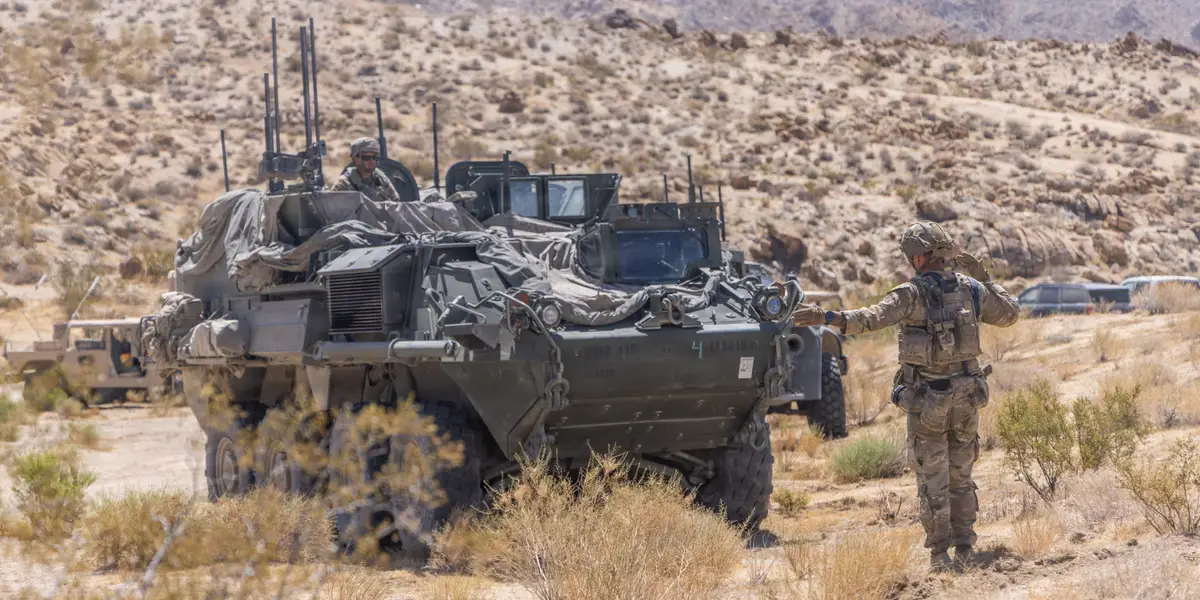
NGC2 was developed iteratively over a series of tests before Project Capstone Convergence at Fort Irwin, California.
US Army photo by Sgt. Sar Paw
The US Army is developing new warfighting software to change the way it fights a large-scale, high-speed, high-tech war. A major exercise recently held in the California desert showed both why the service is moving so quickly and what challenges will need to be overcome to have it work as planned in combat.Out at Fort Irwin in California, the service tested its Next Generation Command and Control, or NGC2, as part of its Project Capstone Convergence exercise. The system is complex and ambitious, marking a total overhaul of how the Army plans and fights.During the exercise, soldiers used NGC2 to locate friendly forces on a digital map, communicate via laptops, tablets, and MPU5 radios, collect data to inform battlefield moves, manage airspace, and make weapon and maneuver decisions.But some technologies that Business Insider saw weren't yet connected to NGC2, and soldiers reported connection issues that sometimes made elements of the system unusable.The occasional shortcomings that emerged during the experimentation at Irwin cut to the central challenge facing the NGC2 project and speak to the work ahead.The Army wants to connect nearly everything on the battlefield into a single networked system, but that vision depends on its weapons, drones, and communications effectively working together under tough conditions like electronic warfare that are designed specifically to disrupt them."We still got challenges to work through," Joe Welch, an Army senior civilian executive overseeing NGC2's development, told Business Insider, "but I mean, I've done this kind of work in the Army for most of my career, and I've never seen anything move nearly as fast as what we've delivered over the past nine to 10 months."