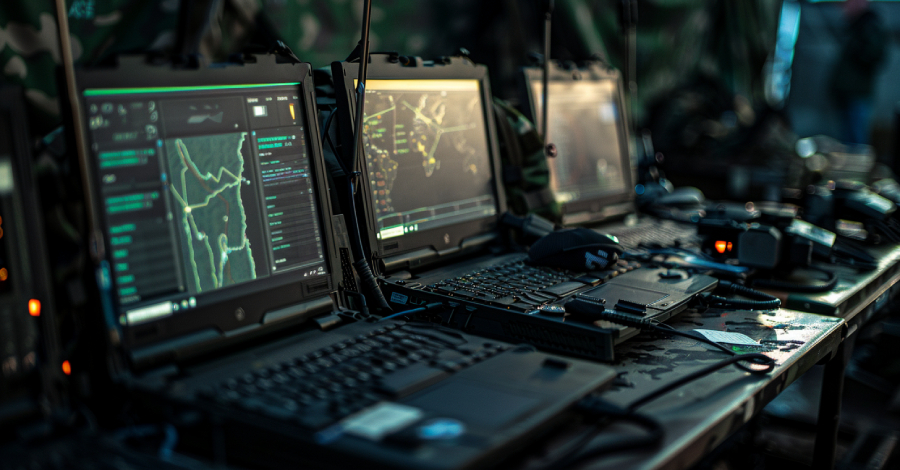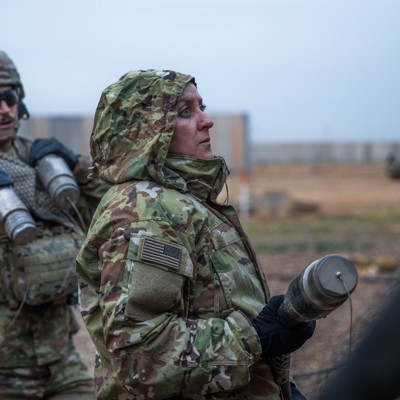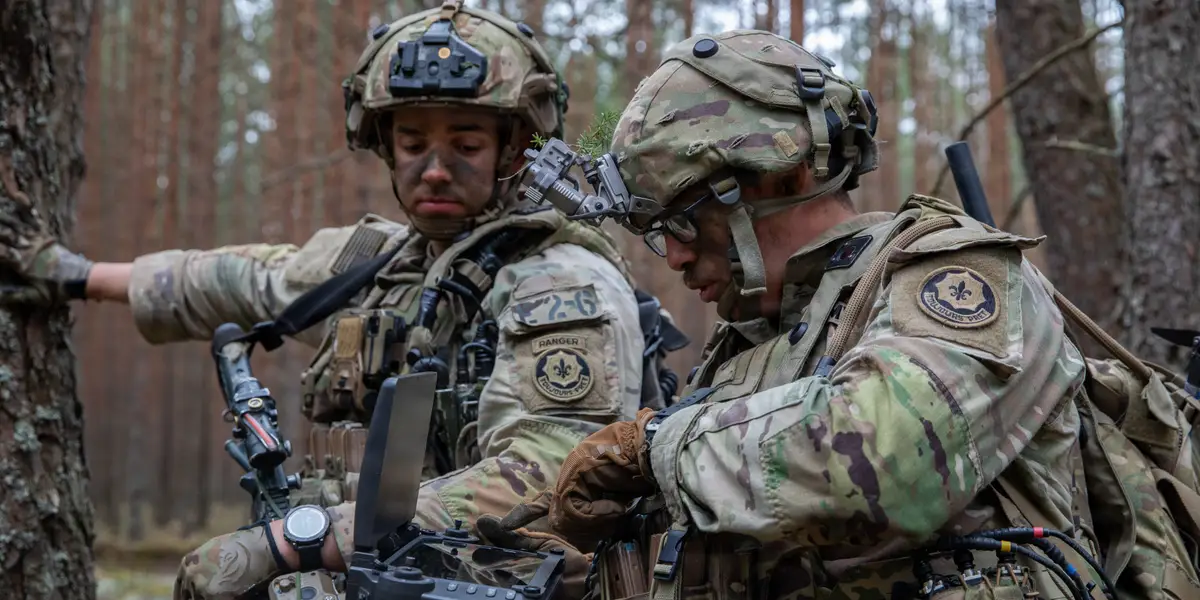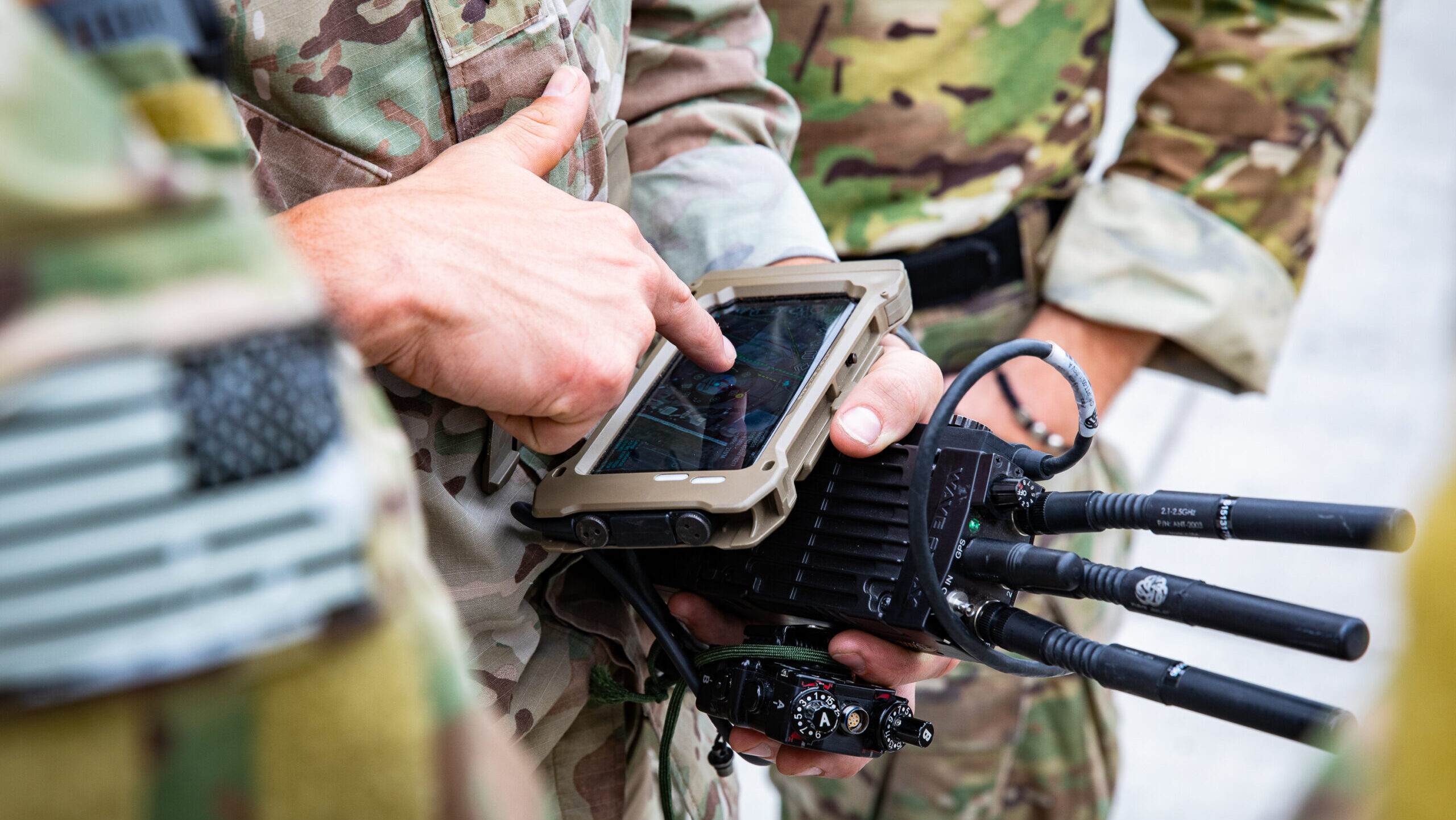
Soldiers from U.S. Army Special Operations Command train with devices connected via the Defense Advanced Research Projects Agency (DARPA) Secure Handhelds on Assured Resilient networks at the tactical Edge (SHARE) system in preparation for their employment during Project Convergence 22. (U.S. Army photo by CPT Alex Werden)
BALTIMORE — As the Army modernizes its network, the availability of artificial intelligence capabilities is presenting new opportunities for the network to be compromised, a top Army IT official said today.
“The threat now is a different spot. These new AI capabilities [are] lowering the barrier of entry and exposing more of our attack service,” David Markowitz, deputy chief information officer and chief data and analytics officer for the Army, said at the TechNet Cyber conference here today. “We really need to better understand our unified network, rapidly understand where those attacks may be coming in … and be able to ingest the threat and act faster than any adversary.”
In 2021, the Army sought to modernize its network, developing what it termed the unified network — a singular network for all of the service. Previously, the service siloed portions of its IT architecture between the enterprise level, used primarily at static locations leveraging common office functions, and the tactical or expeditionary space for battlefield communications and data.