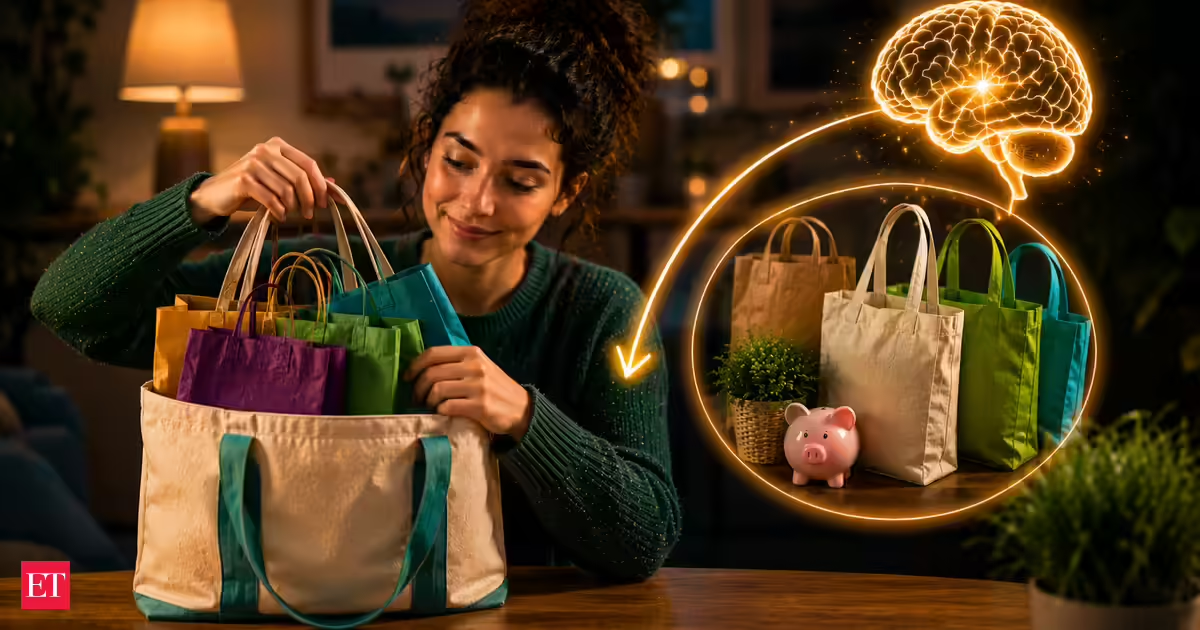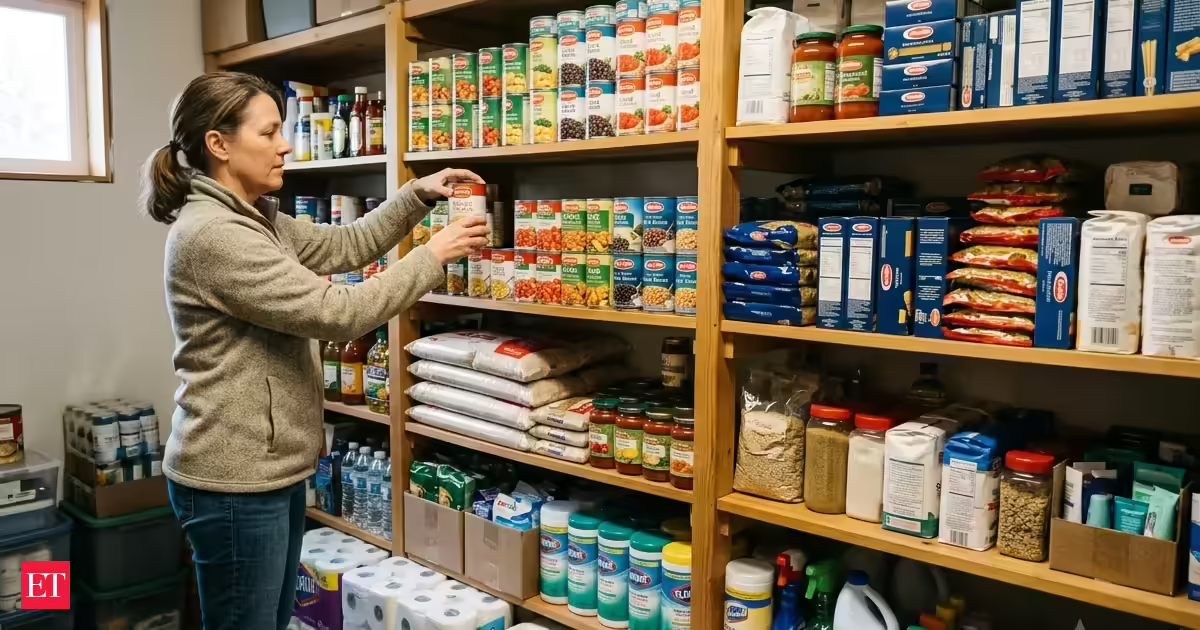
For decades, millions of households around the world have shared one peculiar habit. Open a kitchen cabinet, a pantry or a storage drawer, and you'll probably discover a large shopping bag stuffed with dozens of smaller shopping bags. It is one of those universal habits people joke about online. Social media videos frequently show entire families protecting their famous "bag of bags" as if it were a valuable household possession. But psychology suggests this behavior is far more interesting than simple clutter. People who save shopping bags are often responding to deep psychological instincts involving preparedness, resource conservation and emotional comfort. The truth is, people are rarely saving the bags themselves. They are preserving possibilities for the future. Several psychological theories help explain why this tiny household behavior has become so common across generations.The Scarcity Mindset Makes People Hold Onto Useful ItemsOne of the biggest explanations is something psychologists call the Scarcity Mindset. People who have experienced periods of economic uncertainty, financial stress or resource limitations often become highly sensitive to wasting useful items.Even if life is stable today, the brain remembers previous experiences. Research from Princeton University has shown that scarcity can significantly shape decision-making and attention allocation.A shopping bag may cost very little, but the brain sees future utility. Instead of thinking, "I don't need this." The brain thinks, "I might need this later." This is especially common among older generations who grew up during periods where reusing household items was normal rather than optional.Psychology says people who save shopping bags inside other shopping bags are responding to an ancient survival instinctModern example: Many parents and grandparents still save grocery bags despite living in financially comfortable environments because the behavior has become deeply ingrained.You Might Also Like:The Endowment Effect Makes Ordinary Objects Feel ValuableAnother explanation comes from a concept called the Endowment Effect. Developed by behavioral economists including Richard Thaler, this theory explains that people assign greater value to objects once they own them. The moment the shopping bag enters your house, your brain subtly changes its status. It is no longer disposable. It becomes yours. This tiny shift makes throwing it away feel wasteful. This is why people often tell themselves, "I'll use it someday." Even if that day never comes.Preparedness Psychology Creates A Sense Of SecurityHumans naturally prefer being prepared for future situations. Psychologists sometimes refer to this as anticipatory coping. Anticipatory coping means preparing for potential future needs before they arise. Shopping bags fit perfectly into this mindset.People imagine scenarios such as: Carrying extra groceries, packing household items, organizing belongings, disposing of trash, storing donationsKeeping the bags creates a subtle sense of control. In uncertain environments, small acts of preparation can make people feel safer. Modern example: During global disruptions like the COVID-19 pandemic, many households increased their tendency to save reusable items because uncertainty heightened preparedness behaviors.You Might Also Like:The Brain Loves Avoiding WasteHumans are naturally loss-averse. This idea comes from Prospect Theory, developed by Daniel Kahneman and Amos Tversky. The theory suggests people often work harder to avoid losses than to achieve equivalent gains. Throwing away a perfectly good shopping bag can feel like a small loss. Using it again feels like a win. This explains why people feel strangely satisfied when they finally reuse a bag they saved months ago.The brain rewards efficiency. What seems irrational is actually a highly efficient survival behavior that humans have practiced for thousands of years.Psychology says people who save shopping bags inside other shopping bags are responding to an ancient survival instinctFamily Habits Become Emotional TraditionsSometimes the habit has little to do with practicality. It is simply learned behavior. Psychologists call this social learning theory, introduced by Albert Bandura. Humans unconsciously copy behaviors they repeatedly observe. If someone grows up watching parents or grandparents save shopping bags, they often continue doing it without questioning why. Over time, the habit transforms into a family tradition.Modern example: Videos on TikTok frequently show younger adults laughing after realizing they have unintentionally become their parents by creating their own giant collection of shopping bags.Why This Habit Is More About Comfort Than ClutterAt its core, this behavior is rarely about bags. It is about emotional efficiency. The brain loves reducing uncertainty, avoiding waste and preparing for future situations. A bag filled with smaller bags may appear insignificant, but psychologically it represents something much bigger. It symbolizes readiness.In a world that often feels unpredictable, tiny habits that create a sense of order become surprisingly powerful. Of course, there is a healthy balance. Saving a reasonable number of bags is practical. Allowing hundreds to accumulate may indicate difficulty letting go of objects altogether. The difference lies in whether the habit serves you or whether you serve the habit.For millions of people, however, that famous bag of bags is simply the brain's quiet way of saying, "You never know when you'll need this."FAQsWhy do people save shopping bags inside other shopping bags?Psychology suggests people do this because their brains value preparedness, future usefulness and avoiding waste.Is saving shopping bags a sign of anxiety?Not necessarily. In most cases, it is a normal behavior linked to planning ahead and conserving resources. Excessive accumulation, however, may sometimes be associated with difficulty letting go.
Psychology says people who save shopping bags inside other shopping bags are responding to an ancient survival instinct
At its heart, this habit is rarely about the bags themselves. It is more about psychological efficiency. The brain naturally seeks to reduce uncertainty, prevent waste and prepare for future needs. A larger bag filled with smaller ones may seem trivial, but from a psychological perspective, it often symbolizes a much deeper desire for security, readiness and control.
866 words~4 min read