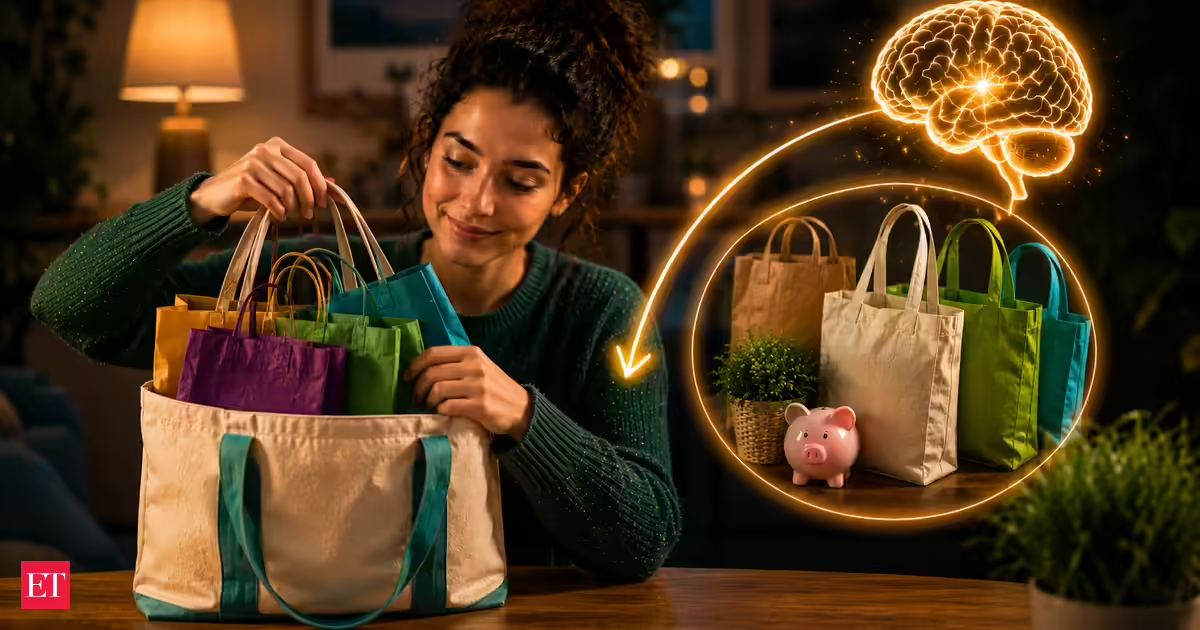
Almost every household has one. A kitchen cabinet filled with empty glass jars. A shelf stacked with takeaway containers. Plastic boxes without lids. Old bottles that no one uses but no one throws away either. Ask the owner why they keep them, and the answer is often immediate: "I might need it someday." At first glance, this seems like a harmless habit. After all, reusing containers can be practical, economical, and environmentally friendly. But psychology suggests something deeper can also be happening. For some adults, holding onto empty jars and containers is not simply about organization or recycling. It can reflect the brain's desire for security, preparedness, and control over an uncertain future.In many cases, the objects themselves are not the real issue. It is the emotional comfort they represent.Why The Brain Loves The Phrase ‘Just In Case’One of the strongest explanations comes from Loss Aversion Theory, developed by psychologists Daniel Kahneman and Amos Tversky. Humans naturally dislike losing something more than they enjoy gaining something new. Throwing away an empty jar may seem insignificant, but the brain immediately imagines a future scenario where it could have been useful.Suddenly, discarding it feels like losing a potential opportunity. This is why thoughts such as these become powerful:"What if I need it later?"You Might Also Like:"What if I buy something that needs storage?""What if I regret throwing it away?"The brain begins protecting against future regret before that future even exists.Psychology says adults who hold onto empty jars and containers are often seeking more than storage: Why ‘just in case’ thinking makes it hard to throw things away (Getty Image)Why Preparedness Creates Emotional SafetyPsychologists also connect this habit to Compensatory Control Theory. The theory suggests that when life feels unpredictable, people seek small ways to restore order and certainty. An empty container represents possibility. It can become a symbol of preparedness. Imagine someone dealing with financial uncertainty, rising living costs, or an unstable job market. Saving useful household items may unconsciously create a sense of security.You Might Also Like:The message the brain receives is simple: "If something unexpected happens, I'll be ready." The container itself becomes less important than the reassurance it provides.Why Some Generations Find It Harder To Throw Things AwayLife experiences matter. Adults who grew up during periods of economic hardship, resource scarcity, or within families that valued frugality often develop stronger "save it for later" habits. Psychologists refer to this as scarcity mindset. The brain learns that resources should not be wasted because they may become difficult to replace.Even if someone's financial circumstances improve later in life, those habits can remain. For example, many adults who were raised by parents who reused every container may continue the behavior automatically. It is not irrational. It is learned survival behavior.Why Throwing Things Away Can Feel Emotionally UncomfortableAnother explanation comes from the Endowment Effect. Research has shown that people assign more value to objects simply because they own them. A glass jar sitting in a store may seem worthless. The exact same jar sitting in someone's kitchen suddenly feels useful. Ownership changes perception. Over time, ordinary items quietly become part of a person's environment and identity. The longer they remain, the harder they become to discard. This is one reason why people often say, "It's still perfectly good."Psychology says adults who hold onto empty jars and containers are often seeking more than storage: Why ‘just in case’ thinking makes it hard to throw things awayWhy Environmental Awareness Can Also Play A RoleToday's adults are also increasingly conscious about sustainability. Social media has encouraged recycling, reducing waste, and reusing products whenever possible. In many cases, keeping containers is a responsible choice. The important distinction psychology makes is frequency.There is a difference between intentionally saving a few useful containers and accumulating dozens without a clear purpose. When cabinets overflow with items that are never used, emotional motivations may be driving the behavior.Why Anxiety Makes The Habit StrongerPsychologists also connect this habit to Intolerance of Uncertainty. Humans generally dislike unpredictable outcomes. When uncertainty increases, the brain begins preparing for multiple possibilities. Saving containers becomes one small way to reduce future anxiety. This same psychological mechanism appears in other everyday habits.People save old chargers, unused shopping bags, extra packaging, and instruction manuals because throwing them away creates a feeling of vulnerability. The habit is often about comfort rather than practicality.The Modern World Has Amplified ‘Just In Case’ ThinkingThe past few years have increased uncertainty for many adults. Economic fluctuations, rising prices, supply chain disruptions, and rapidly changing lifestyles have encouraged people to prepare more than ever before. Modern examples are everywhere.Someone may save food containers because groceries have become expensive. Others may keep delivery boxes because they frequently return online purchases. In an uncertain world, preparedness feels logical. The brain naturally leans toward caution.The Bigger Psychological TruthPsychology suggests adults who hold onto empty jars and containers are rarely being lazy, messy, or irrational. In many cases, they are trying to create a sense of safety. The object becomes a symbol of preparedness, security, and future possibility. The most important insight is that people are not always keeping the jar. They are keeping the feeling that they will be ready when life surprises them.Of course, this habit exists on a spectrum. Saving a few useful items can be practical and environmentally responsible. But when "just in case" begins to dominate living spaces, it may be worth asking a different question. Not, "Will I ever use this?" But, "What emotion am I trying to protect by keeping it?" Often, the answer has very little to do with the container itself.FAQsWhy do people keep empty jars and containers?Psychology suggests many people associate them with preparedness, security, and future usefulness.Is saving containers a sign of anxiety?Not always. However, anxiety and uncertainty can strengthen "just in case" behaviors.
Psychology says adults who hold onto empty jars and containers are often seeking more than storage: Why ‘just in case’ thinking makes it hard to throw things away
Psychology suggests that nail biting is rarely a sign of immaturity, poor discipline or weak self-control. More often, it is the brain's way of seeking relief during moments of stress or internal unease. The key insight is that most adults who bite their nails are not intentionally trying to harm them, they are often trying to soothe themselves.
966 words~4 min read