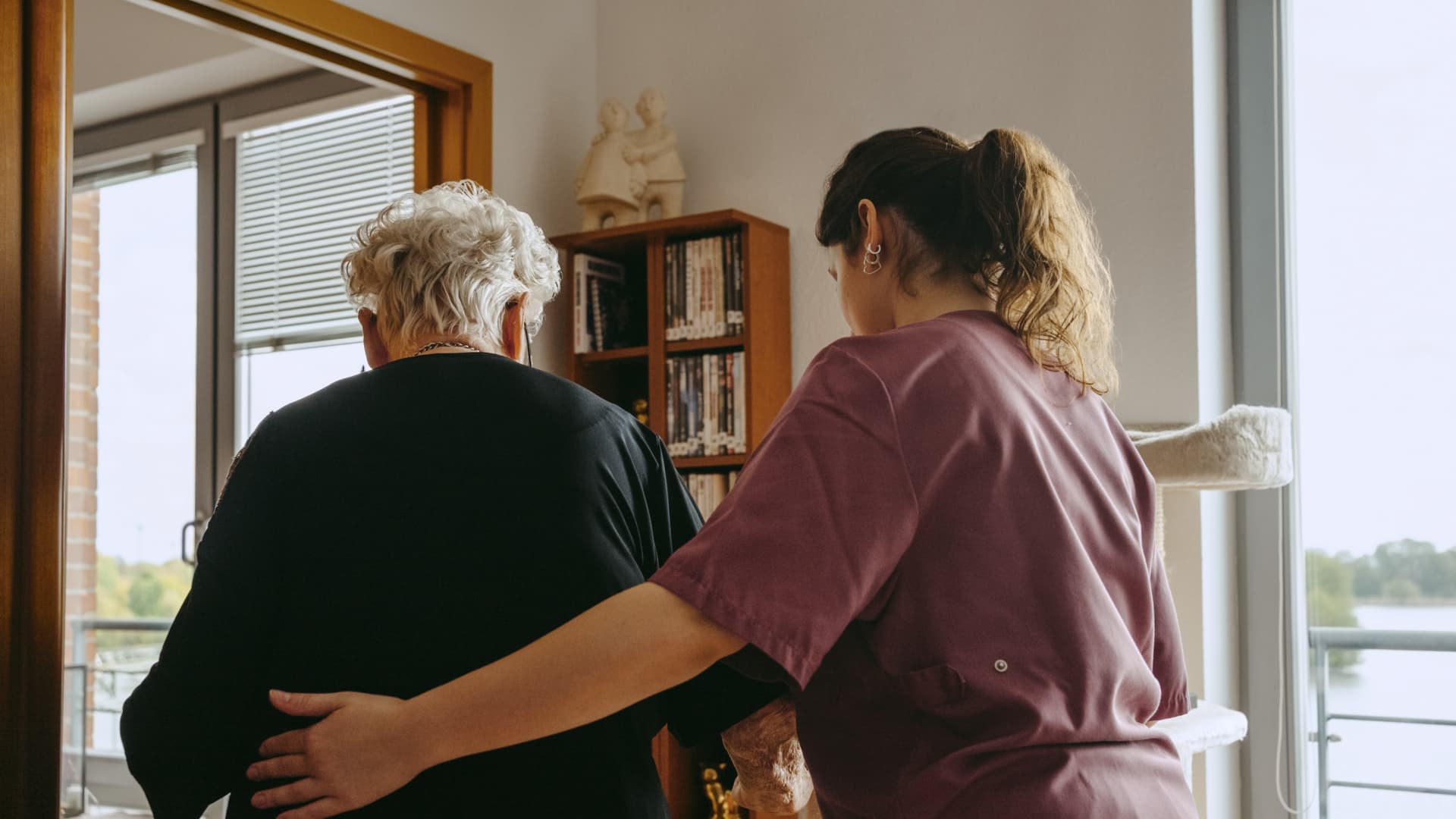
At age 71, MaryClare Feighan still works part time as she cares for her husband Jude, 77, who has been on disability for 15 years. She works for a consulting firm in Eugene, Ore., that helps nonprofits raise funding.
"If I could just let go of working, I would. Given how expensive the world is, I'm not giving up any income," Feighan said. "I'm not retiring anytime in the foreseeable future."
Feighan said their goal is to downsize to a single-story home that would be easier to maneuver - but moving takes time and money, both of which are a luxury right now, Feighan said. They have no children, so Feighan is the sole caregiver. "It's all me," she said.
"I'd love to get away for a weekend, be alone for a few days. Everyone needs a break. But I can't afford to do that," Feighan said. "I would like to go to dinner with friends, but I can't."
While the sandwich generation tries to manage the existing caregiving crisis, the elderly feel it too. They are adjusting their plans for retirement, and sometimes continuing to work both in official jobs and silent ones. The bottom line is that an ever-increasing number of Americans require care, and the burden can fall on people at different stages in their lives.