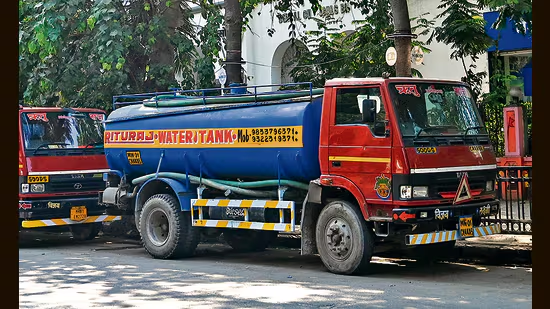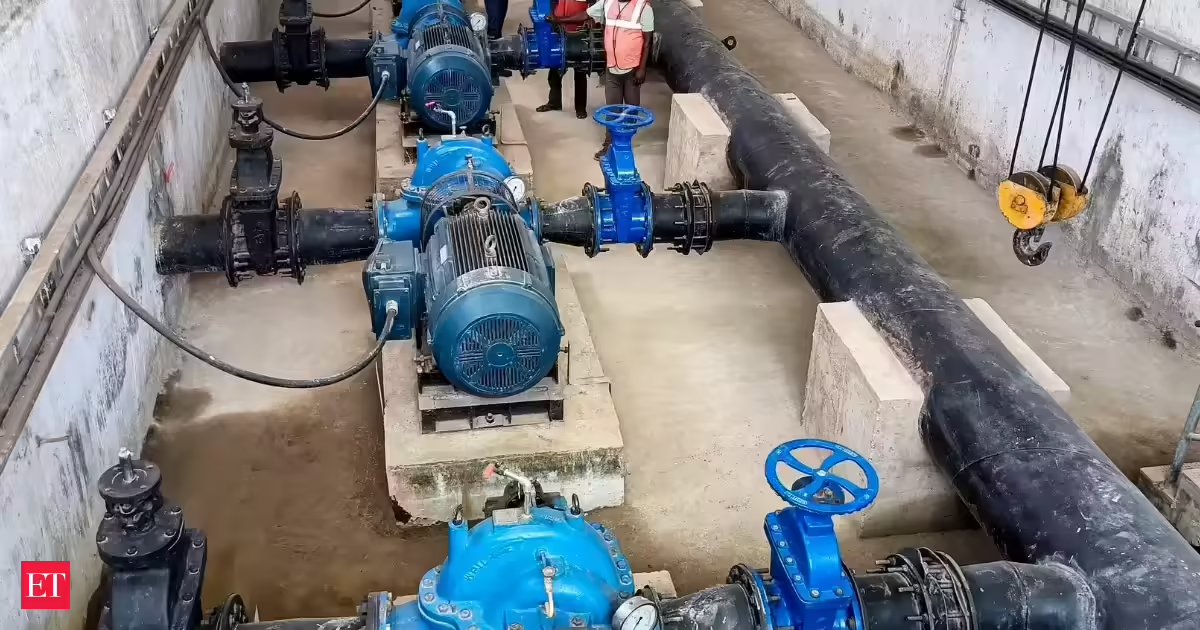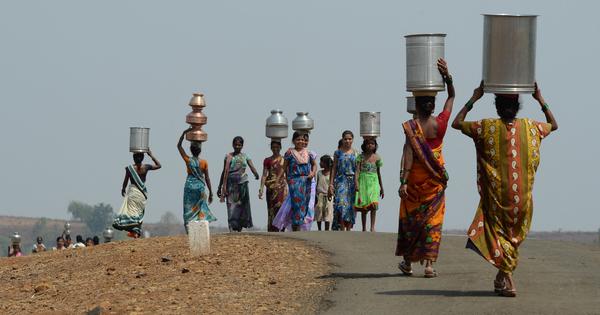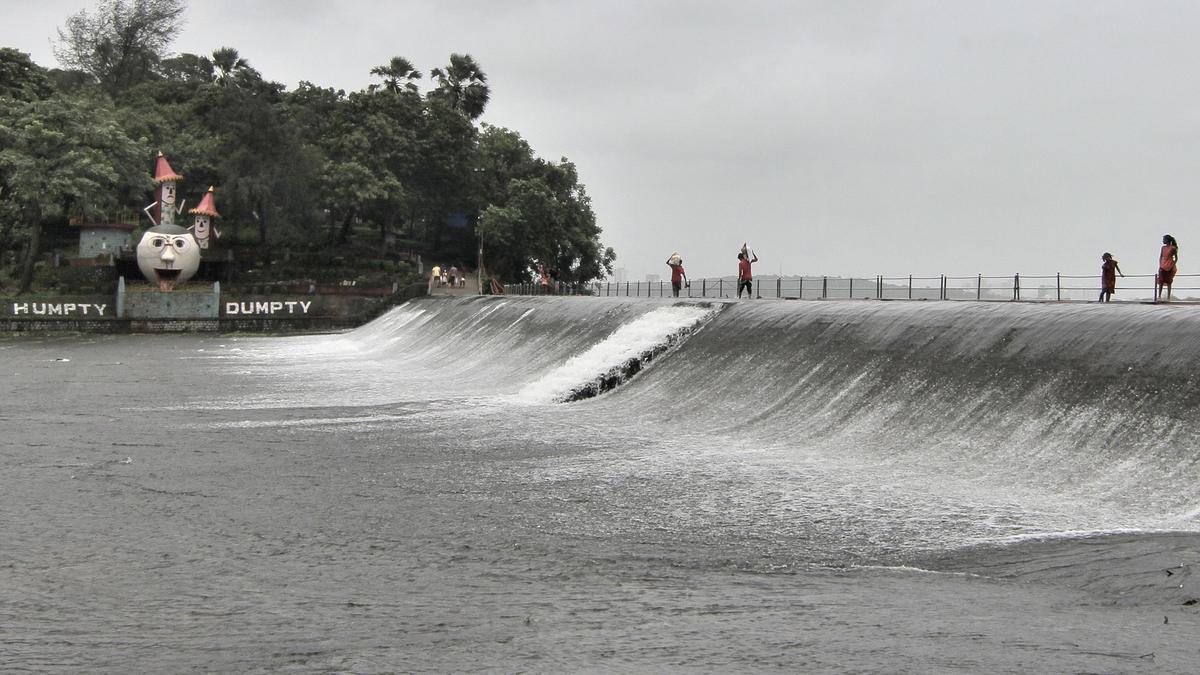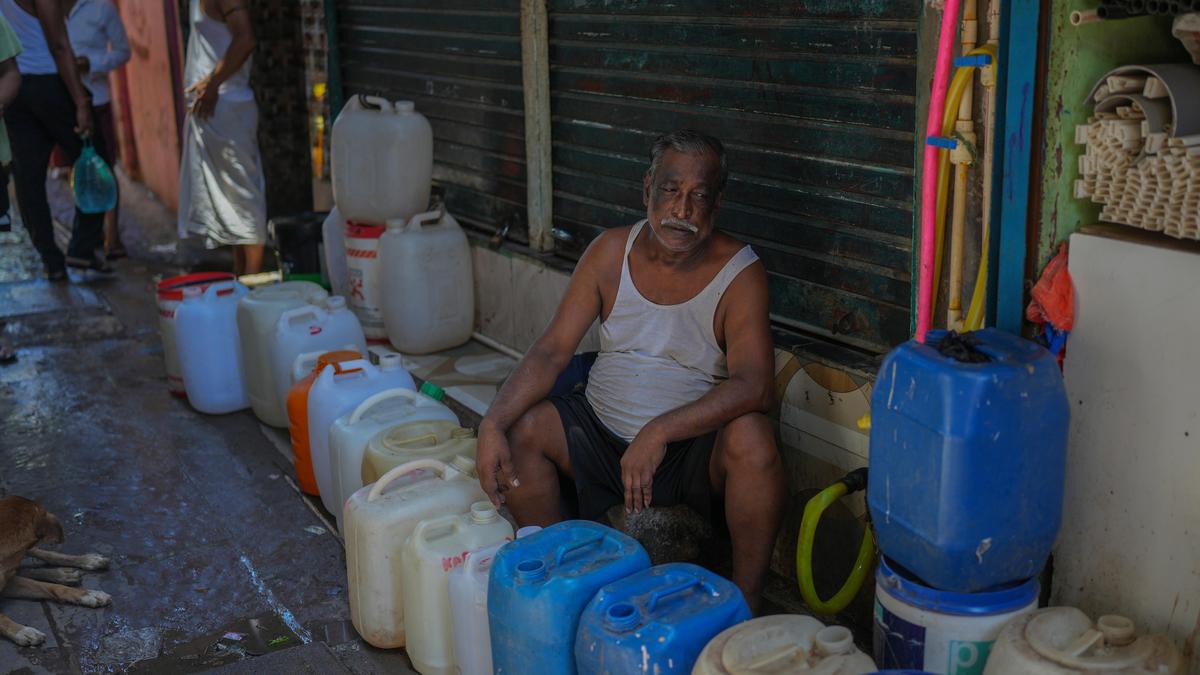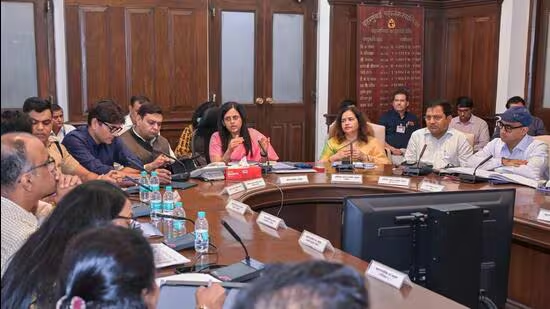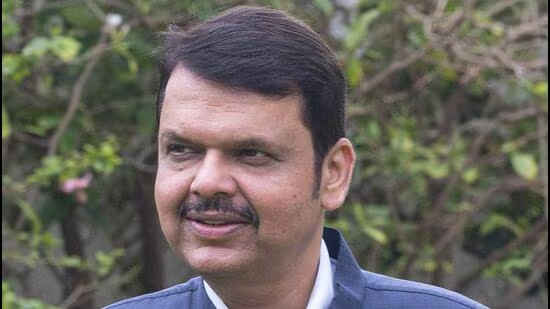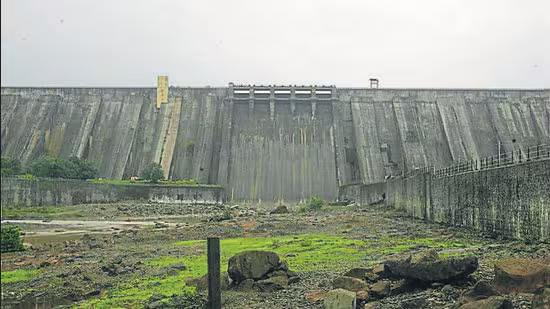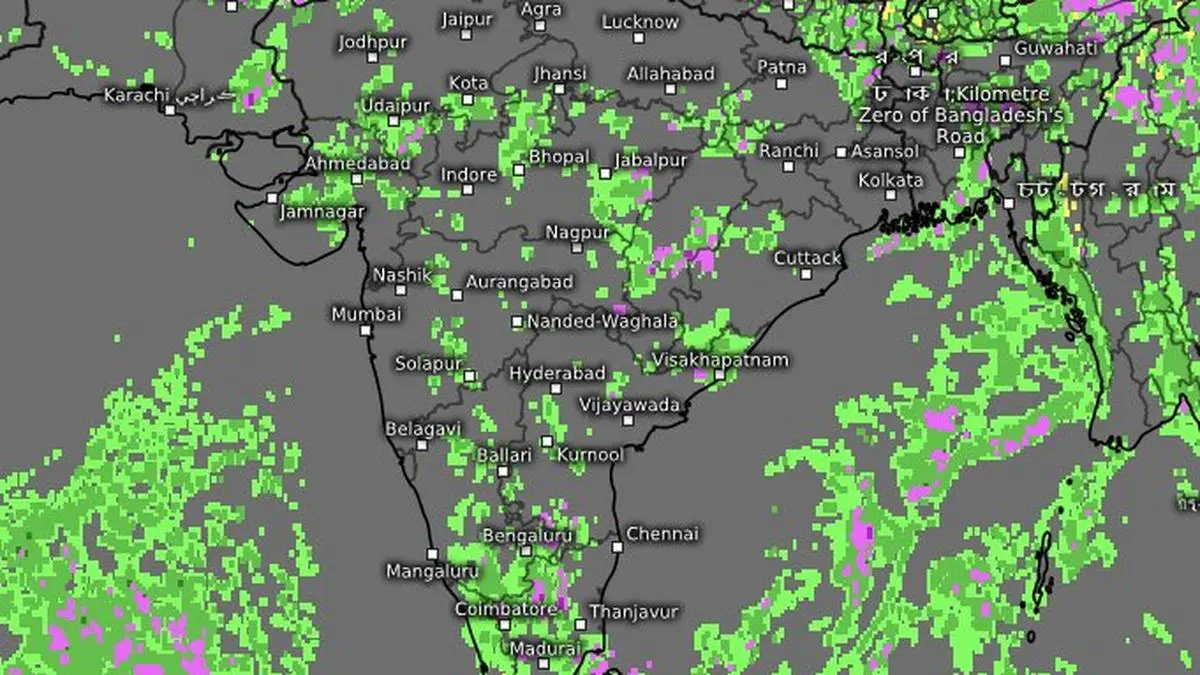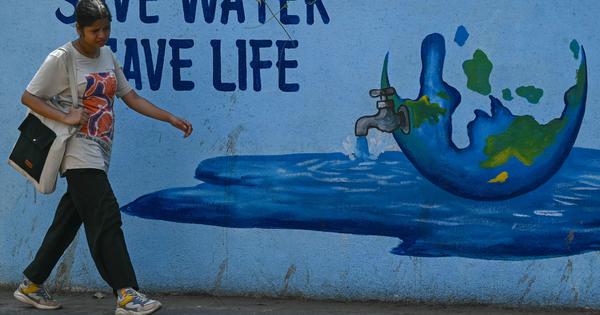
As Mumbai waits for the monsoon, water supply in the city has been cut by 10% since May 15, after water levels in the seven lakes that supply water, have fallen. The lakes depend entirely on seasonal rainfall to be filled, commonly causing water cuts in the summers.Adding to this situation, on June 7, the Mumbai Water Tanker Association went on strike. The strike was called off two days later following an intervention by Maharashtra’s Chief Minister Devendra Fadnavis.Mumbai receives around 4,100 million litres per day against an estimated demand of 4,665 MLD, leaving a shortfall of about 565 MLD. Private water tankers fill this gap.The tanker association was protesting against notices issued by the state government ordering ring-well and borewell operators to stop supplying water to tankers until they obtain fresh licenses from the Central Ground Water Authority.The tanker association protest has drawn attention to a larger issue: Mumbai’s heavy dependence on groundwater and the limited oversight of its extraction.Mumbai’s water demand exceeds its supply, increasing the city’s dependence on alternative sources such as water tankers. Image by Esha Lohia.“Mumbai has more than 17,364 wells used for the commercial sale of water,” says groundwater activist Suresh Kumar Dhoka, citing information obtained through an RTI application. In 2015, the National Green Tribunal made it mandatory for all commercial groundwater users to obtain No Objection Certificates from the Central Ground Water Authority. As of May 2025, only 619 wells, mostly borewells, had received No Objection Certificates for monitoring and charging purposes.Earlier this year, a complaint filed by Dhoka triggered an investigation into hundreds of wells in Mumbai’s western suburbs. Officials reported that 27 wells and borewells were extracting groundwater without a no objection certificate issued by the Central Ground Water Authority in R/C Central division.Extracting groundwater for commercial use without a No Objection Certificate violates groundwater rules and is punishable with a fine or imprisonment under the Environment Protection Act, 1986.Following the current protests by the water tanker association, Shiv Sena (UBT) leader Aaditya Thackeray echoed their concerns. In a June 9 letter to Union Jal Shakti Minister CR Patil, he urged the government to amend the Central Ground Water Authority’s norms for Mumbai and other densely populated cities, describing them as “impractical and highly restrictive” for water extraction.Groundwater dependencyHistorically, Mumbai relied on an extensive network of wells and tanks for its water supply. However, the commissioning of the Vihar water project in 1860 marked the city’s shift towards dams, pipelines and reservoirs managed by public authorities. Today, Mumbai draws water from seven lakes – Tulsi and Vihar within the city, and five others located in Palghar, Thane and Nashik districts.Despite this extensive system, the city faces a water deficit of about 565 MLD, which is filled by private water tankers. “There are 500 water tanker owners and 2,100 water tankers that operate in Mumbai. We supply around 550 MLD to Mumbai each day,” says Ankur Sharma, spokesperson of MWTA.These tankers primarily supply non-potable water to construction sites, malls, hotels, housing societies and other commercial users. While tanker owners purchase some water from the Brihanmumbai Municipal Corporation, they primarily rely on groundwater extracted through borewells.Experts say the issue extends beyond licensing violations. Sitaram Shelar, a right-to-water activist and convener of the Pani Haq Samiti, a people’s campaign for universal access to water, claims that tanker operators often purchase small parcels of land in areas with high water tables and install borewells to extract groundwater. According to him, almost every housing society in Mumbai has at least one borewell.Yet groundwater extraction remains poorly monitored. A Central Ground Water Board report on groundwater quality in Maharashtra records no monitoring borewells in Mumbai, and only six and 19 monitoring dug wells in Mumbai city and suburban areas, respectively. Shelar describes this as a “planned data gap”.He alleges that a nexus exists among borewell contractors, housing societies and some officials involved in granting permissions. “There is a nexus of borewell diggers, pest control officers (PCO) from the BMC and housing societies. The PCO permits the digging of a borewell, while the engineer’s job is to inspect the site. Still, often, many boreholes are rigged without applying the required permissions, and PCO informed us that they are not authorised to monitor these borewells, which are illegally extracting groundwater.”Environmental activist Zoru Bhathena points to another source of stress on groundwater resources. “Unlike earlier times, basements today are at least four floors deep under the ground. This requires dewatering the immediate construction area and its surrounding periphery. Amidst this density, the construction of hundreds of new sites at once is depleting the groundwater enormously.”Relentless concretisation across Mumbai has further reduced natural groundwater recharge by sealing permeable surfaces. Contamination and saline-water intrusion remain additional concerns.Groundwater has become an important part of Mumbai’s water supply, even as concerns grow over weak regulation and monitoring of its extraction. Image by Esha Lohia.“There is so much priority given to the infrastructure that there is hardly any space left in the city. There should be some limitations on infrastructure development and mandatory provision for rainwater harvesting,” says Sharma from Mumbai Water Tanker Association, on groundwater depletion in the city.Experts say the city lacks the institutional capacity needed to understand and manage its groundwater resources. In 1994, an expert committee on water planning, led by Madhav Chitale, recommended establishing a dedicated geo-hydrological unit within the municipal administration to scientifically monitor and manage groundwater. However, the Brihanmumbai Municipal Corporation is yet to establish such a unit.In 2017, the Groundwater Surveys and Development Agency was asked to assess groundwater conditions in Mumbai. Officials discussed conducting a year-long assessment with the Central Ground Water Board and sought data from the BMC, but the exercise never progressed beyond the planning stage, Dhoka claims.“The water supply department is predominantly shaped by civil engineers who approach and remain largely focused on the development, monitoring, and management of surface water resources. There is a need for hydrogeologists who can understand and map aquifers for sustainable monitoring and management of groundwater resources,” says Sachin Tiwale, a fellow at Ashoka Trust for Research in Ecology and the Environment who specialises in studying water governance-related issues. ATREE is a globally recognised non-profit organisation focused on environmental conservation.Aquifer mapping projectIn May 2025, the BMC launched its first aquifer mapping pilot in the upper catchment of the Mithi River. The long-term objective is to include groundwater management into Mumbai’s water resilience and climate adaptation planning.“The upstream catchment was selected strategically because springs and discharge zones are easier to identify in upper catchments, which helps establish aquifer flow patterns,” explains Deepti Talpade, Program Lead – Urban Development and Resilience, Sustainable Cities, WRI India. Aquifers are underground geological formations that store and transmit groundwater, she explains.The Mumbai Water Tanker Association went on strike over notices requiring ring well and borewell operators to obtain fresh licences from the Central Ground Water Authority (CGWA). Image by Esha Lohia.“Groundwater is invisible and therefore easily ignored. Any study on groundwater is incomplete unless you study aquifers,” says Himanshu Kulkarni, hydrogeologist and co-founder of the Pune-based non-profit Advanced Centre for Water Resources Development and Management. “Your entire perspective on groundwater changes when you study the aquifers because it isn’t fixated on the source but a larger system of groundwater and its connection to surface water bodies,” he adds.The Mumbai municipal corporation is carrying out the project with WRI India, Advanced Centre for Water Resources Development and Management and Pani Haq Samiti under the Environment and Climate Change Department, and the work aligns with India’s National Aquifer Mapping Programme. The year-long exercise is still in its early stages, but experts say it could help address critical gaps in understanding Mumbai’s groundwater systems. Talpade reports that the Central Ground Water Board has conducted macro-level surveys in rural settings across the Mumbai Metropolitan Region (MMR), but detailed, city-scale hydrogeological assessments remain limited.One of the major challenges for Mumbai is the influence of seawater on groundwater systems. Kulkarni says that generating scientific data is only part of the task. “Communicating the findings to different stakeholders and translating them into policy and action will be equally challenging. We also need to be sensitive to the concerns and knowledge of local communities.”However, experts caution that better data alone will not solve Mumbai’s groundwater problems. Dhoka says illegal groundwater extraction and unauthorised tanker operations continue openly across the city. “Without strict regulation, accountability and enforcement, even the best mapping exercises will not protect groundwater resources.”This article was first published on Mongabay.
Mumbai is emptying groundwater reservoirs to quench its thirst
As water levels plunge and the monsoon is delayed, the city is dependent on the unregulated tanker economy and borewells to meet its needs.
1,423 words~6 min read