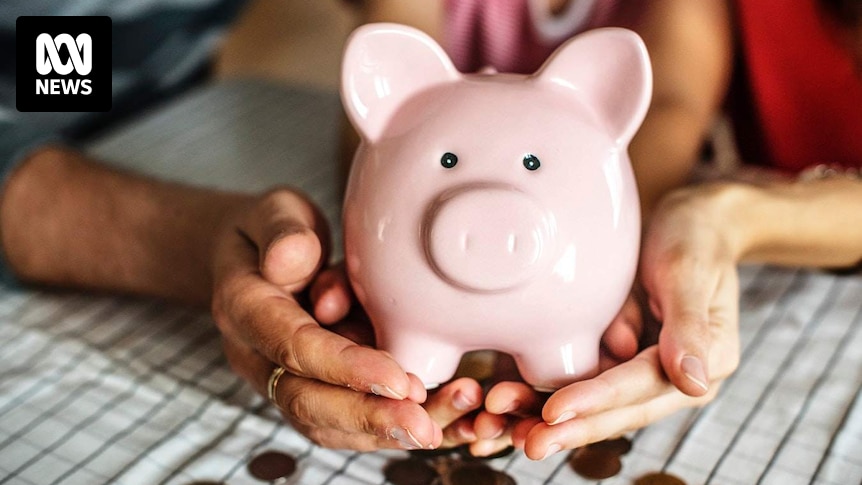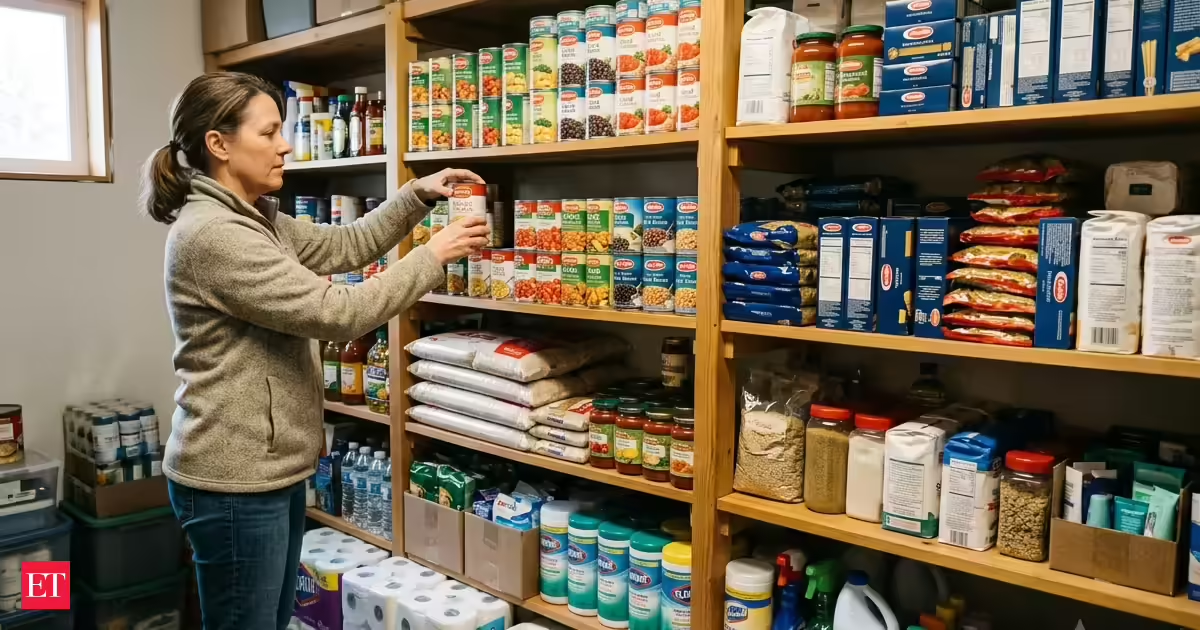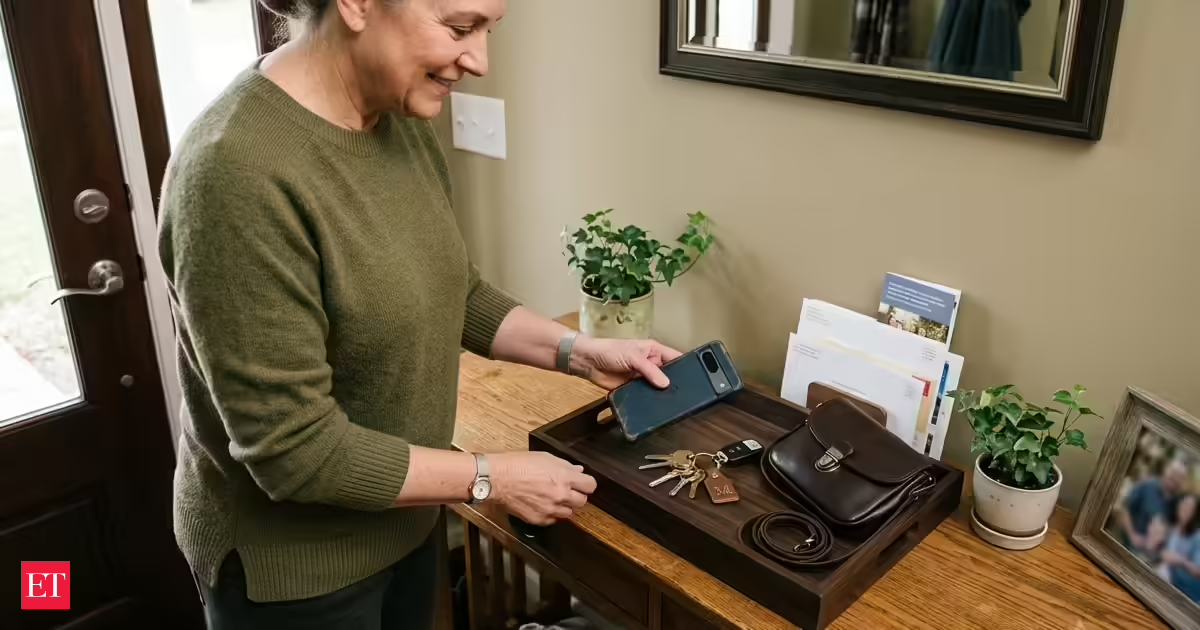
Keeping cash at home is sometimes treated as an outdated habit, especially in a world where payments can be made with a tap, a card, or a phone, but many people continue to keep a small amount of physical money tucked away in a drawer, envelope, or safe despite rarely using it. Research on uncertainty, perceived control, and financial resilience consistently shows that people feel less stressed when they believe they have options available during unexpected situations.For individuals who have experienced financial instability, service disruptions, delayed payments, or other forms of uncertainty, a cash reserve can be a simple way to create a sense of preparedness. The habit may look old-fashioned, but psychologically it often serves a very modern purpose: reducing the mental burden of not knowing what might happen next.A small cash reserve can feel reassuring even when it is never used | PexelsThe brain naturally tries to reduce uncertaintyOne of the strongest findings in modern psychology is that uncertainty can be emotionally demanding. Research published in journals indexed by PubMed has shown that uncertainty itself carries psychological costs because people must continuously evaluate possibilities without knowing which outcome will occur.This helps explain why a small cash reserve can feel reassuring even when it is never used. Money does not need to solve every problem to provide comfort, and its value often comes from reducing a single category of uncertainty. If a payment system fails, a paycheck is delayed, or an unexpected expense arises, the person already knows they have at least one option available. That certainty can make future disruptions feel more manageable before they even occur.Control has real psychological valueA 2025 longitudinal study examining daily stressors found that perceived control was associated with more successful resolution of everyday challenges across adulthood.Cash often serves as a tool of perceived control, allowing people to act rather than wait. If a problem arises, they have immediate access to resources that do not depend on internet connections, banking systems, passwords, or processing delays. The amount of money may be relatively small, but the psychological effect can be meaningful because it preserves a sense of agency. People generally experience stressful situations differently when they believe they still have choices available to them.Past instability can shape present habitsResearch published through PMC examining income volatility suggests that unpredictable financial circumstances can alter how people think about planning, saving, and preparedness.For many individuals, keeping cash at home is not a reaction to an imagined future disaster; it is a response to situations they have already encountered. Someone who has experienced delayed wages, unexpected expenses, banking interruptions, or periods of financial uncertainty may become more attentive to maintaining a backup. The behavior reflects learning rather than panic. Life has demonstrated that systems can occasionally fail, and the cash reserve serves as a practical response to that lesson.Preparedness often feels calmingPublic-health organizations have long recognized that preparedness can improve coping during stressful situations. Guidance from the World Health Organization notes that taking practical steps in advance can strengthen a sense of control and improve people’s ability to respond during emergencies.A household cash reserve fits neatly into that framework since it represents a small action taken before a problem occurs. The benefit is not only financial; it is also emotional. When people know they have prepared for at least some disruptions, uncertainty often feels less overwhelming. Instead of focusing entirely on what could go wrong, they can focus on what resources are already available if something does go wrong, and that shift in perspective can significantly reduce stress.Readiness can function as a broad adaptive response rather than a sign of panic | PexelsReadiness is different from fearOne reason the behavior is sometimes misunderstood is that preparedness and anxiety can appear similar from the outside, and both involve thinking about future problems; the difference lies in the purpose. Anxiety tends to focus on threats that feel uncontrollable, while preparedness focuses on actions that make those threats easier to manage. Research published in Psychophysiology examining threat predictability suggests that readiness can function as a broad adaptive response rather than a sign of panic. Keeping cash at home often falls into this category. The person is not necessarily expecting something bad to happen tomorrow; they simply prefer having a backup available if plans change unexpectedly. The habit is therefore better understood as flexibility than fear.Research on uncertainty, perceived control, financial resilience, and preparedness points toward the same conclusion: people generally feel calmer when they know they have options. A small cash reserve provides one of those options. For individuals who have lived through periods of instability or disruption, the habit can create a sense of readiness that extends beyond the money itself. It serves as a reminder that if circumstances change suddenly, there is still a way forward. That feeling of preparedness is often what people are really protecting, and psychologically, it can be worth far more than the cash alone.
Psychology suggests people who keep cash in the house aren’t paranoid; they’re protecting a sense of readiness because certainty feels calming when life has been unpredictable before
Having a little cash tucked away at home can be incredibly reassuring. It prepares individuals for life's little surprises and reduces daily financial pressures. This practice often stems from personal experiences with financial uncertainty, transforming anxiety into a sense of empowerment. Rather than letting fear dictate their actions, savvy savers choose to be ready for anything that comes their way.
820 words~4 min read