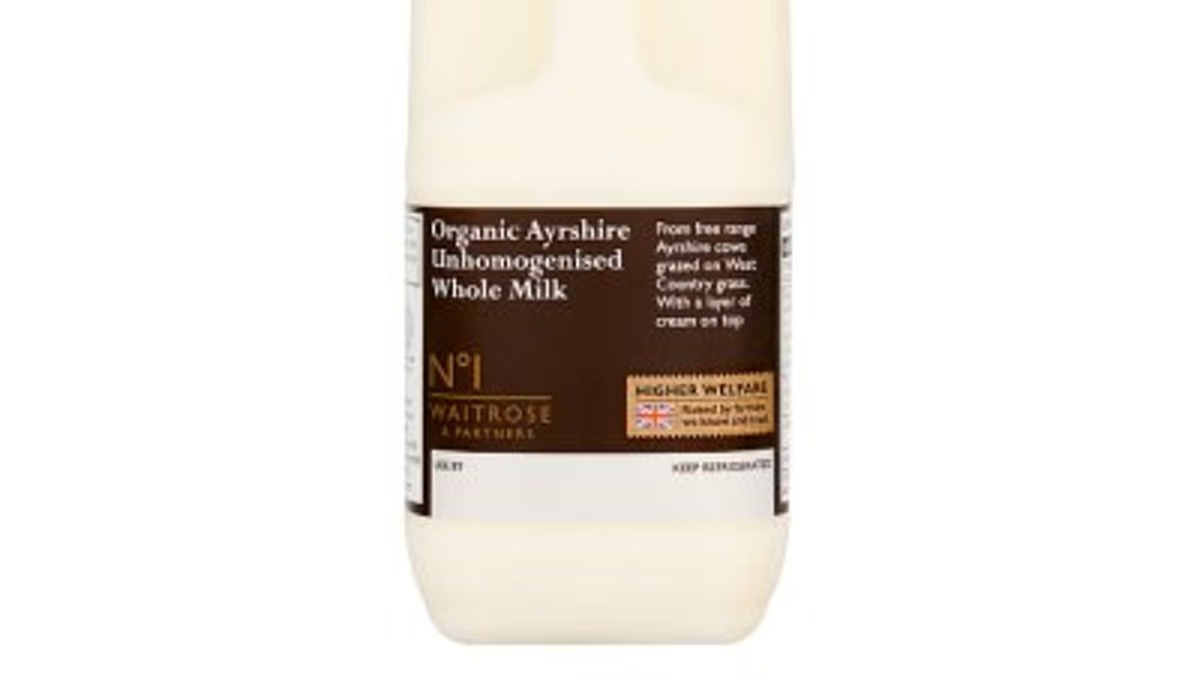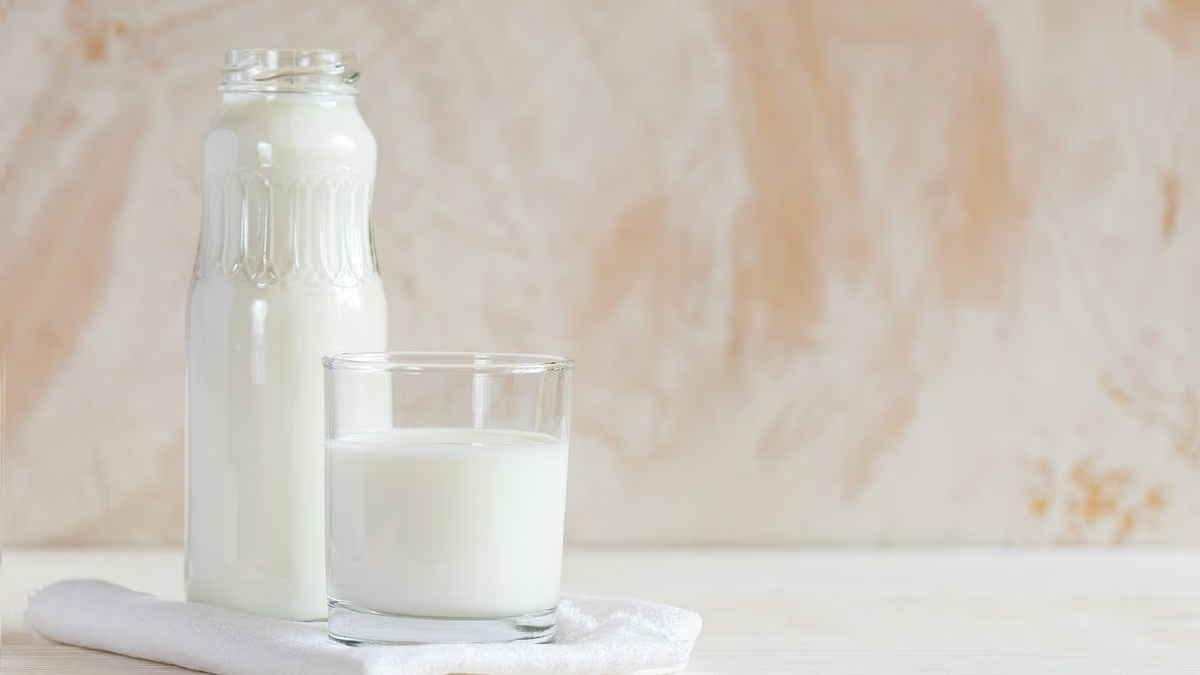
Supermarkets are reporting a surge in Britons now opting for the latest trendy milk – and it's not soy, oat or almond.Unhomogenised milk is flying off the shelves, with Waitrose reporting a 34 per cent rise in sales in the last year.Milk is homogenised by pushing it through a fine nozzle under intense pressure, which smashes the natural fat into tiny droplets, distributing them evenly throughout the liquid.As fats aren't broken down, the cream naturally rises to the top of the bottle, giving the milk a creamier taste and texture.Consumer experts say that the thirst for this untreated milk is driven by health conscious shoppers - but one leading nutritionist tells the Daily Mail that the only benefit is its creamy taste.'From a nutritional perspective, unhomogenised and homogenised whole milk are virtually identical,' says Rob Hobson registered nutritionist and author of the Low Appetite Cookbook.'They both provide similar amounts of protein, calcium, iodine, vitamin B12, riboflavin and other key nutrients. The main difference is texture and appearance rather than nutritional value.'Compared with semi-skimmed or skimmed milk, unhomogenised whole milk will generally contain more fat and therefore more calories, but that reflects the fat content rather than the lack of homogenisation.'Forget almond, soy, or oat – Britain has gone crazy for unhomogenised milk A single glass of milk contains high–quality protein to support muscles and calcium to keep bones and teeth strong.What's often overlooked is that milk is also packed with a range of essential vitamins and minerals that support the body in less obvious ways.It's a key source of vitamin B12, which helps keep the nervous system healthy and supports red blood cell production - vital for energy levels and concentration.Milk also contains iodine, a mineral many people don't realise they're low in, which plays a crucial role in metabolism and brain function.Those behind the unhomogenised milk craze, claim that on top of that there is an additional benefit from it not being ultra-processed.Dan Robinson, Food Processing Manager at the Leckford Estate - Waitrose's dairy farm - said: 'We believe this surge in popularity is being driven by a desire for whole foods and a growing awareness of ultra–processed foods (UPFs).'Many customers are now seeking the "brilliant basics" and embracing a simpler, more natural approach to their diets.'However nutritionist Mr Hobson believes that although this may be driving consumer habits it stems from a misunderstanding from shoppers.'The problem is that this perception can sometimes become mixed up with the assumption that less processed automatically means healthier, which isn't always right,' he says.'People often view unhomogenised milk as the opposite of a highly processed food, but homogenisation is simply a mechanical process that changes the size of fat globules. 'It doesn't fundamentally alter the nutritional profile of the milk.' Most milk goes through a process known as 'homogenisation', in which it is pumped through small gaps at high pressure to distribute the fat globules within the milk, preventing separationMost milk goes through a process known as 'homogenisation', in which it is pumped through small gaps at high pressure.This process distributes the fat globules within the milk, preventing it from separating.Crucially, this is different to pasteurisation, which involves heating the milk before quickly cooling it, to kill off any harmful bacteria.Some have claimed that as a result it has an added benefit to the gut microbiome.'This is where many of the claims have become quite exaggerated. There is very little evidence that unhomogenised milk offers meaningful gut health benefits compared with homogenised milk,' says Mr Hobson.'Some advocates suggest it is easier to digest because the fat globules remain in their natural form, but research has not consistently shown better digestion, improved tolerance or superior gut health outcomes. Some studies have actually suggested homogenised milk may be digested just as well, if not more efficiently.'So experts do not believe it is worth splashing out for the pricier milk on health grounds, with four pints of its Duchy Organic Unhomogenised Whole Milk coming in at £2.65 while four pints of Waitrose's Essential British Free Range Semi–Skimmed Milk is priced at £1.75.The latest craze for unhomogenised milk bucks the trend of a decline in dairy drinkers in Britain.Currently in Britain nearly one in every ten glasses of milk drunk is a plant based alternative - just a decade ago, the figure was one in a hundred.Britons used to sink five pints of milk a week back in 1974, more than double the current average intake of around two pints.
What's the truth about unhomogenised milk? And is it healthy?
Unhomogenised milk is flying off the shelves, with Waitrose reporting a 34 per cent rise in sales in the last year. But is it really better for you?
744 words~3 min read