Whether meat, cheese or yoghurt, many of us, aware of the health risks associated with overly processed food, are seeking simpler alternatives. Now milk has been added to the list.
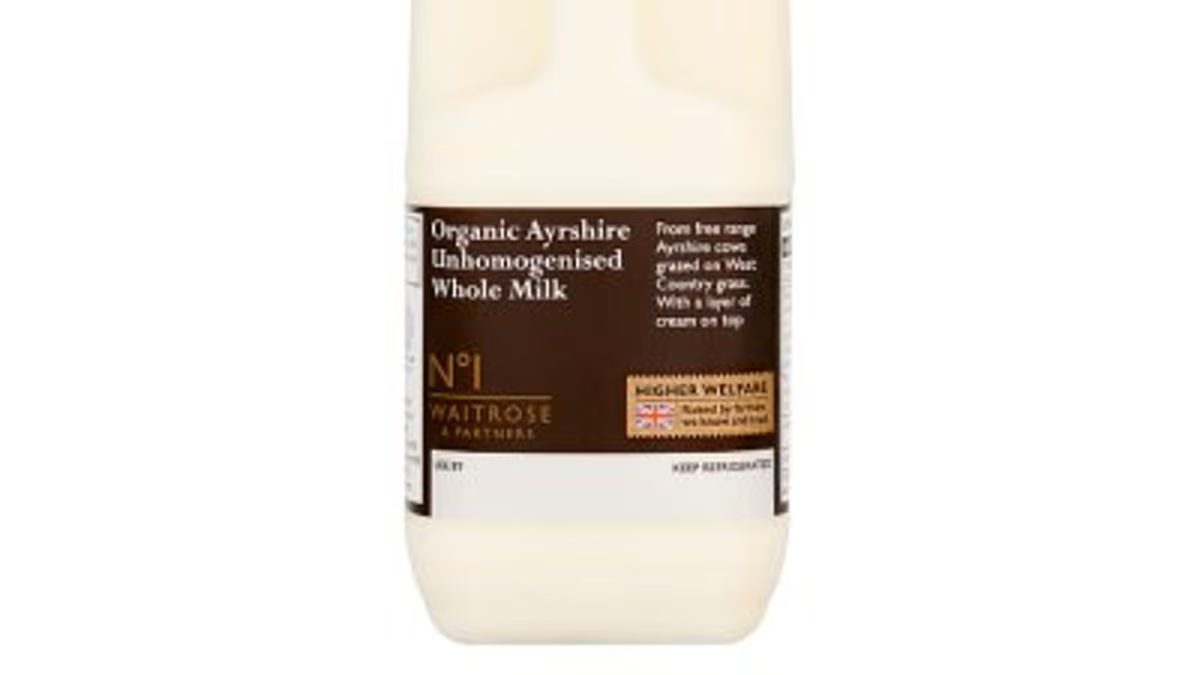
Recently, Waitrose recently revealed sales of its unhomogenised milk – not mechanically processed to break up the fat globules, so the cream naturally rises to the top – surged by 34 per cent last year, with searches for “unhomogenised milk” on its website increasing by 200 per cent.
Dan Robinson, food processing manager at the Leckford Estate, which processes Waitrose’s milk, said the rise in popularity was driven by both its “delicious” taste and “a desire for whole foods”.
Certainly, at over twice the price of homogenised milk – one litre of Waitrose’s unhomogenised milk costs £1.95, while four pints (2.3 litres) of its Essential semi-skimmed costs £1.75 – it’s not driven by a desire to cut down on supermarket bills.
So how exactly is unhomogenised milk different? And are there actually any health benefits?