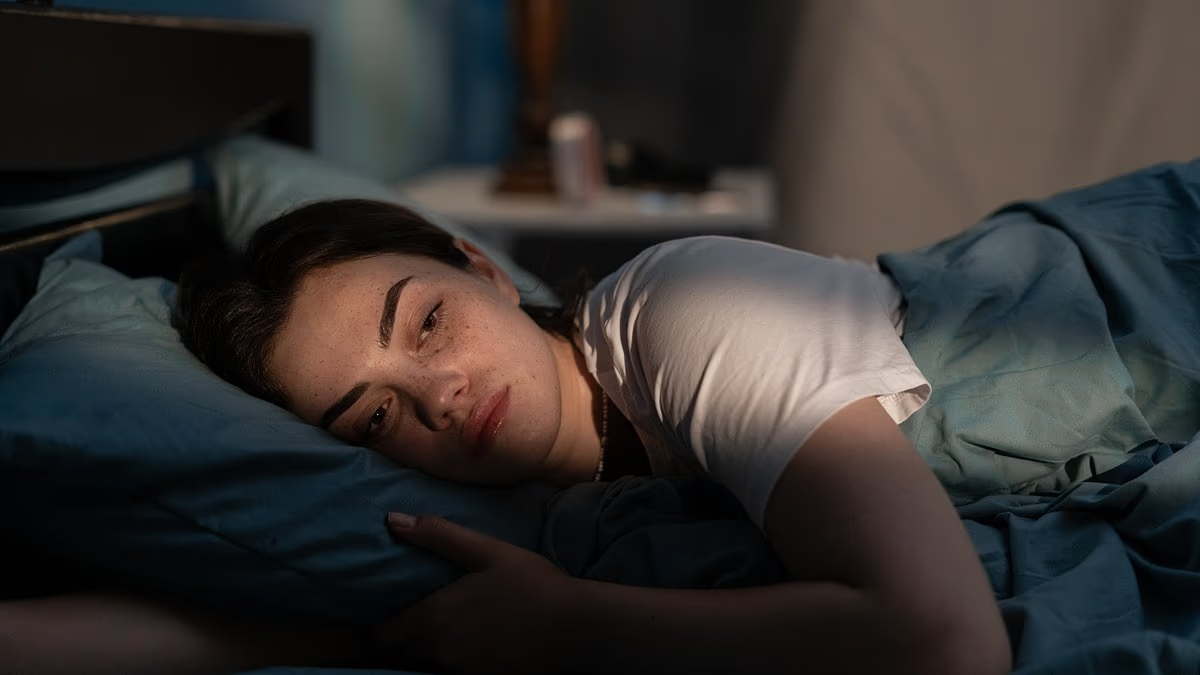
Most people can easily identify moments that bring them joy, like a beautiful sunset, receiving a gift, a heartfelt hug, enjoying intimacy or diving into a swimming pool on a hot day. But for people living with anhedonia, these experiences elicit little or no sense of pleasure.
Psychologist Faith Nyoike says that anhedonia is the inability to experience pleasure from activities that would normally be enjoyable. People with anhedonia can partake in activities, but they don’t feel them at all.
Anhedonia is linked to disruptions in the brain's reward pathways that involve dopamine, a neurotransmitter that brings about motivation, pleasure, and reward. The brain of a person with anhedonia does not secrete dopamine properly, so whatever experience they are going through is not enjoyable.
As a result, activities that once brought satisfaction start to feel meaningless or emotionally empty. Eventually, they stop engaging in them altogether because the expected reward never arrives.
Faith notes that the condition can be confused with depression since both involve diminished emotional wellbeing. However, while depression involves prolonged sadness, hopelessness, and low energy, anhedonia specifically affects the brain's ability to experience pleasure.