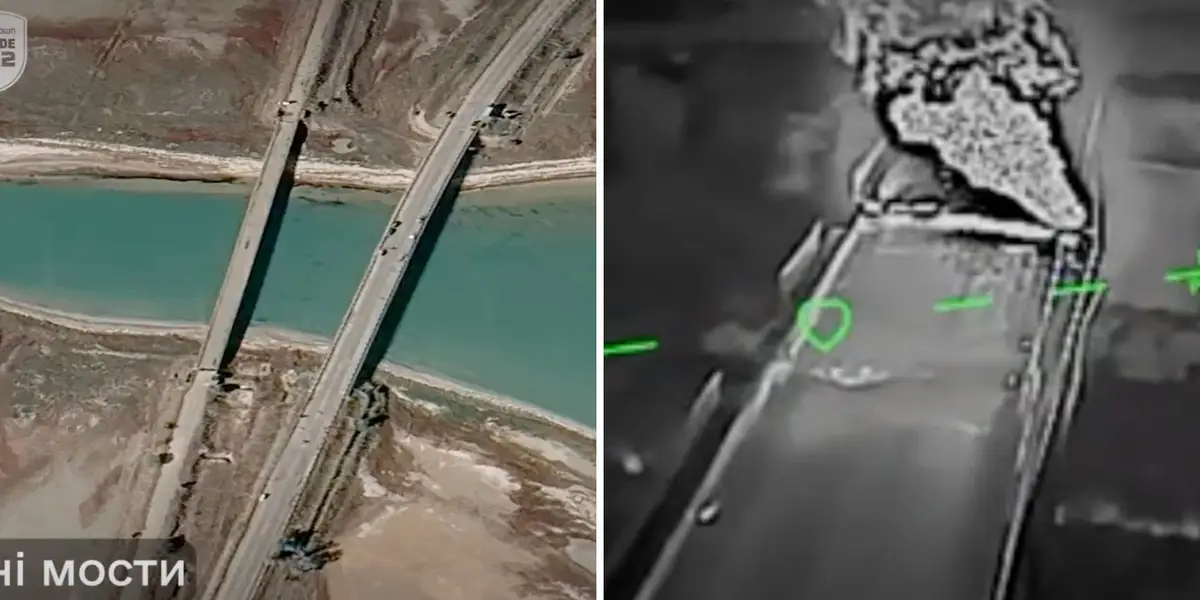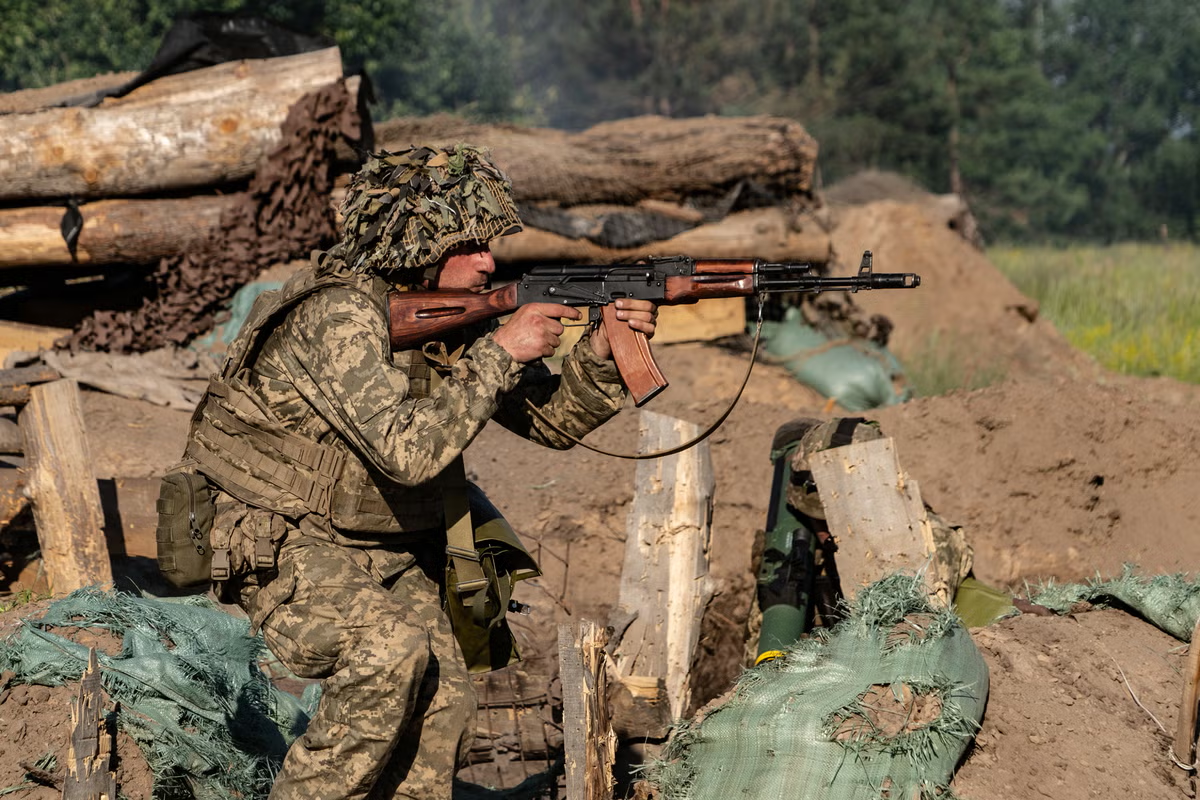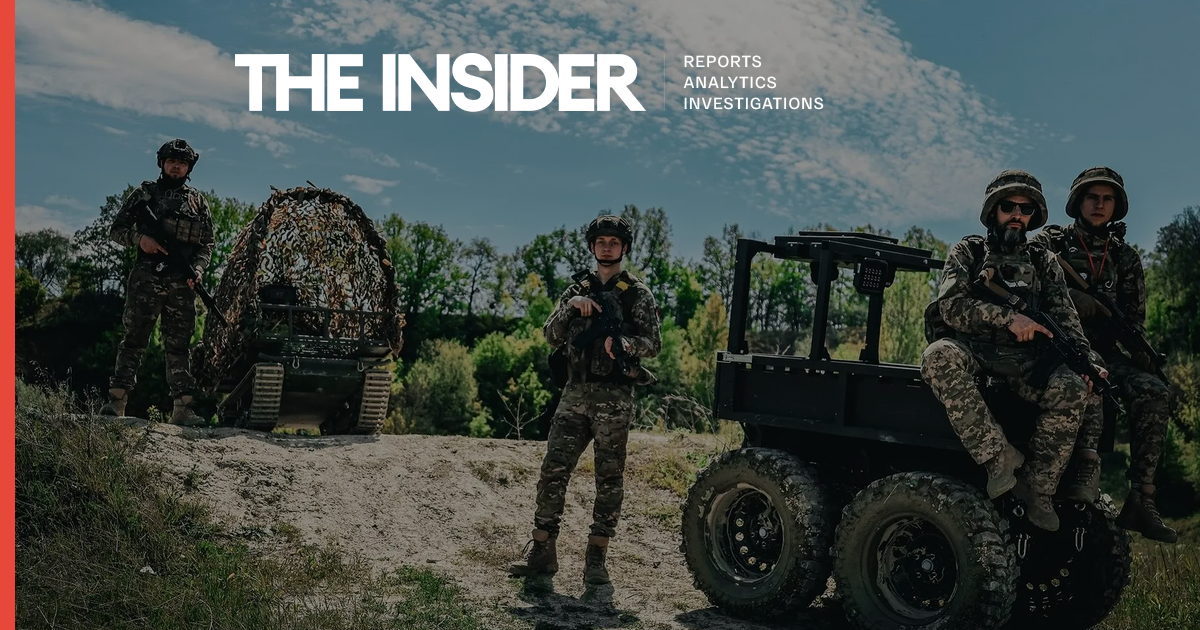
On June 4, 2023, Ukraine launched a counteroffensive. In military terms, the southern thrust was supposed to be the main effort, and its aim was to break Russia’s “land bridge” connecting mainland Russia to occupied Crimea. The operational concept focused on advancing south through western Zaporizhzhia Oblast – primarily from the Orikhiv axis toward Tokmak and ultimately Melitopol on the Sea of Azov.JOIN US ON TELEGRAMFollow our coverage of the war on the @Kyivpost_official. Ukraine had defined four objectives for the southern thrust: Capture Tokmak: Tokmak was a critical Russian logistics and rail hub. Taking it would disrupt Russian command, supply, and reinforcement routes in southern Ukraine. Advance to Melitopol, or the Azov coast: Reaching Melitopol would effectively sever the Russian-controlled corridor between mainland Russia, occupied southern Ukraine, and Crimea. Isolate Crimea operationally: Crimea depended heavily on the land corridor for logistics, fuel, ammunition, and troop movements. Even without fully reaching the coast, advancing far enough south could place key Russian infrastructure within artillery and missile range, making Russian logistics unsustainable. Split Russian forces in the south: Severing the land bridge would have divided Russian troops west and east of the breakthrough, complicating Russian operational coordination and potentially creating conditions for later offensives toward Crimea or Kherson. While the 2023 counteroffensive did not completely fail – Ukraine liberated villages and degraded Russian capabilities – it failed to achieve its central strategic objective: breaking through to the Sea of Azov and severing Russia’s land bridge to Crimea. The failure had multiple causes. Russia was given seven months to build one of the densest defensive systems seen in Europe since World War II – an extensive network of trenches, anti-vehicle ditches, anti-personnel and anti-vehicle mines, razor wire, and dragon’s teeth, the truncated reinforced-concrete pyramids used to stop main battle tanks and mechanized infantry and channel them into artillery kill zones. Ukraine lacked critical capabilities. It lacked not only air superiority but air support. It lacked layered air defense to counter Russia’s air power. It lacked mine-clearance capabilities. Western equipment arrived late and in insufficient quantities, leaving Ukraine without enough armored mass for a sustained breakthrough.
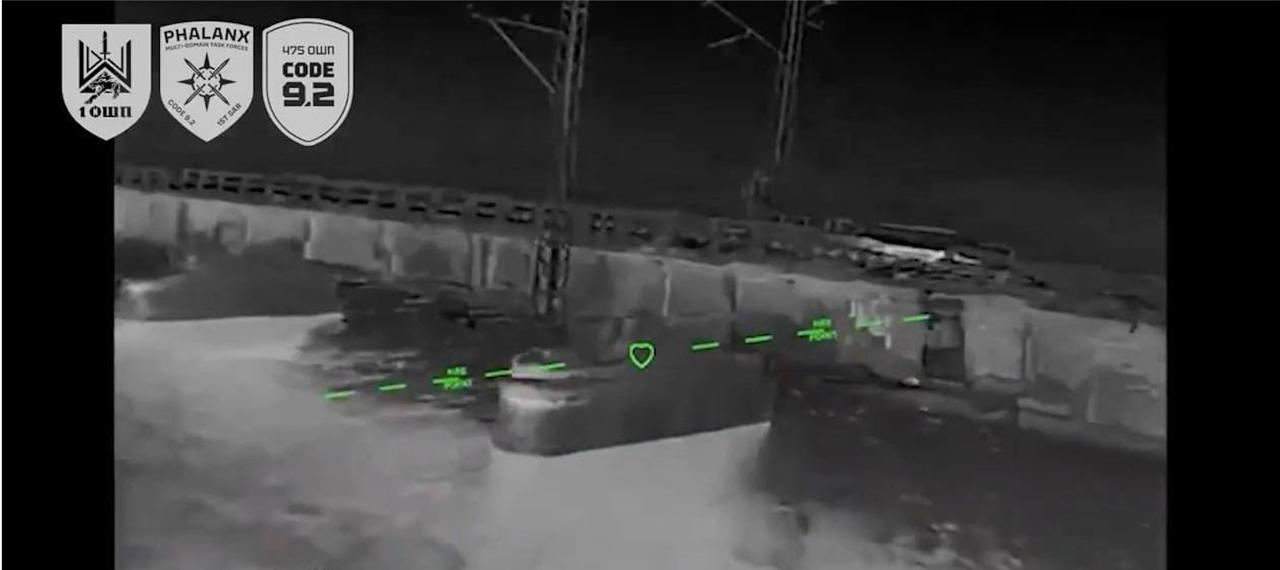
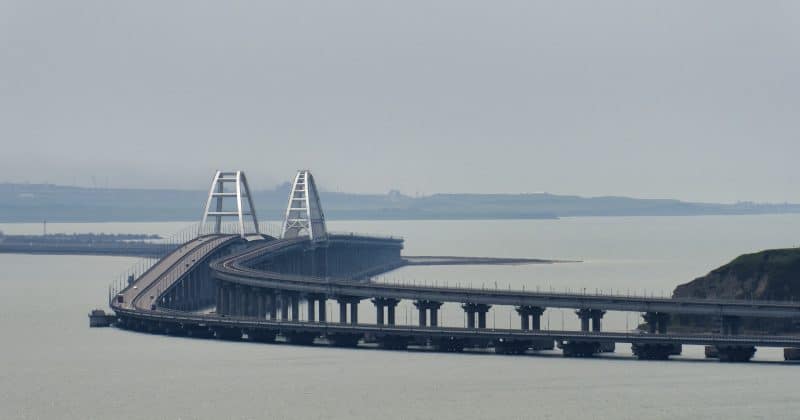
Ukraine Couldn’t Break Russia’s Land Bridge With Tanks – Now Drones Are Doing the Job
In 2023, armor failed to reach the Sea of Azov. In 2026, the lever isn’t ground – it’s the lower airspace over Russia’s only road to Crimea.
2,518 words~11 min read