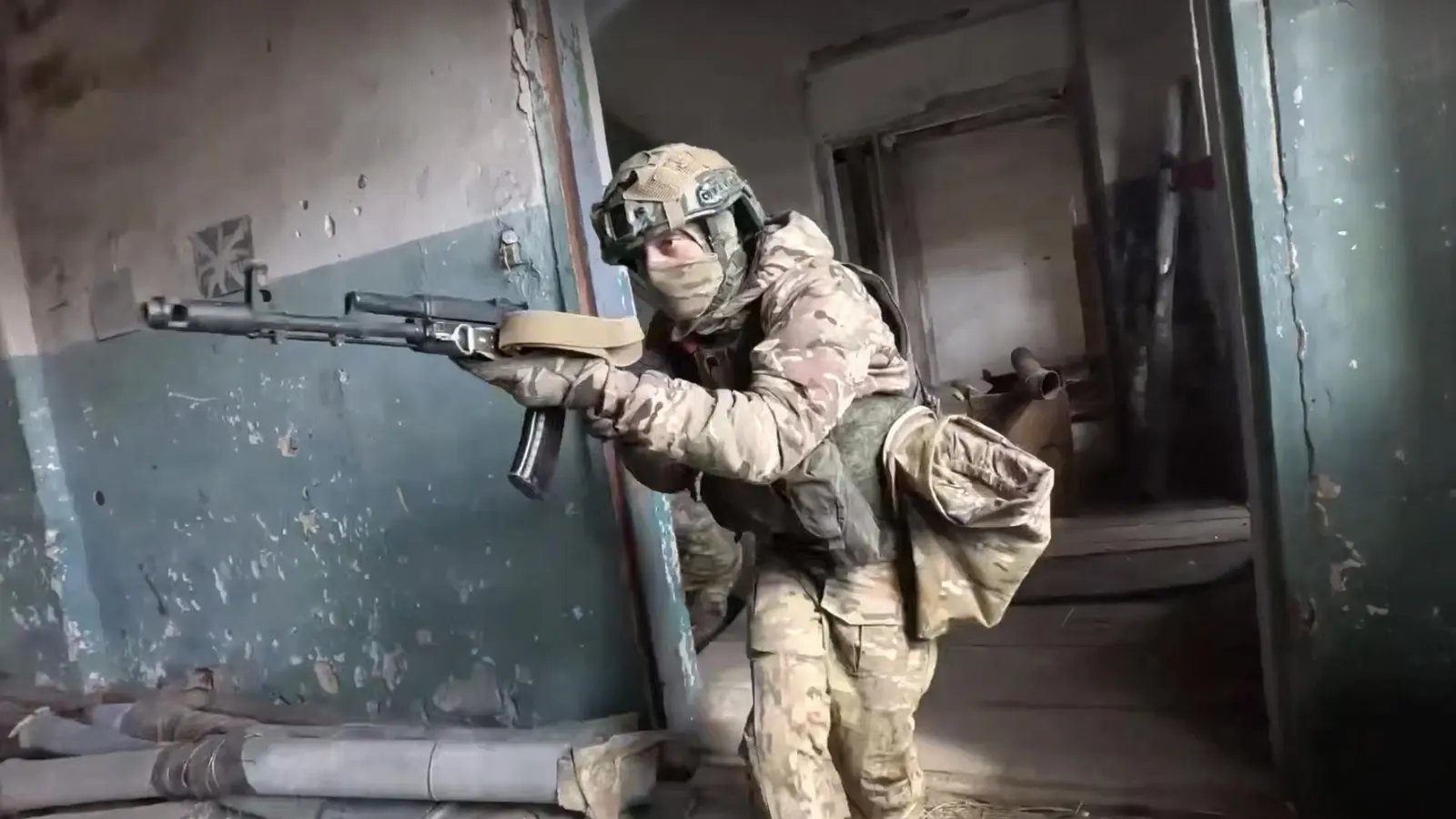
Image captured from video posted on Telegram by the Russian Ministry of Defense on April 18, 2026. The video shows an assault detachments of the 20th Combined Arms Army conducted training in urban operations.Social Media CaptureRecent reports from Ukraine indicate that Russian forces are losing ground to the ongoing Ukrainian counteroffensive. This shift in battlefield dynamics has been attributed to Ukrainian "kill zones," regions in front of Russian lines that are heavily patrolled by Ukrainian drones tasked with detecting and destroying any Russian incursion. These kill zones prevent Russian forces from employing the massed formations common to their doctrine, forcing them to adopt new tactics. Recent videos posted on Telegram by the Russian Ministry of Defense indicate a new set of Russian tactics in which soldiers infiltrate these kill zones in small groups around Ukrainian-held positions. They use these infiltration sites to establish localized drone superiority. Russian forces then assault Ukrainian positions with multiple small units attacking from different directions under the cover of drone support. Although the Russian Ministry of Defense claims some success with this approach, it is unlikely to reverse the broader trends shaping the war.Russian Infiltration Tactics And Establishing Drone Corridors Inside Ukrainian Kill ZonesWhile kill zones are often perceived as a modern no-man’s-land, a region that neither side controls spanning the area between the Russian and Ukrainian lines, their implementation is more complex. Given the resource and manpower constraints of the war, Ukraine has focused its kill zones along key Russian avenues of advance, particularly those leading toward major objectives such as Kostyantynivka, Kupyansk, and Orikhiv. Within these areas, Ukraine still retains control of several key towns, which are further protected from Russian assault by the surrounding kill zones. For example, Ukrainian forces continue to hold Ivanopillya, a small town within the kill zone that blocks the Russian avenue of approach to Kostyantynivka.Over the past several months, Russia has conducted a large number of infiltration missions into these kill zones around towns still held by Ukrainian forces. The infiltration teams typically consist of two to three soldiers, a size that Russian forces have found can enter the kill zone without being detected. These small teams move quickly, using urban terrain or forested environments for cover and concealment. Once a team reaches its designated position, it establishes a forward outpost in a location that offers some protection from drones. From these outposts, the soldiers are able to launch their own drones.Image captured from video posted on Telegram by the Russian Ministry of Defense on June 6, 2026. The video shows a small assault unit moving in to take control of Shevchenko in the Kharkiv region.Social Media CaptureRussia has deployed numerous teams in this manner, gradually scattering outposts throughout the kill zone. The Institute for the Study of War has reported that, in the course of advancing towards Kostyantynivka, Russian forces infiltrated the southeastern portion of the city and its suburbs, pushing 2 to 4 kilometers ahead of their assessed lines. Collectively, these outposts create what can be termed a "drone corridor," in which Russian drones effectively control the airspace. These drones perform multiple functions, including hunting down Ukrainian drones, identifying Ukrainian defensive positions, and providing overwatch for additional infiltration teams moving forward.MORE FOR YOUOnce a Russian unit has established these drone corridors, it launches an assault on the Ukrainian-controlled town. Armor remains vulnerable, so these attacks are primarily conducted by dismounted infantry, though ATVs and motorcycles may also be employed. Russian troops attack from multiple directions, advancing along routes protected by the drone corridors. These corridors limit Ukraine’s ability to pinpoint Russian positions for artillery strikes or strike drones. The assaulting forces move quickly into the town in an effort to overwhelm the defenders. Because these positions are often held by relatively small Ukrainian garrisons due to the challenges of resupply, Russian forces that reach the town in sufficient numbers are likely to capture it. The Tactical Integration Of Drones Into Assault OperationsThe Russian Ministry of Defense has posted several videos on Telegram over the past few weeks showing different Russian units executing these tactics to capture Ukrainian-held towns. The videos tend to also highlight that in every case, the assault units are accompanied by drones. One video features a Russian platoon leader describing the capture of Huliaipilske near Orikhiv, where the three assault elements were all "escorted" by drones. Another video shows a Russian regimental deputy commander describing the role of drones in providing cover and support during an assault on Volokhovka in the Kharkiv region. A third video shows Russian drones striking Ukrainian targets and directing artillery fire in support of an infantry assault into Shevchenko.Image captured from video posted on Telegram by the Russian Ministry of Defense on June 11, 2026. The video a unit from the Vostok Group's conducting an assault in the Zaporozhye region. As they conduct the assault, a drone operator is providing them real-time support.Social Media CaptureThis integration of drones at the small-unit level has even been featured in training videos posted by the Russian Ministry of Defense. One recent video shows marines from the Sever and Tsentr groups training for assaults against Ukrainian fortified positions, with drones integrated into the assault force to provide reconnaissance and fire support. These videos suggest that drones are becoming more deeply integrated into Russian tactical assault operations.While drones have long played an integral role in Russian operations, they have traditionally been used for artillery spotting and precision-strike missions. However, in this case, they are being integrated directly into small-unit assaults. These drones provide real-time reconnaissance, giving Russian troops an additional set of eyes above ground level to identify Ukrainian defensive positions, particularly those concealed within buildings. They also offer a direct strike capability that can be used to suppress or destroy Ukrainian fighting positions ahead of the assault force. By integrating drones directly into the assault, Russian forces mitigate many of the traditional advantages held by defenders in urban terrain.The Effectiveness Of These TacticsAlthough the videos posted by the Russian Ministry of Defense show a degree of success with these tactics, including the capture of the towns of Komsomolskoye and Shevchenko, they are unlikely to produce the breakthrough Russian forces are seeking. Even after Russian troops capture a town, they remain within the broader Ukrainian kill zone, leaving them vulnerable to Ukrainian artillery and drone strikes. Nevertheless, these tactics may enable Russian forces to capture some of the settlements required en route to larger operational objectives.Image capture from a video posted on Telegram by the Russian Ministry of Defense on June 10, 2026. The video shows paratroopers training on assaulting positions as small teams.Social Media CaptureUkraine will naturally develop counters to these new tactics, as it has done throughout the war. Increased drone production will allow kill zones to be more extensively patrolled, reducing the effectiveness of Russian infiltration teams. Ukraine is also advancing its electronic warfare and jamming capabilities to degrade the effectiveness of Russian drones. At the same time, it is improving logistics and resupply methods, including the use of ground robots, to sustain these forward positions and improve their ability to withstand Russian attacks.During the early phases of the war, battlefield dynamics were often shaped by technological innovation, particularly the rapid rise of drones and electronic warfare systems. However, as the war continues, tactical innovation has become increasingly important. Success on the battlefield now depends on which side can best adapt its tactics to exploit its technological and military advantages. In this case, Russia is attempting to leverage its larger military and growing drone capabilities to penetrate Ukrainian kill zones and seize forward positions.
Russia Adopt New Infantry Tactics In Attempt To Regain Momentum
Russia is using small-team infiltrations and drone corridors to penetrate Ukrainian kill zones, but these tactics are unlikely to deliver a decisive breakthrough.
1,265 words~6 min read