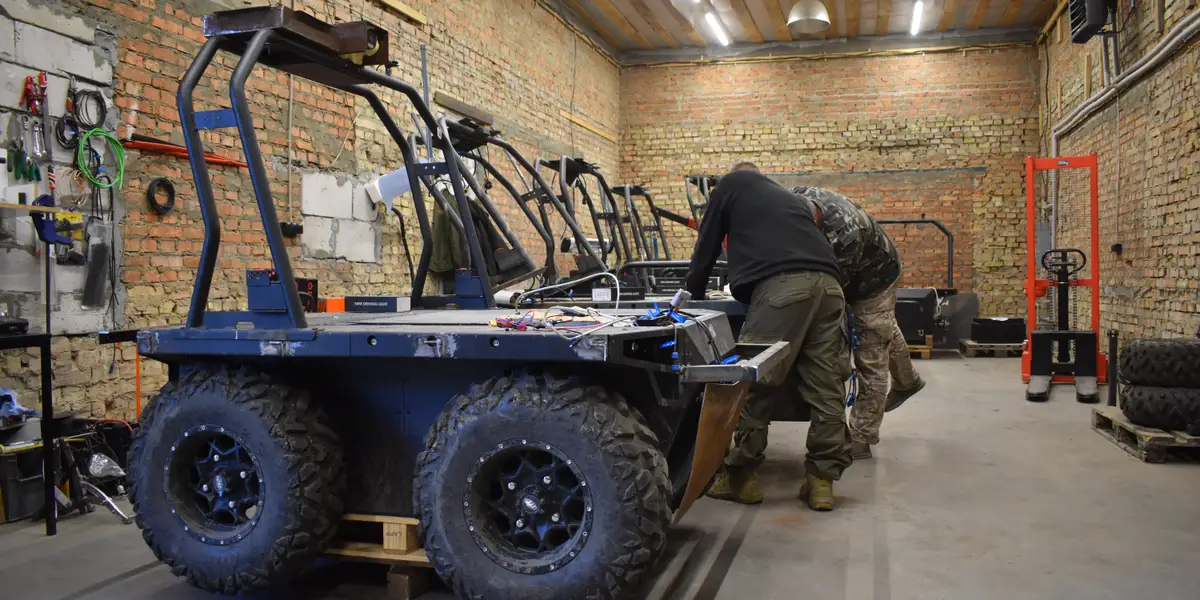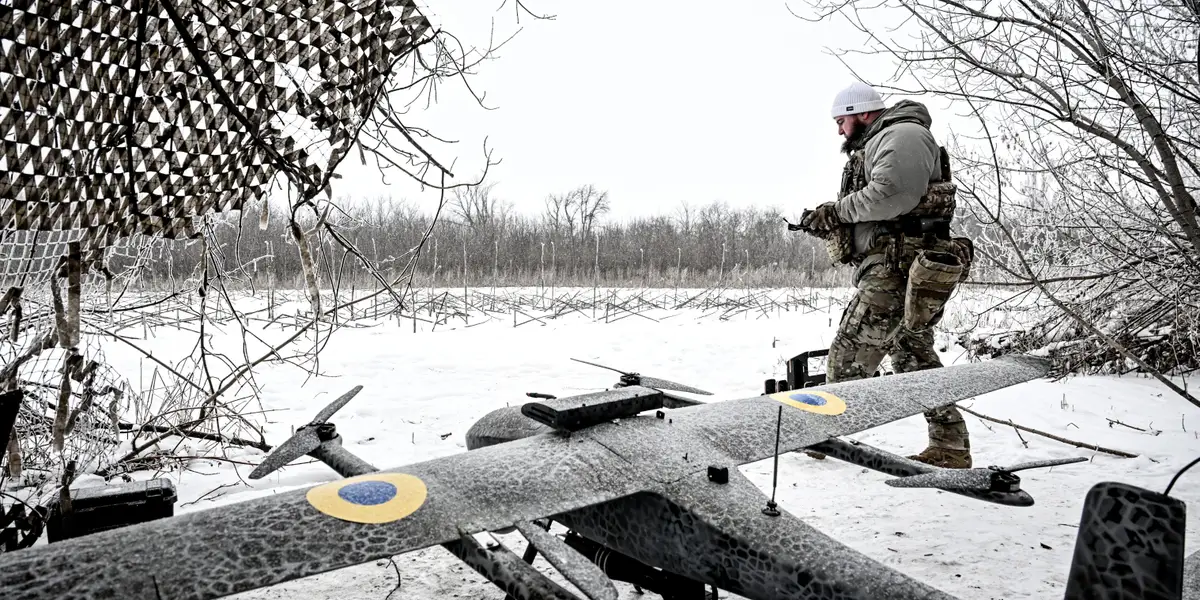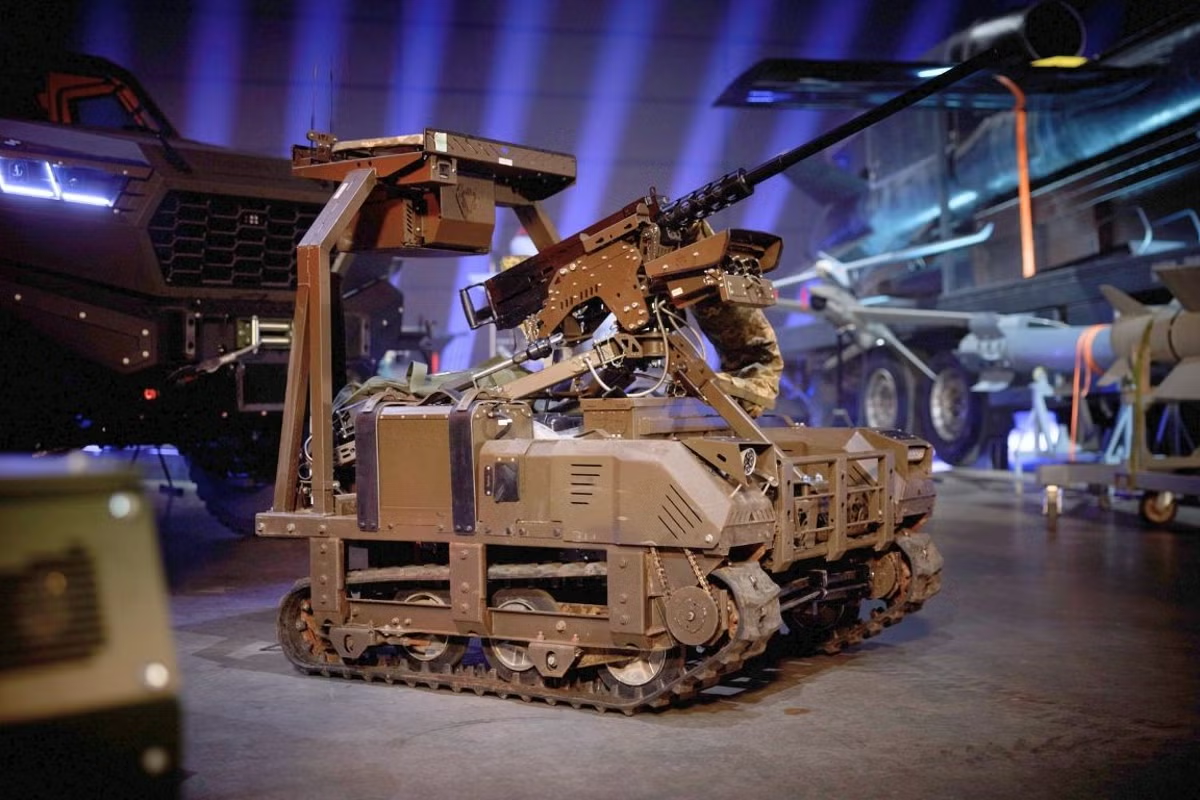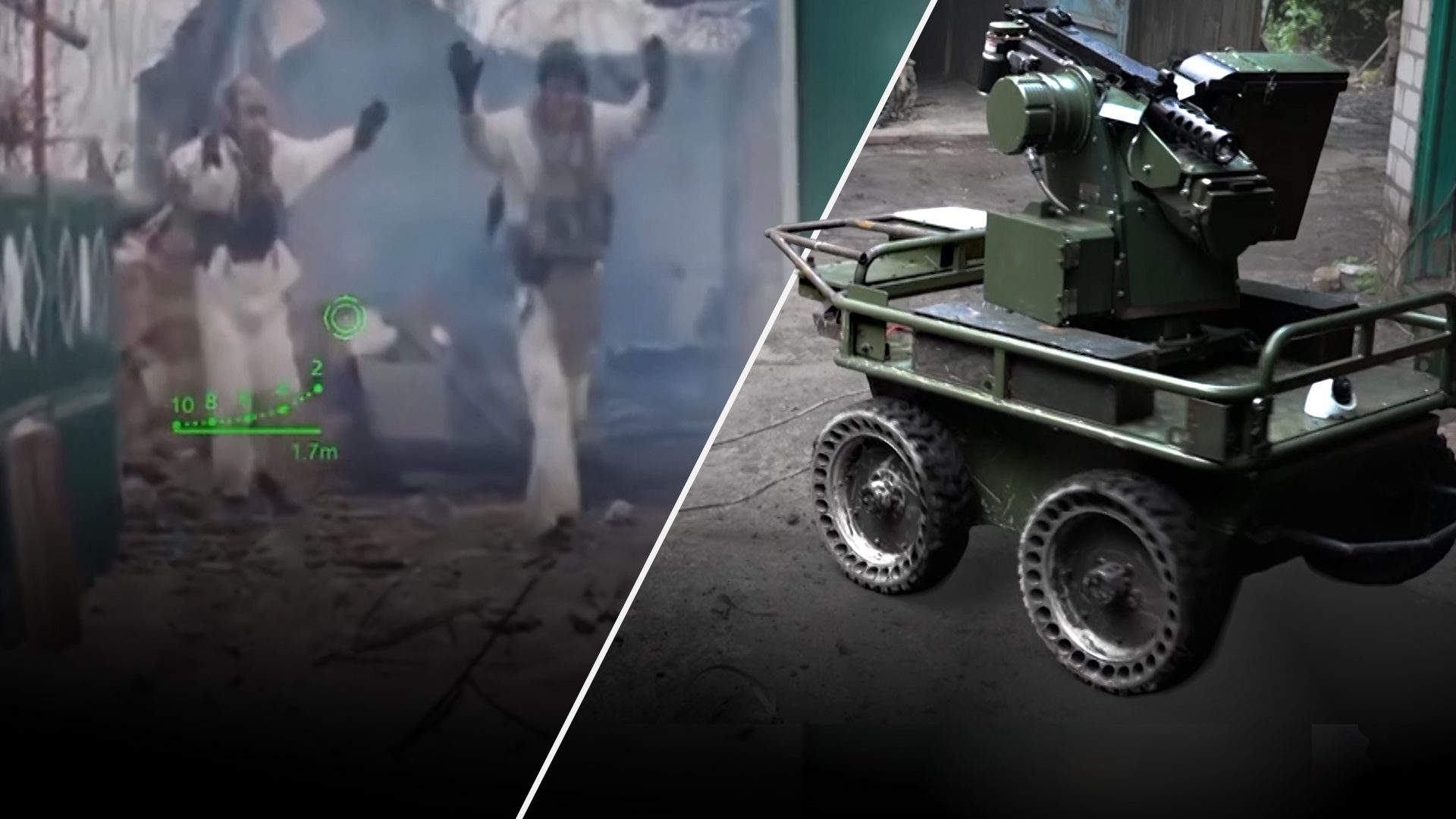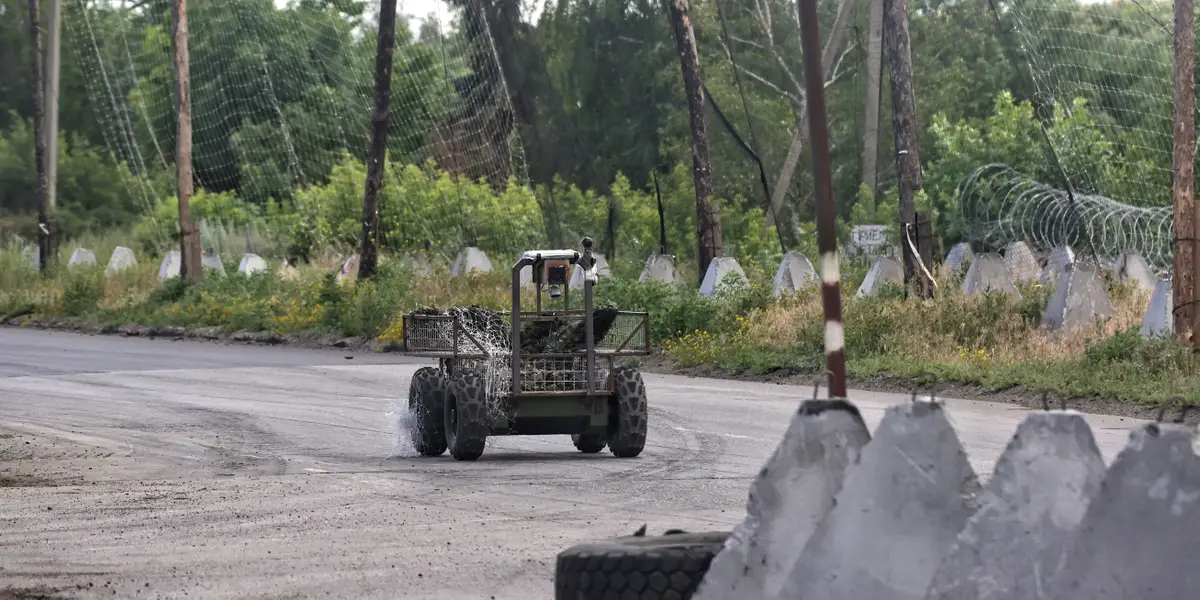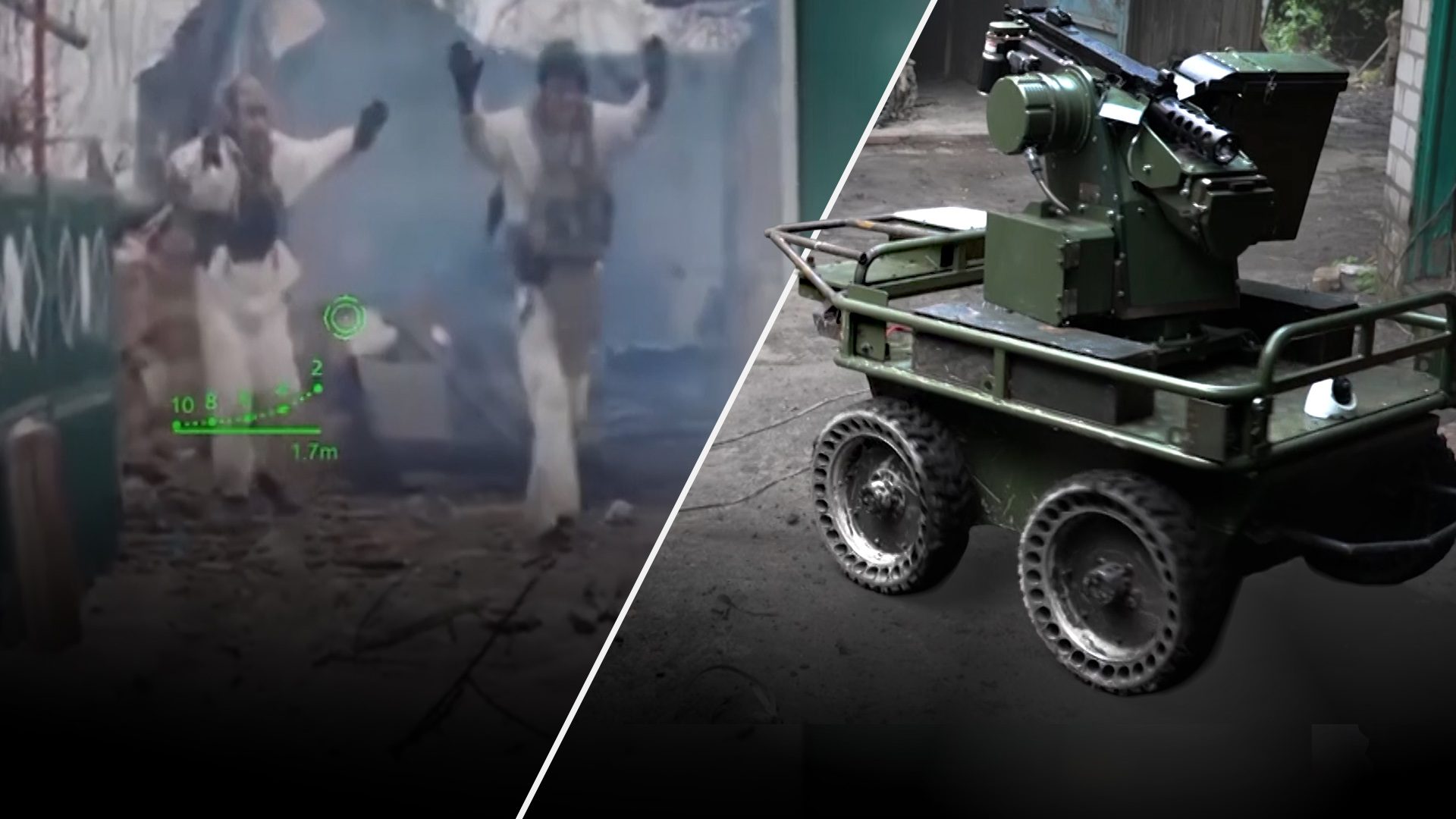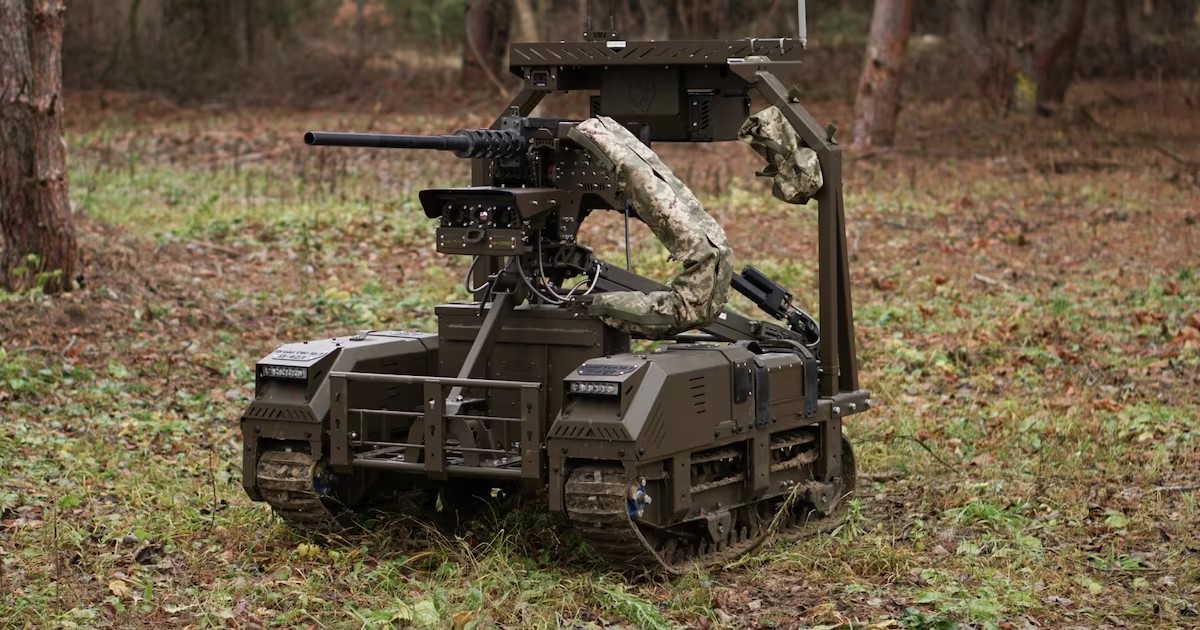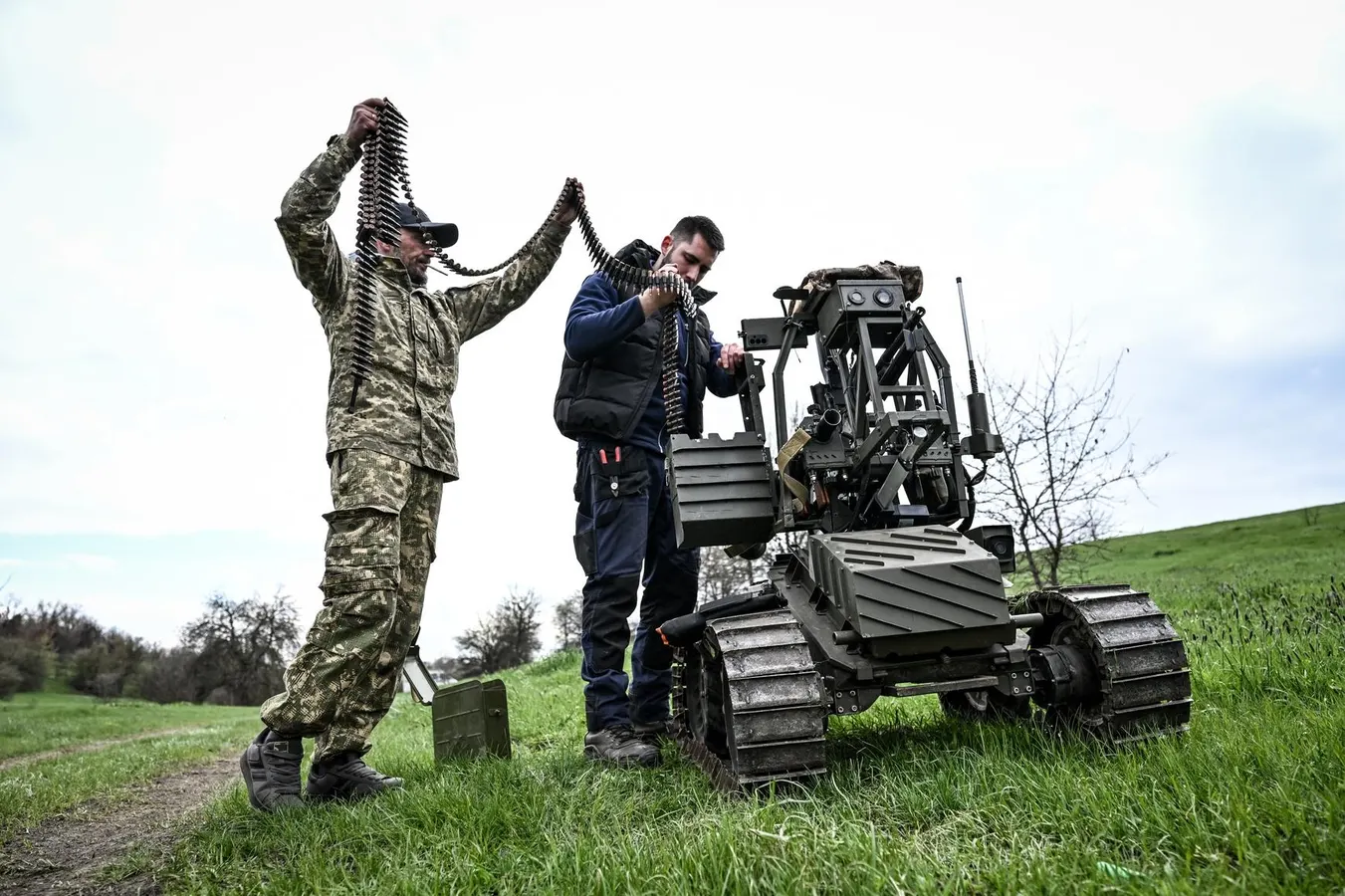
In April 2026, Volodymyr Zelensky reported the first instance of Ukrainian drones and ground robotic systems (GRS) capturing a position and taking enemy fighters prisoner without infantry involvement. In the first three months of 2026 alone, Ukrainian ground drones completed 22,000 missions at the front. Some compare their proliferation to the revolution of military affairs seen in the early 20th century, which was marked by new technologies such as machine guns, tanks, and aircraft. GRSs perform numerous tasks on the front line: logistics and evacuation missions, mining and demining, reconnaissance and combat operations, electronic warfare support, and FPV drone deployment. Contents1.The evolution of ground robotic systems2.GRS missions at the front3.Russian vs. Ukrainian GRS4.The future of ground dronesThe evolution of ground robotic systemsModern ground robotic systems trace their origins to experiments conducted more than a century ago, when the first simple remote-control systems emerged. In 1903, Spanish engineer Leonardo Torres Quevedo created a device called El Telekino, which received commands via radio waves and converted them into mechanical actions.The forerunners of modern combat systems were radio-controlled teleoperated tanks like the Soviet TT-26, developed in the 1930s. In the 1980s, following the Chornobyl nuclear disaster, specialized remotely operated vehicles began to appear for use in hazardous zones. In the mid 2010s, Russian robotic systems Uran-9 and Uran-6 were tested during military operations in Syria. The obtained operational experience informed the development of more advanced models, such as the NRTK Kuryer (NRTK is the Russian abbreviation for GRS).A key driver behind the rapid development of ground robots during the Russia-Ukraine war has been the near-impenetrable “kill zone” stretching dozens of kilometers on both sides of the frontline, the result of extensive aerial drone use by both sides. The first GRS operator companies in the Defense Forces of Ukraine (DFU) appeared as early as the first half of 2024, while the Russian armed forces began catching up considerably later. Critical logistics challenges were among the main reasons for the sharp rise in the prominence of GRS in 2025, but an additional driver was the personnel shortage caused by failures of mobilization policies and widespread desertion.In order to further prioritize the preservation of soldiers’ lives, tech-savvy Ukrainian commanders began delegating as many frontline tasks as possible to robots. Notably, given the one-time compensation of 15 million hryvnias (around $340,000) paid for each fallen AFU fighter, a soldier’s life costs the state far more than a robot. If the soldier survives, the same amount could buy and deploy around 35 robots on a combat mission. A soldier’s life costs the state far more than a robotRussia’s circumstances are similar. The one-time payment upon the death of a serviceman in the so-called “special military operation” amounts to 13.9 million rubles plus a regional component of 1 to 3 million rubles (totaling between $206,000 and $234,000) — equivalent to the cost of 15–17 NRTK Kuryer chassis.Ukrainian authorities have been consistently incentivizing the use of technological solutions. In September 2025, Minister of Digital Transformation Mykhailo Fedorov (now the Minister of Defense) announced that e-points under the Army of Drones Bonus program would be awarded not only for striking enemy targets but also for logistics operations carried out with the use of GRS.To earn e-points, units need to document the completion of a mission and submit confirmation to the system, just as they do when striking enemy targets with drones. Troops can use the accumulated points to order new GRS systems tailored to their unit’s needs. At the time, 10 types of robotic systems were available for points on the Brave1 Market platform; now there are around 90.Ukraine’s Ministry of Defense Procurement Agency has signed contracts with GRS manufacturers to enable the swift supply of systems on order for military units under the Army of Drones Bonus program.The DFU owes much of the scaling of ground drone use to Robert ‘Madyar’ Brovdi, the commander of the Unmanned Systems Forces. As early as the summer of 2025, he identified the “deployment of ground robotic systems as the primary logistics tool for delivering munitions, drones, and peripherals to operators at positions.” Moreover, the expansion of Unmanned Systems Forces units to the regiment and brigade level brought the GRS subunits within them to a qualitatively new level.In early April 2026, Ukraine's Ministry of Defense declared its intention to reduce the risks to personnel by transferring frontline logistics tasks to ground robotic systems where possible. While only 67 DFU units were using GRS for missions in November 2025, by March 2026 that number had grown to 167.In April, GRS completed more than 10,000 missions at the front, compared to just 2,900 in November 2025. In April, Defense Minister Fedorov set a goal of outsourcing 100% of frontline logistics to robotic systems, and the DFU plans to replace up to 30% of its personnel in the most challenging sections of the front with robots by the end of 2026.On April 15, Ukraine’s Ministry of Defense announced the introduction of drone assault units that integrate aerial and ground drones with infantry. According to official assessments, this approach has proven effective in the South Donetsk sector, where these new units have liberated significant territory since February.Ukraine is deploying drone assault units that combine ground and aerial dronesThe ministry also revealed plans to contract 25,000 GRS in the first half of 2026 — twice as many as in all of 2025. Additionally, a GRS competence center under the Ministry of Defense will be established, intended as the sole platform for interaction between manufacturers and the military and a catalyst for the deployment of robotic systems at the front. This year, manufacturers will receive contracts for 2027, enabling them to plan production and ensure the necessary supply volumes.The industry’s rapid progress is also evidenced by a special competition for GRS manufacturers held in Kyiv in February 2026. During the trials, robotic platforms had to navigate obstacles, orient themselves in terrain, and locate and film special markers placed in trees.GRS missions at the frontDefense Minister Fedorov noted in April that the GRS segment had become one of the most dynamic areas of defense tech in Ukraine. At the start of the full-scale war, the country had to build this industry from scratch; now it has since grown into a fully-fledged market with more than 280 companies.Ukraine’s GRS segment has grown into a fully-fledged market with more than 280 companies
Robots in arms: Ukraine’s frontline is becoming a test range for ground drones
In April 2026, Volodymyr Zelensky reported the first instance of Ukrainian drones and ground robotic systems (GRS) capturing a position and taking enemy…
4,049 words~18 min read