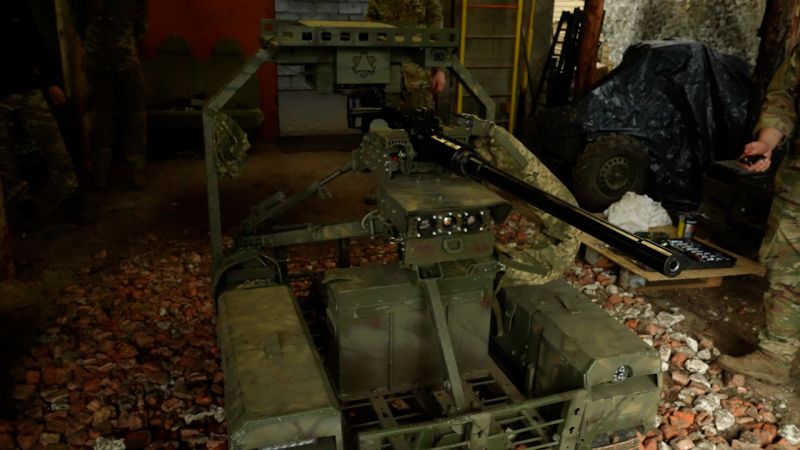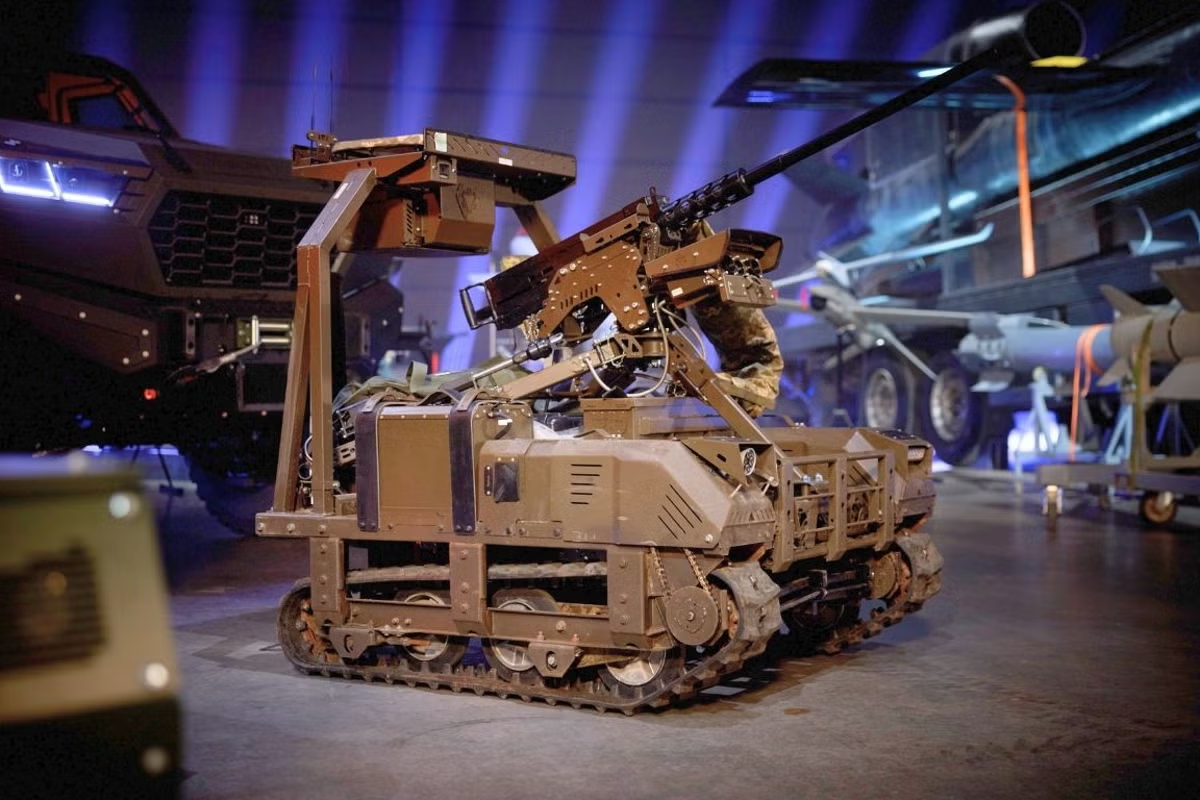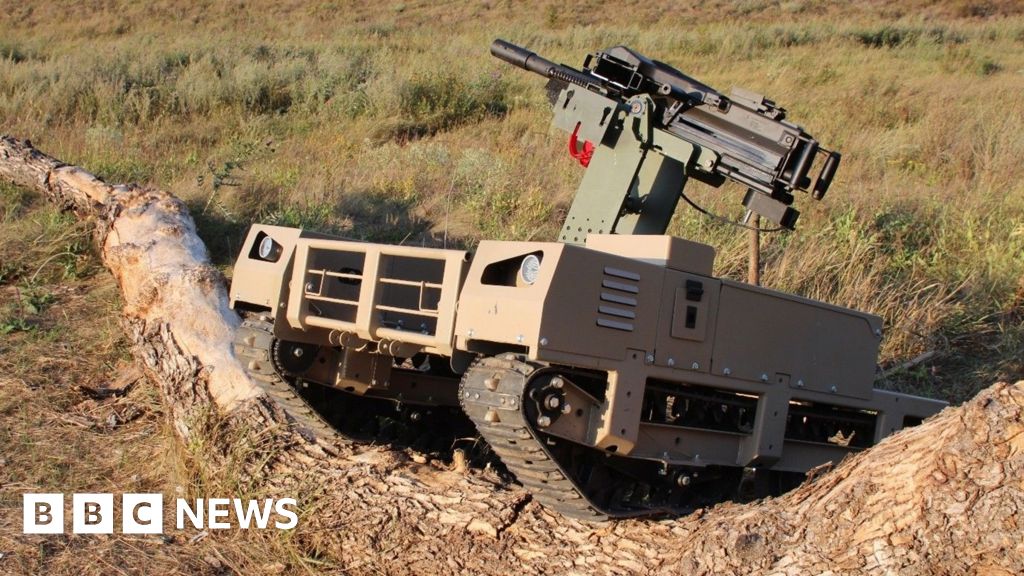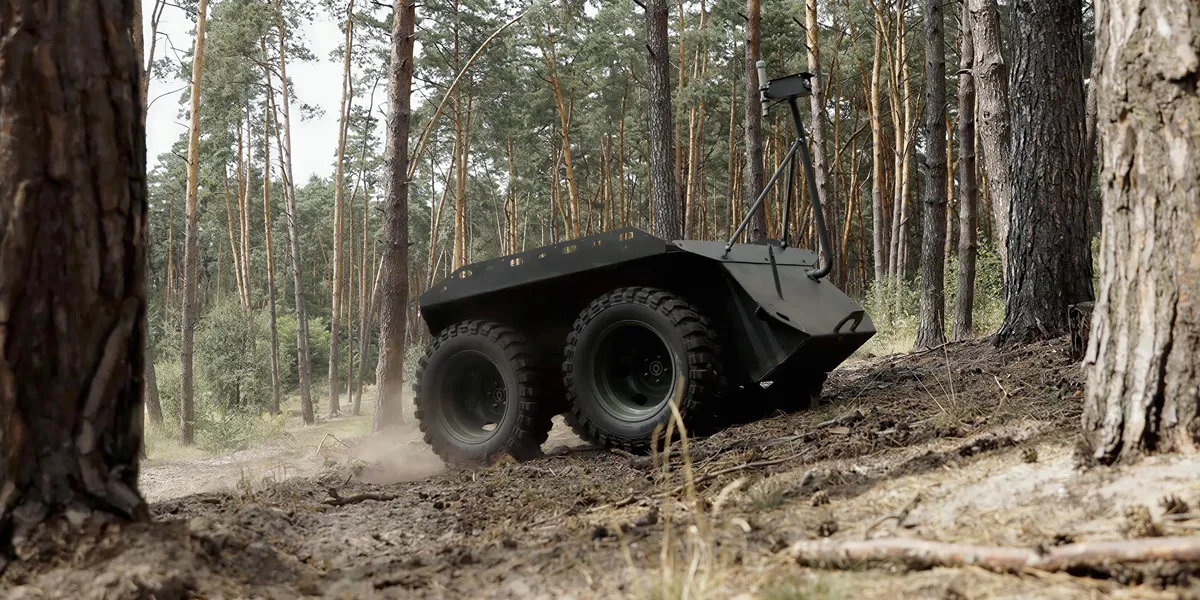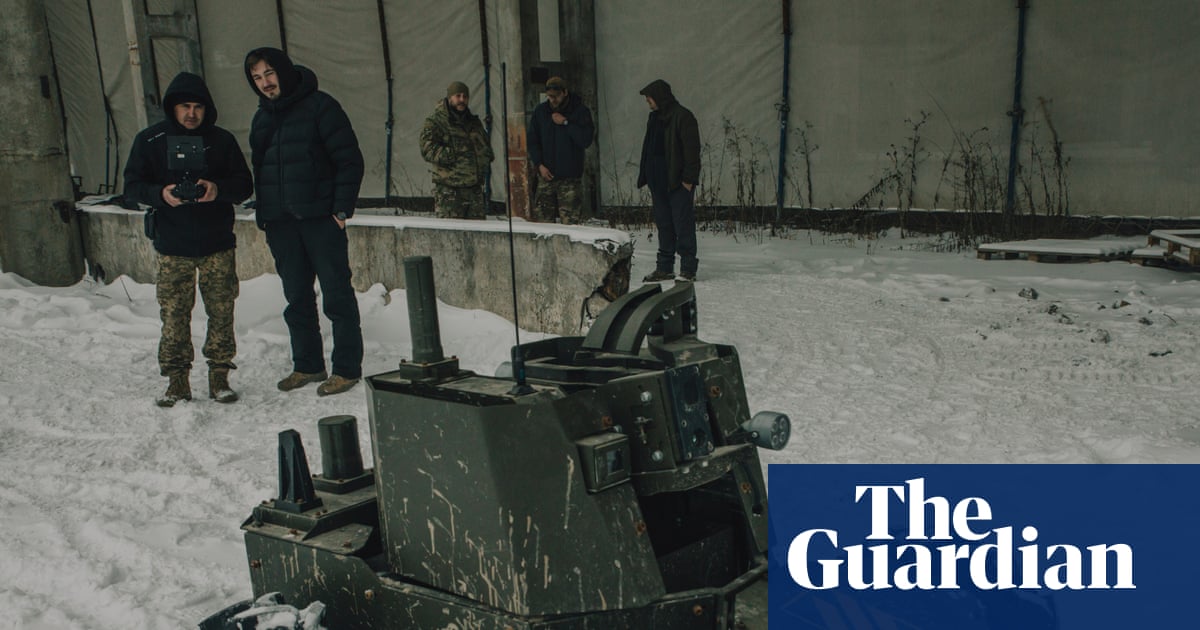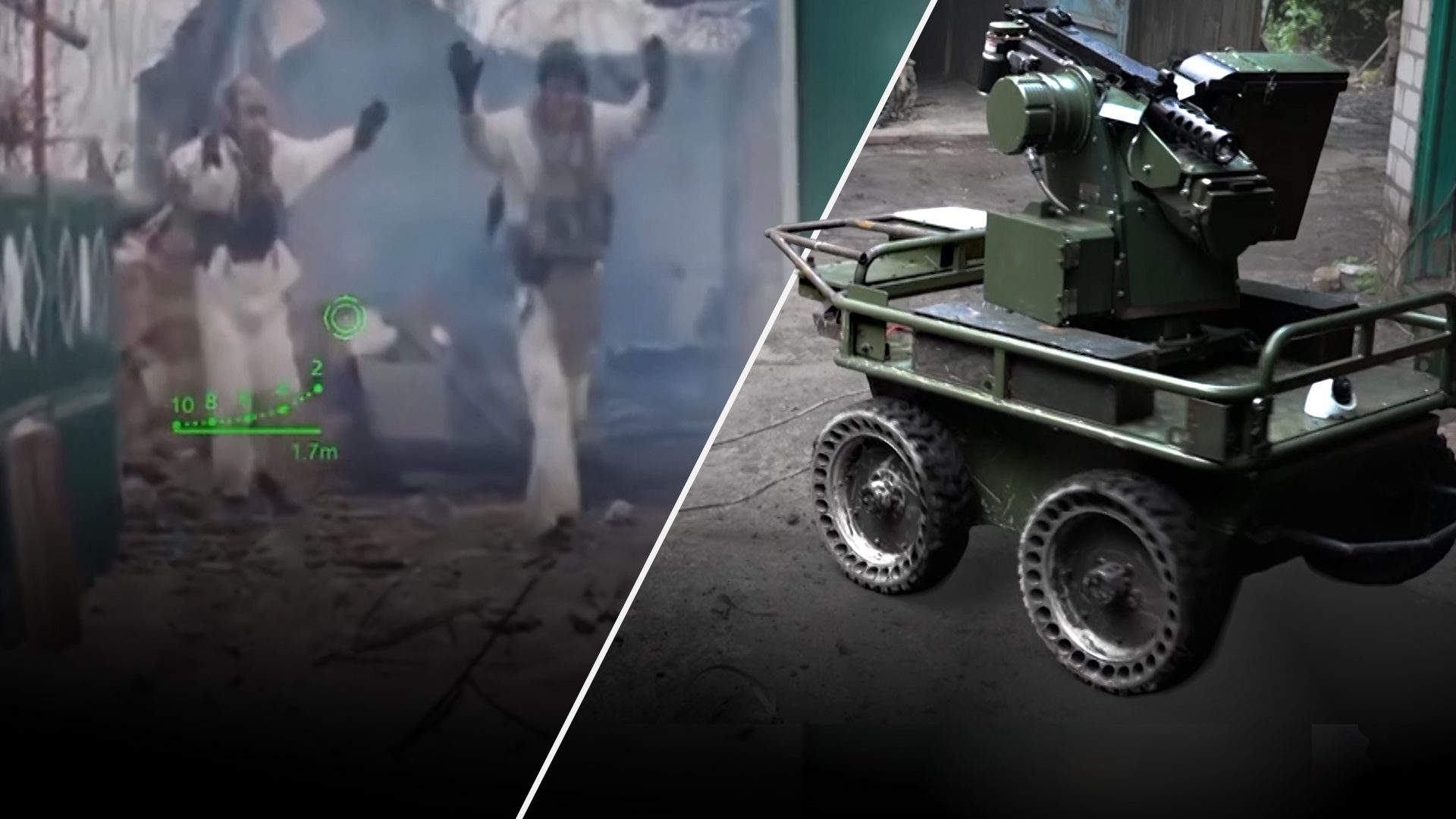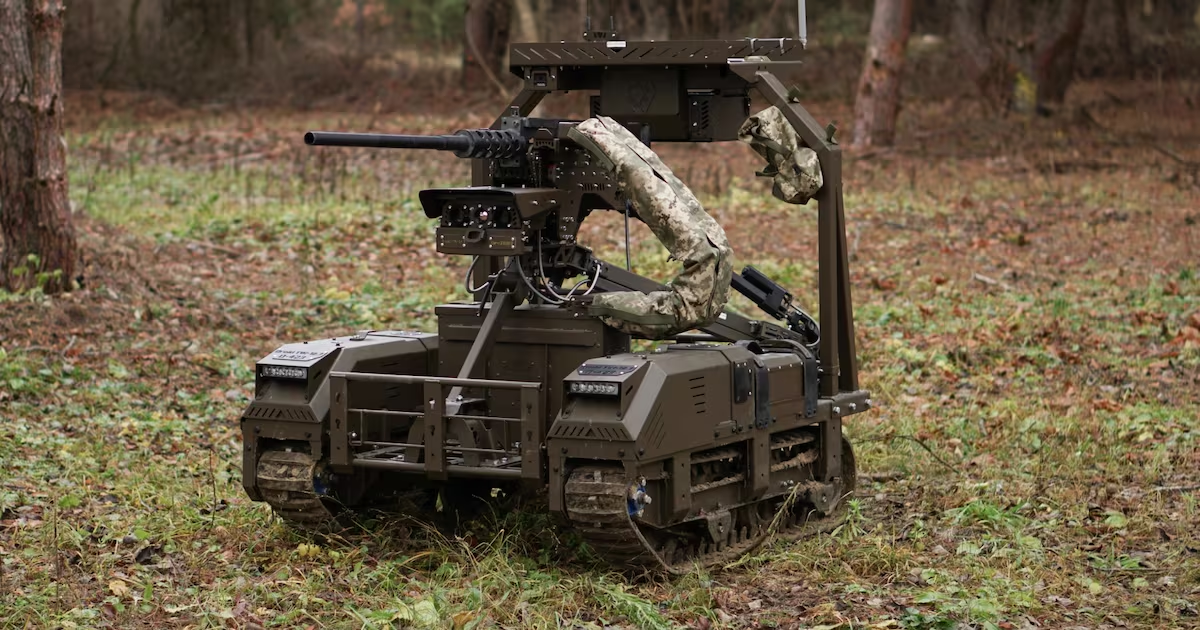
Four years into a grinding conflict, the outcome of the Ukraine-Russia war might now rest on the race for which side can develop an army of ground robots at speed to dominate the human battlefield. Currently, Ukraine is making the running using unmanned ground vehicles (UGVs) alongside aerial drones to help it take back up to 600 square kilometres of territory this year. By contrast, Russia continues to rely on thousands of troops to take villages or small towns with an attrition rate that is now far outstripping its ability to recruit replacements. It has, according to one western estimate, lost just under 500,000 soldiers from more than 1.2 million casualties. Russia’s huge armoured arsenal has also been depleted to the point that no tanks were on display for its annual Second World War victory parade earlier this month. That humiliation was compounded by President Vladimir Putin essentially requesting his foe President Volodymyr Zelenskyy’s permission not to strike the Moscow event with drones. Diplomatic experts also believe that Russia’s reversals might hint at the first steps to a peace deal. However, Ukraine has suffered heavily, too, with more than 55,000 soldiers killed, and the fallback to robots is likely because “they are absolutely desperate” to make up for a lack of manpower, a defence source in the eastern city of Kharkiv told The National. He also pointed out the city’s cemetery was crammed full of fresh graves as an indication to Ukraine’s losses in a country where by law, conscription for men begins at 25. A mass funeral ceremony to bury 25 unidentified Ukrainian soldiers in Kyiv. ReutersInfoUkraine advanceDespite the losses there has been a vast turnaround for Mr Zelenskyy in 2026, from his humiliation in the White House early last year to the end of US military aid and a miserable winter of Russian strikes on Ukraine’s energy infrastructure.But it has survived, in part down to its ability to innovate largely enforced by America’s withdrawal of hardware and having a population of less than 40 million, some 100 million fewer than Russia’s. Ukrainian ingenuity has seen it fight off Moscow’s near daily missile and drone attacks with a system of drones, machine guns and western interceptors. The war also extended into Romania on Friday, when Moscow’s drones that were allegedly targeting Ukraine struck a block of flats in Romania, injuring two people. The UK’s Foreign Secretary Yvette Cooper condemned “the violation of Nato airspace” as “extremely dangerous and reckless”.But it is Ukraine’s development of UGVs that has helped take it on to the offensive, pushing back Moscow’s troops in several areas. The moment robots debuted in human warfare came last month when President Zelenskyy announced that a Russian position had been taken using only ground and aerial drones. “The occupiers surrendered, and the operation was carried out without infantry and without losses on our side,” he posted on April 14. In parts of the front line Ukraine has been able to withdraw its troops beyond the 20km striking distance of Russia’s own sophisticated aerial drones, largely abandoning trench warfare. They have also deployed Hornet loitering drones, that use their AI to avoid Russian jamming and can act autonomously, striking at logistic targets up to 100km behind the front line. That has seen supplies along the vital M14 motorway that connects the once besieged city of Mariupol to Crimea nearly cut off, with the Hornets taking out more than 125 ammunition, fuel and personnel lorries this month. Ukraine’s interceptor drones have also become so effective that they have been exported in large numbers to Gulf states to meet the threat from Iran’s Shahed-136 UAVs (unmanned aerial vehicles). Drone tactics from the war have also been copied by Iran, as well as Hezbollah, which has used the difficult to jam fibre-optic drones against Israeli targets. Soldiers training on robots in the Zaporizhzhia region. AFPInfoRobot army But could the country’s ground robot developments also become its next major export? Much of their operational effectiveness remains secret, yet it is known that a tracked robot mounted with a heavy 12.7mm Browning machinegun called the Droid TW-12.7 has reportedly been very effective. Built by Ukraine firm Devdroid, it has a night vision capability and is currently remotely operated rather than fully autonomous. The company has also deployed the Droid NW 40 robot, which has a belt-fed grenade launcher that fires 40mm rounds with 1.5km range that can take out lightly armoured vehicles or enemy sheltering in trenches.“What is really interesting is the impact that we're now seeing of track or tractor-wheeled killer robots,” said former military intelligence officer Dr Lynette Nusbacher. “If Ukraine were able to deploy them at range operating autonomously in large numbers then they could unleash swarms of drones and that could break the stalemate.”▶Former British soldier, Conservative MP and Russia specialist Bob Seely, who has visited Ukraine several times, said that while the Ukrainians “haven't quite given up on trench warfare” they had largely replaced it with “zonal defence”. “If the Russians attack, they're not being repelled by humans but by air and ground drones collectively and this form of warfare is really beginning to take off this year,” added the author of The New Total War. Indeed, Kyiv’s generals plan to replace 30 per cent of manpower in the most kinetic front line zones with drones by purchasing 25,000 UGVs this year, for both attack, logistics and evacuating the wounded. Members of the Lava Unmanned Systems Regiment monitor screens as they wait for a combat mission with ground robots. GettyInfoDevelopments have now got to the point, argued veteran former diplomat Tim Wilsey, where “Ukrainian troops have withdrawn from the 20 to 40 kilometres behind the front line killing zone” saving them precious personnel. “A year ago we used to say the reason why Russia is probably going to overall win this war is because they've got more people to throw into the meat grinder, well Ukraine isn't throwing people into the meat grinder any more,” he added. “They're not losing so many people and Russia is losing vast numbers.” Former tank commander Col Hamish de Bretton-Gordon suggested this could soon go one step further with a single crewed main battle tank controlling five autonomous mini-tanks “who unlike soldiers don’t have to be trained for a year, you just load up the software”. He contested that it was now “a truly autonomous war” for Ukraine and although they might lose thousands of unmanned weapons “you can replace a drone and train a drone very much more quickly than you can a soldier.”Ukrainian infantrymen heading the frontline. GettyInfoFading manpower Russian losses over more than four years of war have been huge but still, using big financial incentives, the authorities are just about finding new recruits. But for how much longer is this sustainable? The minor operations to seize Ukrainian territory are “at best tactical victories leading effectively to strategic defeat,” said Mr Seely. “The amount of kit and humans that they have expended on very small gains is unsustainable even for a country that has to a certain extent willing manpower.”This was now becoming a “real problem for Russia” said Col de Bretton-Gordon. “Russia's got a serious challenge ahead and there's real concern in Moscow that their children are going to be conscripted.”But Dr Nusbacher did not believe that “Russia getting anxious about this” or was “bracing themselves for an imminent collapse in army manpower”. Indeed, she argued Russia could, as they have shown before, adapt to Ukraine’s use of “automation”.Russian servicemen march on Red Square during the Victory Day military parade in central Moscow on May 9. AFPInfoWaiver paradeBut she also repeated that military tenet that “ultimately ground doesn't matter, it’s the enemy's will to fight matters” and that willpower could well be ebbing on the Russian side. Mr Wilsey, a senior fellow at the Royal United Services Institute think tank, pointed to “a fascinating series of events, which makes one wonder whether for the first time Putin is beginning to waver a bit”. Alongside other commentators, he highlighted Mr Putin’s humiliation of indirectly asking Mr Zelenskyy not to strike the victory show. “Zelenskyy very cleverly sent out a message saying, ‘yes, it's OK, I permit the parade to go ahead’ so that's a terrible look for the Russian people.” Perhaps to reassert Russia’s dominance, the Kremlin launched its biggest missile and drone assault on Ukraine over last weekend, but only a few days later asked Europe to offer some form of mediation in the war. “I'm wondering whether 2026 might be the year negotiations started to be serious,” said Mr Wilsey. “There's an air of desperation about Putin at the moment.”
Rise of the machines: Ukraine’s ground robot army forces Russian retreat | The National
Autonomous ground vehicles and AI drones are transforming the battlefield as Kyiv offsets manpower shortage to break frontline stalemate
1,442 words~7 min read