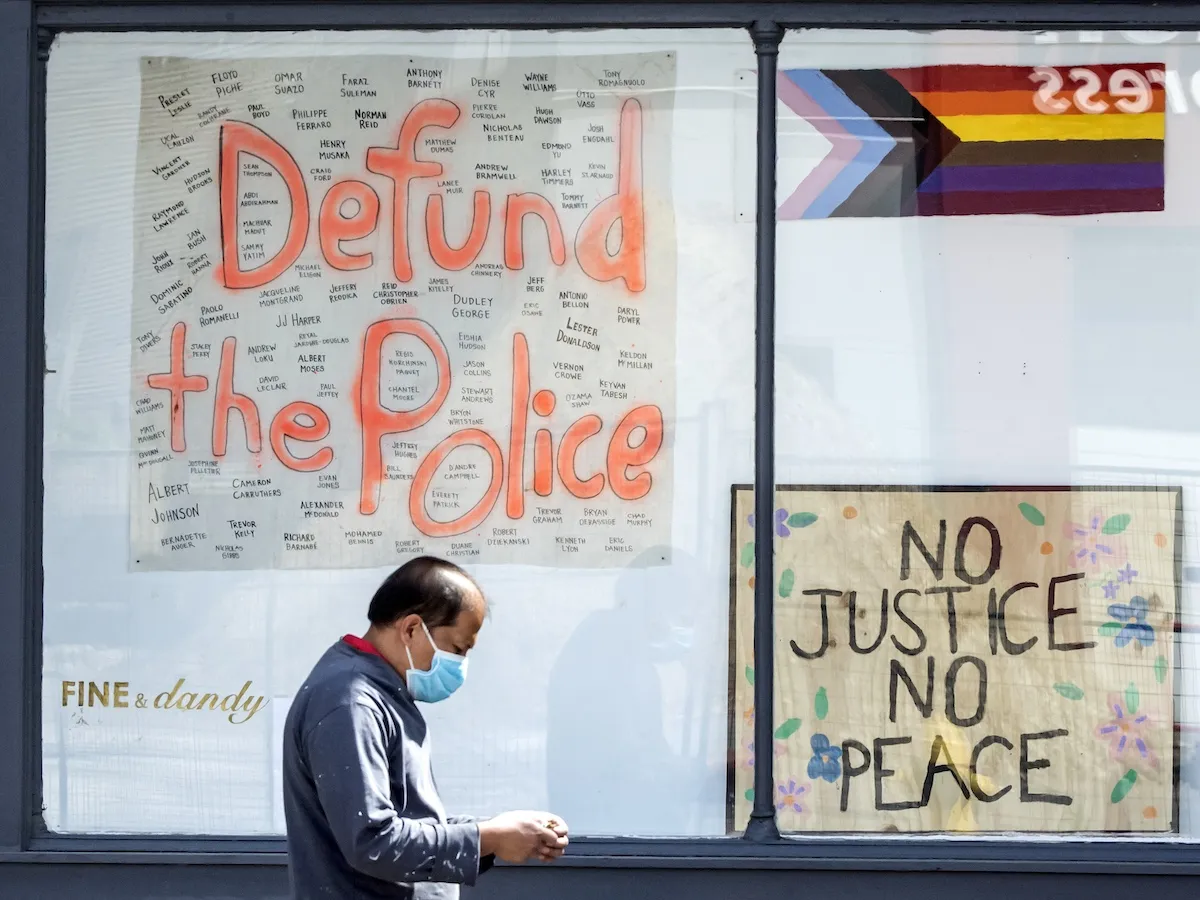
Skip to Content Subscribe Our Offers My Account Manage My Subscriptions FAQ Newsletters Canada Canadian True Crime Canadian Politics Health World Israel & Middle East Financial Post NP Comment Longreads Puzzmo Diversions Comics NP News Quiz New York Times Crossword Horoscopes Life Eating & Drinking Style Sponsored Play for Ontario Travel Travel Canada Travel USA Travel International Cruises Travel Essentials Culture Books Celebrity Movies Music Theatre Television Business Essentials Advice Lives Told Tails Told Shopping Buy Canadian Home Living Outdoor Living Kitchen & Dining Tech Style & Beauty Personal Care Entertainment & Hobbies Gift Guide Travel Guide Amazon Prime Day Deals Savings National Post Store More Sports Hockey Baseball Basketball Football Soccer Golf Tennis Driving Vehicle Research Reviews News Gear Guide Obituaries Place an Obituary Place an In Memoriam Classifieds Place an Ad Celebrations Working Business Ads Archives Healthing Epaper Manage Print Subscription Profile Settings My Subscriptions Saved Articles My Offers Newsletters Customer Service FAQ Newsletters Canada World Financial Post NP Comment Longreads Puzzmo Diversions Life Shopping Epaper Manage Print Subscription HomeNP CommentThe Western Surrender: The U.S. unleashed wokeness on a world incapable of handling itNo. 5: The movement began on U.S. college campuses, but the country’s individualism renders it largely immuneLast updated 32 minutes ago You can save this article by registering for free here. Or sign-in if you have an account.A pedestrian wearing a mask walks past art in a window stating “Defund The Police” and “No Justice No Peace” on Toronto’s Dundas Street West during the Covid 19 pandemic, Friday June 12, 2020. Photo by Peter J. Thompson /National PostAll that is great about western civilization is being undermined by a progressive political and cultural project that aims to reject and rewrite our history, prioritize group identity above the individual and embed this agenda into our laws and institutions. Welcome to The Western Surrender, an NP Comment series ranking the five Anglosphere countries by their adoption of these ideas. Today, we start with No. 5, the United States.Enjoy the latest local, national and international news.Exclusive articles by Conrad Black, Barbara Kay and others. Plus, special edition NP Platformed and First Reading newsletters and virtual events.Unlimited online access to National Post.National Post ePaper, an electronic replica of the print edition to view on any device, share and comment on.Daily puzzles including the New York Times Crossword.Support local journalism.Enjoy the latest local, national and international news.Exclusive articles by Conrad Black, Barbara Kay and others. Plus, special edition NP Platformed and First Reading newsletters and virtual events.Unlimited online access to National Post.National Post ePaper, an electronic replica of the print edition to view on any device, share and comment on.Daily puzzles including the New York Times Crossword.Support local journalism.Create an account or sign in to continue with your reading experience.Access articles from across Canada with one account.Share your thoughts and join the conversation in the comments.Enjoy additional articles per month.Get email updates from your favourite authors.Create an account or sign in to continue with your reading experience.Access articles from across Canada with one accountShare your thoughts and join the conversation in the commentsEnjoy additional articles per monthGet email updates from your favourite authorsSign In or Create an AccountorCOTTONWOOD, Arizona — In something like its current usage, the term “woke” originated a century ago among African Americans in reference to awareness of racial prejudice. More recently, it came to embody modern identitarian progressive ideology — and then quickly became shorthand in the U.S. for leftist excess. Americans’ long exposure to battles over identity and our insistence on treating people as individuals may have granted us strong immunity to a toxic political movement our country spawned. While wokeness is, at its core, an American innovation and export, the movement is in retreat across most of American society.The National Post newsletter that doesn’t hold back, giving readers the unvarnished truth on media, politics and culture.By signing up, you consent to receive the above newsletter from Postmedia Network Inc.A welcome email is on its way. If you don't see it, please check your junk folder.The next issue of Right? will soon be in your inbox.We encountered an issue signing you up. Please try againIn 2023, after “woke” had already become a contentious term signifying, among proponents, a far-reaching social justice agenda and, among its opponents, a totalitarian ideology that treats people as members of groups rather than as individuals, the National Association of Colored People (NAACP) protested. “The words ‘Wake Up’ and ‘Woke’ have served as a call to action as conveyed by social activist Marcus Garvey who stated, ‘Wake up Ethiopia! Wake up Africa’, and the Negro Mine Workers who in 1940 issued the statement, ‘We were asleep. But we will stay woke from now on,’ in advocating against discriminatory pay,” the NAACP asserted in a resolution.But the NAACP was fighting a rearguard action. Two years earlier, Columbia University linguist John McWhorter, himself Black, published Woke Racism: How a New Religion Has Betrayed Black America. He argued that wokeness “is actually a religion in all but name” that irrationally repackages racism in antiracist form. It had its roots, he wrote, in critical race theory which “tells you that everything is about hierarchy, power, their abuses — and that if you are not Caucasian in America, then you are akin to the captive oarsman slave straining belowdecks in chains.”Helen Pluckrose and James Lindsay made similar points in their 2020 book, Cynical Theories: How Activist Scholarship Made Everything about Race, Gender, and Identity ― and Why This Harms Everybody (the “cynical” in the title is printed as a scrawl over a crossed-out “critical.”). “Wokeism,” they wrote, is another term for social justice ideology that applies neo-Marxist academic filters to old concerns about inequality to arrive at a “new religion.” The woke belief system asserts that “society is simplistically divided into dominant and marginalized identities and underpinned by invisible systems of white supremacy, patriarchy, heteronormativity, cisnormativity, ableism, and fatphobia.”You don’t have to understand those terms to see how this ideology quickly degenerates into a grievance Olympics which sets race, sexuality, and other identities in a competition for victim status. It perversely claims that to battle inequality, you must treat people differently. That’s the basis for racial preferences in hiring as well as American universities’ practice of discriminating against Asian applicants which the U.S. Supreme Court ruled in 2023 to be illegal racial discrimination. Canadians will recognize the basis for mandated differential sentencing for criminals who have a First Nations background, and increasingly for offenders who are black.But Americans have always discussed and fought over differences. Slavery is the original sin of the U.S. and pseudoscientific justifications for the practice fuelled generations of racial and ethnic mistreatment — mostly for Blacks, though Native Americans, Hispanics, Asians, Irish, Italians, Jews, and others have their own stories to tell. That racial attitudes evolve is clear from the election of Barack Obama, a mixed-race man, as president of the U.S., and also by the election to the U.S. Senate of Tim Scott, a Black man, who represents South Carolina, the first state to secede from the U.S. in 1861 in a scheme to preserve racially based slavery. Times change.Tellingly, Gallup polling found that, in 2013, majorities of both Black and white Americans — 72 per cent of whites and 66 per cent of Blacks — rated relations between white and Black people as very or somewhat good. Those percentages plummeted during the rise of wokeness, hitting a low of 43 per cent of whites and 33 per cent of blacks in 2021. Now, with wokeness on the wane, a rising share — 57 per cent of whites and 45 per cent of blacks — once again call race relations very or somewhat good.Americans have seen real racism — too many of us have that uncle who still voices old-school bigotry — and we’ve seen dramatic improvements. Telling us that expecting employees to show up on time and well-dressed is “racist” (as a 2019 Stanford Social Innovation Review article alleged in 2019) is laughable and insulting.Gays and lesbians have their own reasons to doubt their placement in a hierarchy of competing victimizations. The gay rights movement really kicked off in 1969 in the most American way possible: with a revolt against authority. That year customers at the Stonewall Inn, a gay bar in New York City’s Greenwich Village, responded to a police raid by swarming into the street and battling cops. That history doesn’t lend itself to passive placement in a narrative of oppression.Since then, American society has become increasingly comfortable not just with homosexuality, but same-sex marriage. Sixty-eight per cent of Americans support the practice, according to Gallup, up from 27 per cent in 1996. Why not? Gays and lesbians fought their way to decent treatment.The social justice movement’s all-in endorsement of “transgender rights” met widespread pushback. Contrary to the craze of recent years, the American Medical Association (AMA) and the American Society of Plastic Surgeons (ASPS) say gender transition surgery should wait until adulthood. “ASPS recommends that surgeons delay gender-related breast/chest, genital, and facial surgery until a patient is at least 19 years old,” urges a statement endorsed by the AMA. Americans agree. A reluctantly released Democratic post-mortem on the party’s losses in the 2024 elections labeled the victorious Trump campaign’s “attack ad focused on the Vice President’s prior statements on transgendered Americans” as “very effective” because they highlighted her own woke comments on the issue.As for more obscure obsessions like “cisnormativity” and “ableism,” the Democratic post-mortem came to a similar conclusion. It urged candidates to “focus less on abstract issues and identity politics” if they want to “connect with voters.”That’s not to say that we Americans have solved all our problems. We’re flawed, argumentative, and forever at each other’s throats. But Americans are fundamentally individualistic and not inclined to lump people together by group identity.In his classic textbook, American Society, the sociologist Robin M. Williams, Jr., who passed away in 2006, wrote that American culture “emphasizes individual personality rather than group identity and responsibility.” He added that “American ‘individualism,’ taken in broadest terms, has consisted mainly of a rejection of the state and impatience with restraints upon economic activity.”Broad cultural currents aren’t predestination. But our core individualism nudges Americans, sometimes against our vigorous efforts, away from dealing with people as representatives of categories rather than as agents responsible for their own actions and destinies. We don’t like being told by others – especially government officials – that we should treat neighbors as avatars of designated identities. Ultimately, that pushes us, despite a checkered history, away from bigotry based on group membership and towards dealing with people on their own merits or lack thereof.Individualism may be why the Social Justice movement’s rush to erase “offensive” monuments and place names quickly hit resistance and largely faded. Most Americans view statues as records of what people did in the past, not as expressions of collective identity and guilt. Even in 2020, when the Black Lives Matter movement and wokeism were at their peak, a Just News/Rasmussen poll found a “strong majority of voters oppose tearing down statues honouring George Washington, Thomas Jefferson, and Abraham Lincoln” when ascendant social justice activists pushed to do just that. The poll found an even division on the question of statues depicting Confederate leaders.We’re unlikely to see the return of Confederate monuments; many were raised long after the Civil War to rub the “Lost Cause” in the public’s face and people have good reason to resent the use of their tax dollars for such constructs. But few embrace the crusade to rewrite history.And most Americans reject the woke social justice movement’s effort to force us to accept collective identities in place of our sense of self.As late as March 2023, Ipsos pollsters found that more Americans (56 per cent) attributed to “woke” its original meaning of “to be informed, educated on, and aware of social injustices” than thought it meant “to be overly politically correct” (39 per cent). But even then, 40 per cent of respondents considered the term an insult, compared to the 32 per cent who thought it a compliment. In the aftermath of the Republican victory in the 2024 national election, YouGov pollsters reported that 57 per cent of Americans thought political correctness or being “woke” played a very or somewhat important role in determining the election’s overall rejection of the political left. A separate survey in November 2024 by the same firm concluded that, while most respondents were familiar with stereotypical social justice terms like “white privilege,” “systemic racism,” and “patriarchy,” 20 per cent or fewer used them on a regular basis.“From 2014 to about 2023, and peaking in 2020, Democrats fell under the sway of ‘woke’ ideas that prioritized divisive cultural issues such as transgender rights and reducing funding for police,” progressive political scientist Shadi Hamid wrote for the Washington Post in January of this year. “A growing number of Democrats and liberals have acknowledged that things may have gone too far, alienating too many Americans who might have otherwise been sympathetic to the Democratic Party’s economic message but couldn’t get on board with an expansive and aggressive cultural agenda.”Unfortunately, bigotry isn’t as flushed from American life as it ought to be, and neither is its representation in wokeism. Some professional schools fixate on incorporating social justice ideology into their curricula, such as Penn State Dickinson Law Schools dedication to “recruit, retain, teach and research according to antiracist principles” defined as “antiracist critical pedagogy” rather than simple rejection of racism.But Penn State is swimming upstream. The American Bar Association voted to repeal its diversity and inclusion accreditation standard for law schools in recognition of cultural and legal opposition. Penn State’s law school, a public school subject to First Amendment considerations, now faces a federal civil rights complaint over its adoption of a mandated ideology.American universities are where wokeism was born from the application of critical theory to social relations, and Americans aren’t thrilled about the politicization of higher education. Last October Pew Research polling found “seven-in-ten Americans now say the higher education system in the United States is generally going in the wrong direction” with almost half expressing concern about ideological conformity on college campuses.Another remaining redoubt of social justice ideas is California, where politicians keep pushing “reparations” to Black residents for wrongs done to past generations. But the West Coast’s cities may be the last places in the country to take such ideas seriously. California Governor Gavin Newsom, who has presidential ambitions, walks a tightrope by playing lip service to reparations while vetoing related bills that propose spending money.Political scientist Hamid, while heralding the passage of wokeness, described pro-Palestinian sympathies and a willingness to accuse the lone Jewish state of Israel of genocide as the latest left-wing political litmus test. This may “mean that the very meaning of ‘wokeness’ has changed, transforming itself from a question of culture to a question of whether the United States should continue supporting an Israeli government that now stands accused of the crime of crimes,” he noted. In a few years, woke ideas may be little more than rebranded and (very) slightly camouflaged antisemitism.In March, progressive writer Miles Klee wrote in Wired that frustrated leftists awaiting “Woke 2” hanker for a “radical political order, still out of reach, that will swing America into a utopia with infinite gender identities, a strong social safety net, the complete abolition of AI, and Nuremberg-style trials for their enemies.”Unfortunately, frustrated leftists haven’t been satisfied with yearning after a reboot of wokeness. The assassinations of Charlie Kirk and Brian Thompson, attempted assassinations of President Trump, the murders of Yaron Lischinsky and Sarah Lynn Milgrim by a “Free Palestine” activist, arson attacks on Tesla vehicles and dealerships, and other crimes demonstrate the eagerness of too many people with woke motivations to contribute to an escalation of political violence in the U.S.Fortunately, American culture is remarkably resistant to collectivist ideologies like wokeness. It’s too bad we unleashed the toxic movement on a less immune world. But we should brace ourselves for what disappointed woke activists and other collectivists have in store for us next.National PostNext up on Thursday: No. 4To ensure you catch every entry in the The Western Surrender series, sign up for our NP Platformed newsletter at nationalpost.com/platformed. You can also bookmark The Western Surrender page. Send any feedback and questions to npplatformed@postmedia.com. Join the Conversation This website uses cookies to personalize your content (including ads), and allows us to analyze our traffic. Read more about cookies here. By continuing to use our site, you agree to our Terms of Use and Privacy Policy.
The Western Surrender: The U.S. unleashed wokeness on a world incapable of handling it
No. 5: The movement began on U.S. college campuses, but the country’s individualism renders it largely immune
2,765 words~13 min read