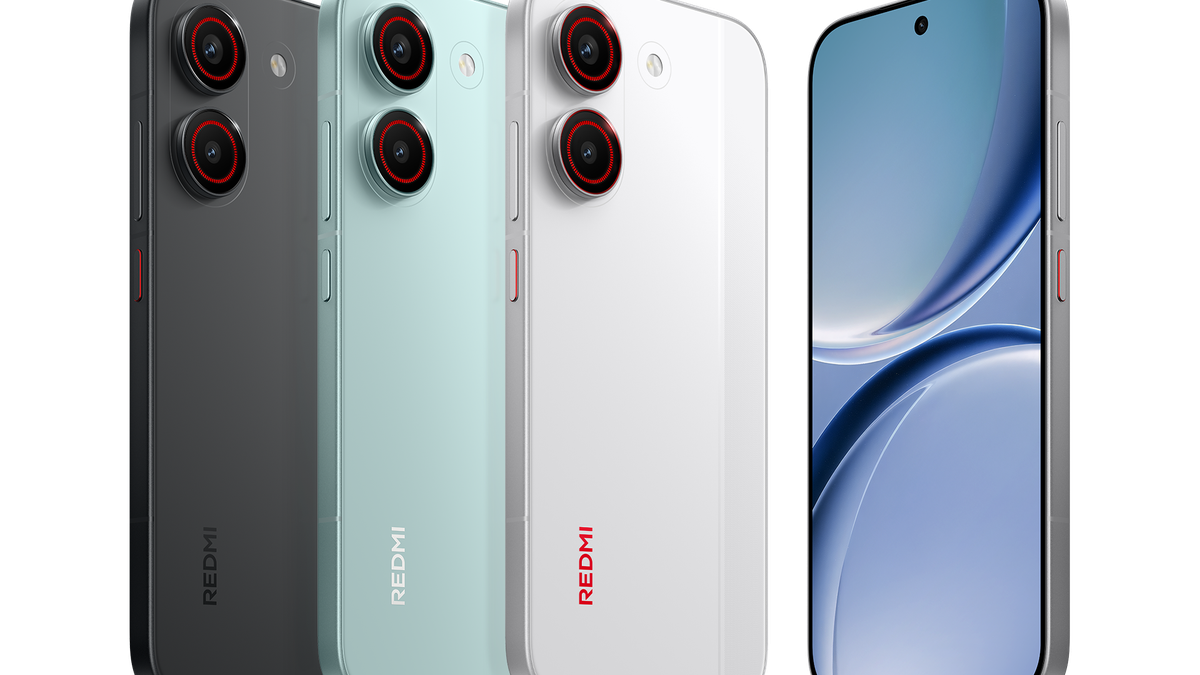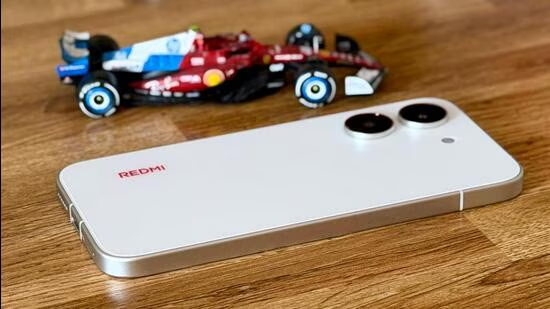
Redmi has brought its Turbo performance line to India for the first time, and it has led with the part a buyer feels first: a 7,540mAh battery, the largest Redmi has ever fitted to a phone sold in the country. The Redmi Turbo 5, announced on 16 June and on sale from 19 June, wraps that cell around the world’s first MediaTek Dimensity 8500-Ultra chip and opens at Rs 37,999. The same hardware already sells in China, where it launched in January, and ships to other markets as the POCO X8 Pro — so India gets the Redmi badge on a phone the rest of the world meets under a different name.It walks into the most crowded, most price-aggressive corner of the Indian market, the Rs 30,000-to-40,000 performance bracket, where a big battery on its own settles very little.Key TakeawaysThe Redmi Turbo 5 launches in India at Rs 37,999 for 8GB+256GB and Rs 40,999 for 12GB+256GB, with a Rs 2,000 bank discount taking effective prices to Rs 35,999 and Rs 38,999; sale opens 19 June at noon on Mi.com, Amazon.in and Xiaomi retail.It carries a 7,540mAh silicon-carbon battery with 100W wired charging and 27W reverse wired charging — Xiaomi’s biggest battery on an Indian Redmi phone.The chip is the MediaTek Dimensity 8500-Ultra, a 4nm part the Turbo 5 debuted globally, with an all-big-core layout and an AnTuTu score above 2 million.The 6.59-inch 1.5K AMOLED display reaches 3,500 nits peak, runs at 120Hz with Dolby Vision, and the body holds IP66/IP68/IP69/IP69K ratings with Gorilla Glass 7i.The camera is the modest part: a 50MP Sony IMX882 main with optical stabilisation, an 8MP ultrawide and a 20MP selfie, and the rivals push back hardest on chip tier and price.What does the Redmi Turbo 5 cost, and when does it go on sale?It starts at Rs 37,999 and goes on sale on 19 June at noon. That base buys the 8GB+256GB model; the 12GB+256GB version asks Rs 40,999, and a Rs 2,000 instant bank discount brings the two down to Rs 35,999 and Rs 38,999. Sales run across Mi.com, Amazon.in and Xiaomi’s retail stores. The launch matters beyond one phone, because it opens the Redmi Turbo series in India for the first time, a line Xiaomi has sold in China since the Turbo 3 and kept away from Indian shelves until now. One number frames the ambition and the risk together: in China the Turbo 5 opened near 1,999 yuan, roughly Rs 26,000, so the Indian sticker sits well above its home price once taxes and positioning are added.Power built to go the full distanceThe 7,540mAh battery is the reason this phone exists, and it answers the one complaint that outlasts every spec cycle: range anxiety. Most flagships in 2026 still pace themselves around 5,000 to 5,500mAh; the Turbo 5 runs with a far deeper tank, built on 16 per cent silicon-carbon chemistry that packs more capacity into the same space. Xiaomi rates it for two days of moderate use, a claim worth testing in review rather than taking on trust, yet the headroom is real and rare at this price. When the tank does run low, 100W wired charging refills it to 51 per cent in half an hour by Xiaomi’s measure, with the charger supplied in the box. There is a second wind built in too: 27W reverse wired charging lets the Turbo 5 push power back out to earbuds, a watch or a friend’s dying handset, at a speed that outpaces the wired charging on some pricier phones. The trade for all that capacity is mass, and the phone carries it well — roughly 8.2mm thick and around 204 grams, slim for a cell this size.The chip, the screen and the buildPerformance is where Redmi has spent its boldest claim. The Dimensity 8500-Ultra arrived first on this phone, a 4nm part MediaTek built with an all-big-core layout borrowed from its flagship thinking, and it clears 2 million on AnTuTu — territory that reads as upper-tier rather than mid-range. Redmi pairs it with LPDDR5X Ultra memory (on the 12GB model) and UFS 4.1 storage, then leans on a 3D IceLoop cooling system with a 5,300mm² vapour chamber and Game Turbo Wild Boost tuning to hold frame rates steady. The company quotes sustained 120fps across more than 20 titles, with the list growing.The display tells a similar story of spending where buyers notice. It measures 6.59 inches, runs 1.5K resolution at 120Hz, and peaks at 3,500 nits — bright enough to stay legible in Indian summer glare, and the brightest screen Xiaomi has put on a Redmi. Dolby Vision, 12-bit colour and 3,840Hz PWM dimming round it out, with TÜV Rheinland certification for eye comfort and a pair of stereo speakers tuned for Dolby Atmos. Build quality reaches higher than the segment norm as well: an aluminium frame, dual glass with Corning Gorilla Glass 7i, the full sweep of IP66, IP68, IP69 and IP69K dust-and-water ratings, and the Pixel Matrix ring lights around the cameras that pulse to calls and notifications.The camera is where the budget ran thinner. A 50MP Sony IMX882 main with optical and electronic stabilisation handles the heavy lifting, backed by an 8MP ultrawide and a 20MP front sensor, with 4K 60fps video and a Turbo Snap burst mode that fires 100 frames in 4.4 seconds. Capable for daylight and clips; some way short of the multi-lens systems that camera-led rivals bring to the same money. Software runs Xiaomi HyperOS 3 over Android 16, with Gemini and Circle to Search built in, and Xiaomi promises four years of Android upgrades and six years of security patches.Where does it stand against the iQOO Neo 10?It is dearer than the phone most buyers will cross-shop it against, and that is the Turbo 5’s central problem. The iQOO Neo 10 opens around Rs 31,999, several thousand rupees under the Turbo 5, and answers spec for spec on the things performance buyers count. Here is how the two line up.SpecRedmi Turbo 5iQOO Neo 10Price (from)Rs 37,999 (effective Rs 35,999)~Rs 31,999ChipDimensity 8500-Ultra (world-first)Snapdragon 8s Gen 4 + Q1 gaming chipDisplay6.59” 1.5K AMOLED, 120Hz, 3,500 nits6.78” 1.5K AMOLED, 144Hz, ~5,500 nitsBattery / charging7,540mAh / 100W wired, 27W reverse7,000mAh / 120W wiredRear cameras50MP IMX882 (OIS) + 8MP ultrawide50MP + 8MP ultrawideFront camera20MP32MPDurabilityIP66/IP68/IP69/IP69K, Gorilla Glass 7iVapour-chamber gaming buildSoftwareHyperOS 3, 4 yrs OS + 6 yrs securityFuntouch OSRead across and the contest splits cleanly. The Turbo 5 holds the bigger battery, the brighter rated screen and the fuller set of water-resistance ratings; the Neo 10 brings a 144Hz panel, faster 120W charging, a dedicated Q1 gaming chip beside its Snapdragon 8s Gen 4, and a lower price. Step up a few thousand rupees and the realme GT 7, around Rs 36,999, fields a Dimensity 9400e — a genuinely flagship-grade chip — for much the same outlay. The Turbo 5’s silicon sits between the two: stronger than most mid-range parts, a step below the flagship tier its closest-priced rival reaches.A loud spec sheet on a crowded streetThink of this segment as a packed food street where every stall piles the thali higher to win the next customer, and the Turbo 5 arrives with a plate stacked tall — the deepest battery, the brightest screen, the toughest body — while the stall next door serves nearly as much for less. That is the bet Xiaomi has placed. Redmi’s chief business officer in India, Sandeep Singh Arora, pitched it at buyers who “refuse to compromise on performance, endurance or reliability,” and the phone delivers most loudly on endurance and reliability. On raw chip tier and on camera, the cheaper iQOO Neo 10 and the chip-led realme GT 7 keep the pressure on.For a particular buyer the maths still lands. Anyone who values two-day battery life, a screen readable in harsh sun, and an IP69K body that shrugs off rain and dust will find the Turbo 5 carries more of those at once than anything near the price. The shopper chasing the highest benchmark score per rupee, or a sharper camera, has cheaper and equally loud options on the same street. Two things are worth watching from here: whether Xiaomi lets the POCO X8 Pro — the Turbo 5’s global twin — reach India and crowd its own shelf, and how fast the 19 June sale prices settle once the bank-offer dust clears.Frequently asked questionsWhat is the price of the Redmi Turbo 5 in India?It starts at Rs 37,999 for the 8GB+256GB variant and Rs 40,999 for 12GB+256GB. A Rs 2,000 instant bank discount lowers the effective prices to Rs 35,999 and Rs 38,999. Sale opens on 19 June 2026 at noon on Mi.com, Amazon.in and Xiaomi retail stores.How big is the Redmi Turbo 5 battery and how fast does it charge?The battery is 7,540mAh, built on 16 per cent silicon-carbon chemistry, which Xiaomi says is the largest on any Redmi phone sold in India. It supports 100W wired charging — rated to reach 51 per cent in 30 minutes, with the charger included — plus 27W reverse wired charging to top up accessories or other phones.Which chipset powers the Redmi Turbo 5?The MediaTek Dimensity 8500-Ultra, a 4nm chip the Redmi Turbo 5 launched first, globally. It uses an all-big-core layout and scores above 2 million on AnTuTu, placing it among the stronger performance chips in the segment, a step below flagship Snapdragon and the top Dimensity 9000-series parts.How does the Redmi Turbo 5 compare with the iQOO Neo 10?The Turbo 5 leads on battery (7,540mAh versus 7,000mAh), rated screen brightness and water resistance. The iQOO Neo 10 starts about Rs 6,000 cheaper, charges faster at 120W, runs a 144Hz screen, and adds a dedicated gaming chip. The realme GT 7, at a similar price to the Turbo 5, offers a flagship-grade Dimensity 9400e.Is the Redmi Turbo 5 the same as the POCO X8 Pro?They share the same core hardware. The phone sells in China as the Redmi Turbo 5 and reaches several global markets as the POCO X8 Pro. In India, Xiaomi has chosen the Redmi Turbo badge, opening the Redmi Turbo series locally for the first time.end of article
Redmi Turbo 5 Brings A 7,540mAh Battery To India From Rs 37,999
Redmi has brought its Turbo performance line to India for the first time, and it has led with the part a buyer feels first: a 7,540mAh battery, the largest Redmi has ever fitted to a phone sold in the country. The Redmi Turbo 5, announced on 16 June and on sale from 19 June, wraps that cell around the world’s first MediaTek Dimensity 8500-Ultra chip and opens at Rs 37,999. The same hardware already sells in China, where it launched in January, and ships to other markets as the POCO X8 Pro — so India gets the Redmi badge on a phone the rest of the world meets under a different name.
1,688 words~8 min read