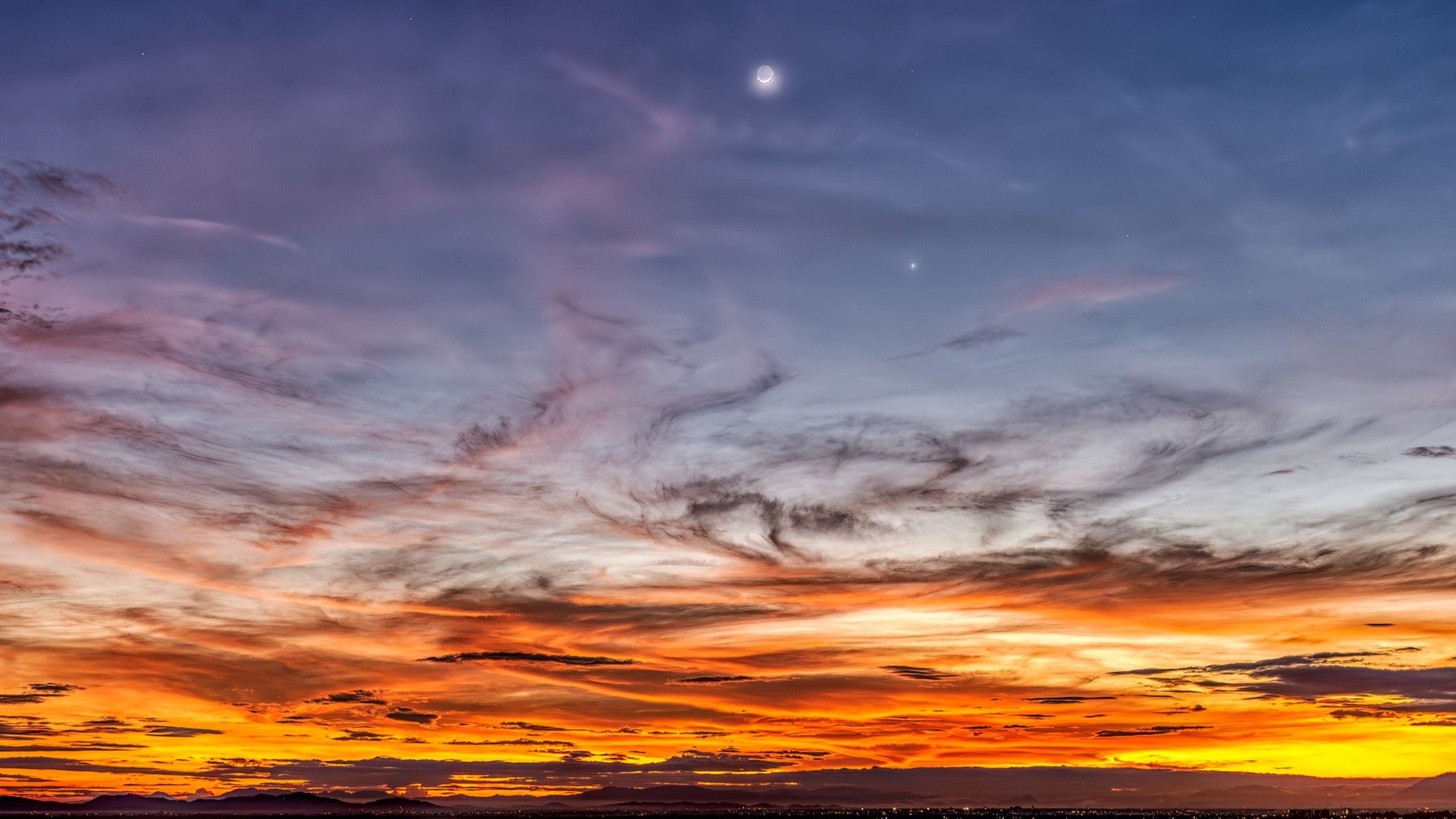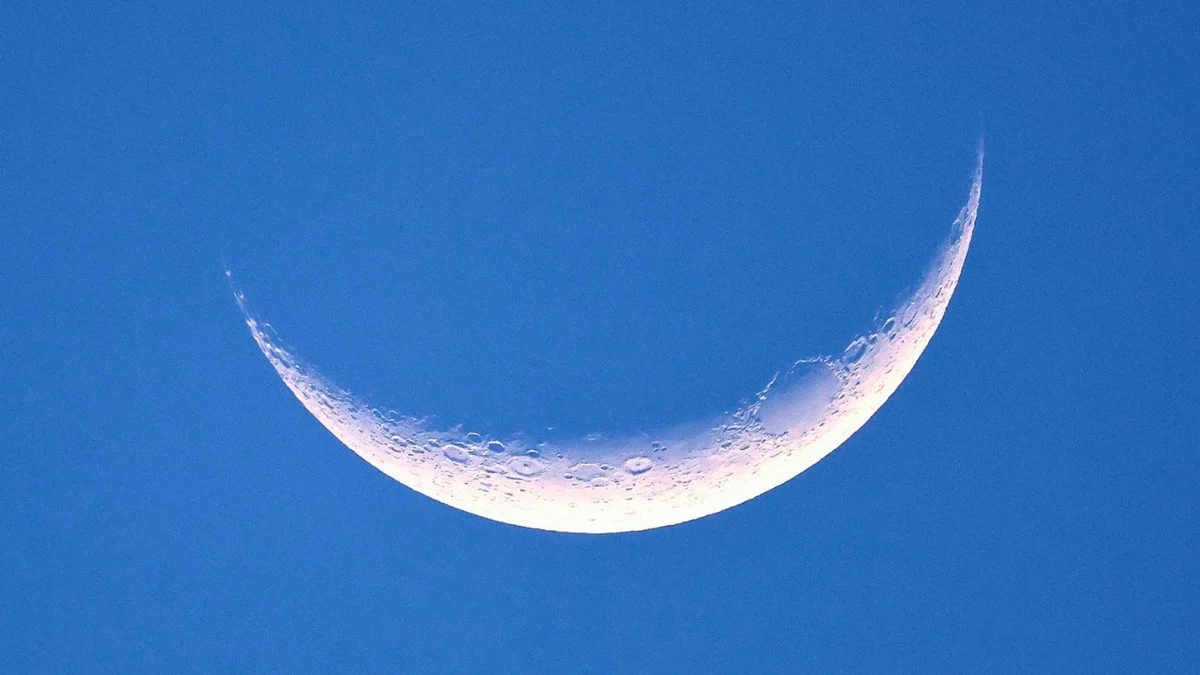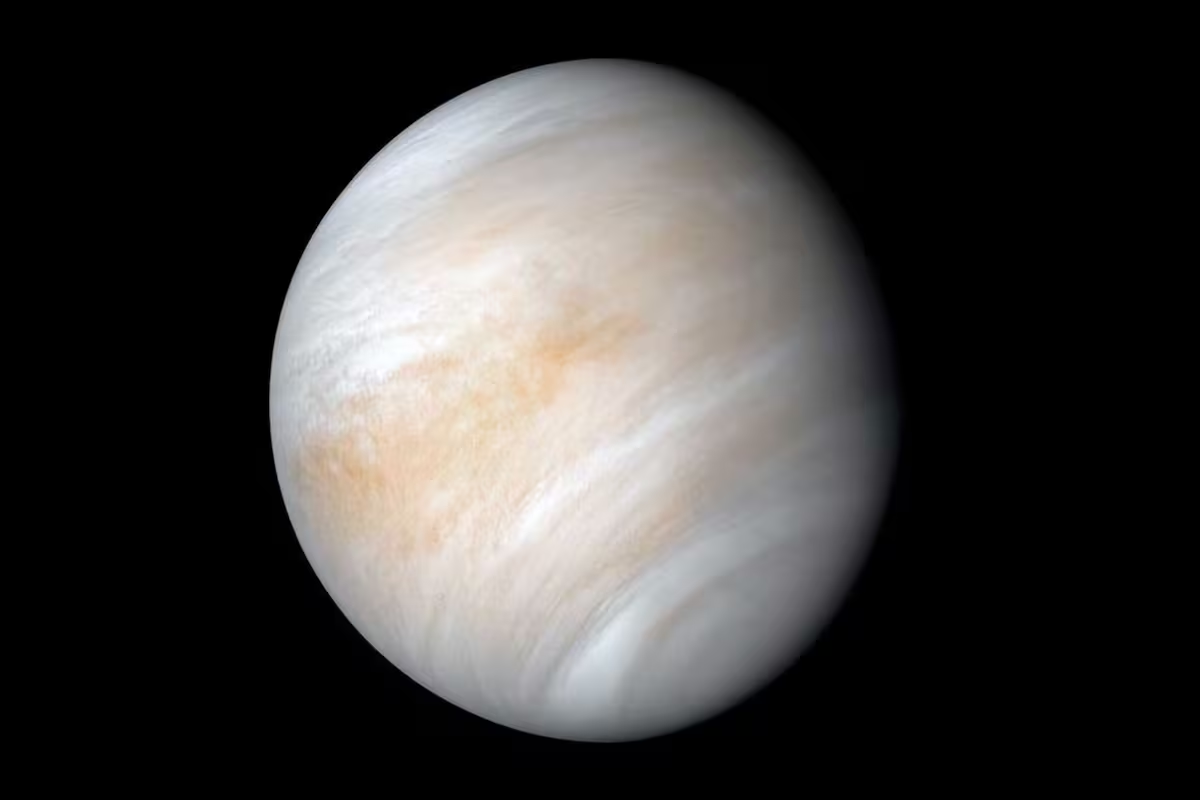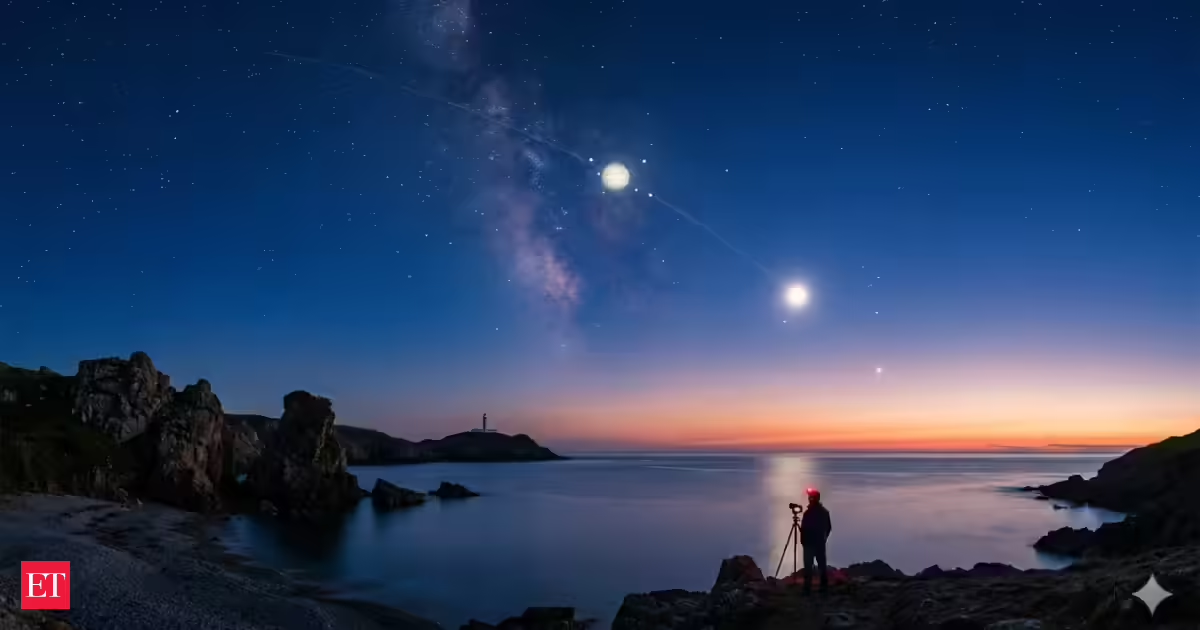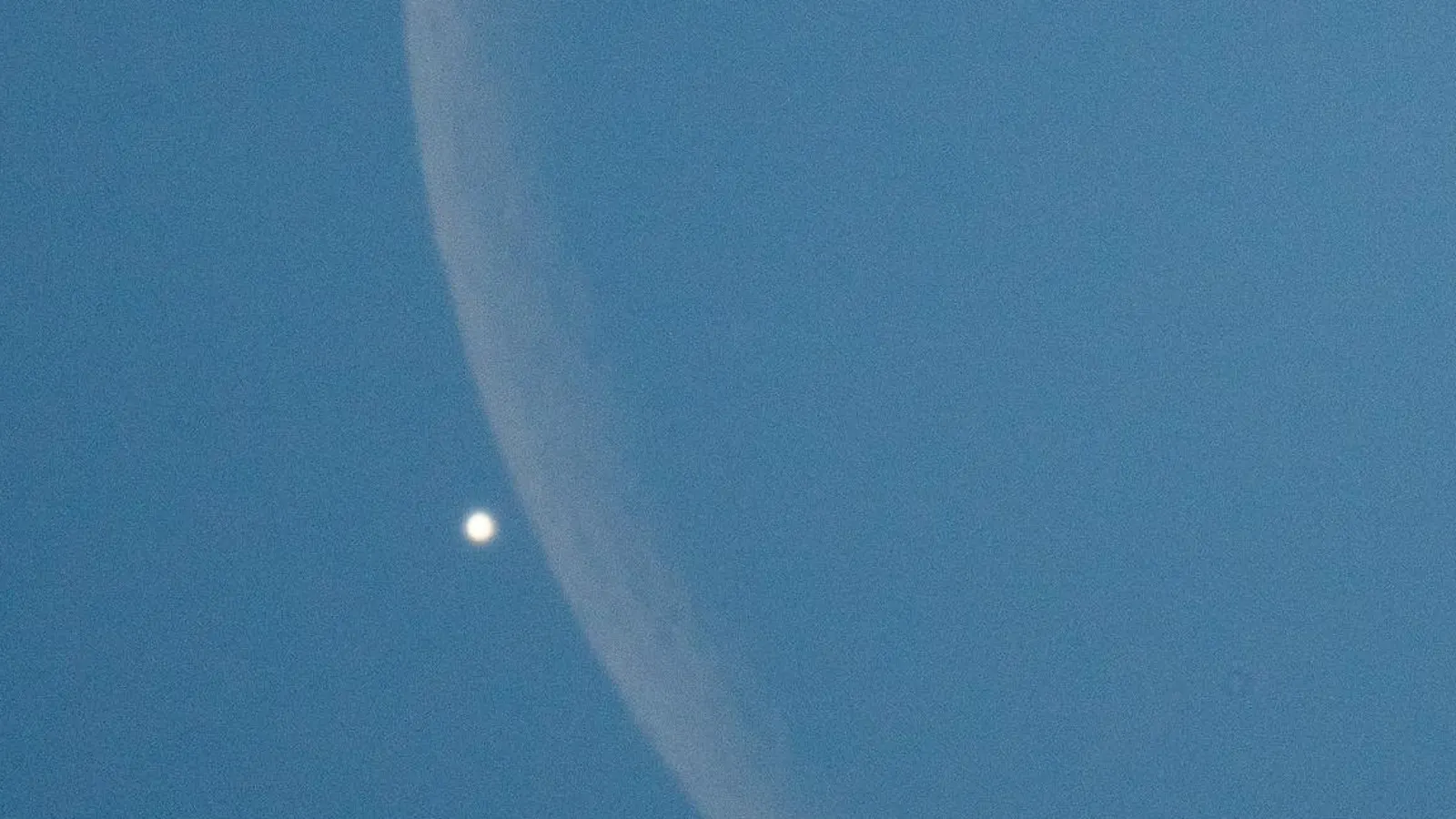
A lunar occultation of Venus is seen through a telescope from L'Aquila, Italy, on September 19, 2025. (Photo by Lorenzo Di Cola/NurPhoto via Getty Images)NurPhoto via Getty ImagesCareful skywatchers across the U.S. and much of Canada will have a rare chance this Wednesday, June 17, to witness a striking daytime astronomy event as the crescent moon passes directly in front of Venus for around an hour. The event, known as a lunar occultation of Venus, will see the bright planet disappear behind the moon’s dark edge before reappearing roughly an hour later. It marks the first time in 11 years that this type of daylight occultation of Venus has been visible over the U.S. It will also be seen in Canada, Brazil and Venezuela, according to In-The-Sky.org. However, care will be needed when pointing binoculars while the sun is in the sky. Here’s everything you need to know about the daylight occultation of Venus on June 17, 2026 — and how to stay safe.The beginning and end of the lunar occultation of Venus on June 27, 2026. StellariumHow To Watch The Venus Occultation SafelyUnlike many celestial events that require dark skies, this one happens in broad daylight. According to Dr. Tony Phillips at Spaceweather.com, the best way to see it will be to “go outside under the blue sky and stand in the shadow of a building. Scan the blue sky with binoculars until you find the moon's pale crescent.” At the time of the occultation, the moon will be just 11%-lit and about 38 degrees from the sun. Standing in a shadow is a good way to avoid pointing binoculars at the sun, which can cause immediate and permanent eye damage.Once you’ve found them using binoculars, says Phillips, you’ll probably be able to see the moon and Venus with the naked eye. “Find the moon and look just to its left for a spark of white light glimmering against the blue sky,” says Bob King on Sky & Telescope. “Or if you'd prefer, pull out a pair of binoculars and point it at the moon. For an hour or two on either side of the occultation, Venus will shine close to the moon in the same field of view.” Remember, never aim binoculars, telescopes, or any optical equipment near the sun. Doing so can cause immediate and permanent eye damage.MORE FOR YOUA map from In-the-sky.org showing the visibility of a lunar occultation of Venus on June 17, 2026. Dominic Ford / In-the-sky.orgExactly When To Look For The Lunar Occultation Of VenusThe event will begin with Venus disappearing behind the dark limb of the crescent moon and end when it reappears beside the bright crescent. Those two moments are what skywatchers will be waiting for.Although it’s visible across the entire contiguous U.S. and much of Canada, the exact timing for any observer depends on their exact location. Exhaustive times for various places are listed by the International Occultation Timing Association, though in universal time (use a timezone converter).The daytime sky and position of the moon and sun during the occultation of Venus on June 17, 2026. StellariumAlong the East Coast of the U.S., the occultation begins around 4:00 p.m. EDT, while on the West Coast, the event starts around 11:40 a.m. PDT. Here are some exact times for 10 sample cities in the U.S. from east to west: Newark, New Jersey: 3:53:21 p.m.–5:10:27 p.m. EDT (1 hour, 17 minutes, 6 seconds)Philadelphia, Pennsylvania: 3:51:21 p.m.–5:11:19 p.m. EDT (1 hour, 19 minutes, 58 seconds)Chicago, Illinois: 2:24:49 p.m.–3:50:09 p.m. CDT (1 hour, 25 minutes, 20 seconds)Houston, Texas: 2:29:27 p.m.–3:36:04 p.m. CDT (1 hour, 6 minutes, 37 seconds)Dallas, Texas: 2:18:13 p.m.–3:34:35 p.m. CDT (1 hour, 16 minutes, 22 seconds)Fort Worth, Texas: 2:17:54 p.m.–3:33:58 p.m. CDT (1 hour, 16 minutes, 4 seconds)San Antonio, Texas: 2:26:06 p.m.–3:23:53 p.m. CDT (57 minutes, 47 seconds)Phoenix, Arizona: 11:50:54 a.m.–12:55:07 p.m. MST (1 hour, 4 minutes, 13 seconds)San Diego, California: 11:44:10 a.m.–12:43:14 p.m. PDT (59 minutes, 4 seconds)Los Angeles, California: 11:40:38 a.m.–12:44:07 p.m. PDT (1 hour, 3 minutes, 29 seconds)The moon and planets will be on show in the west after sunset on June 17, 2026. StellariumWhy To Come Back After SunsetWhether or not you see the rare occultation, come back about an hour after sunset and look west for the beautiful sight of a 12%-lit waxing crescent moon and three bright planets. The moon will have moved slightly away from Venus, with Jupiter and Mercury below.Put your binoculars on the crescent moon once again, and behind it, you’ll see a flurry of stars. That’s the Beehive Cluster (also called M44 and Praesepe), in the constellation Cancer, an open cluster of around 1,000 stars.The Virtual Telescope Project will livestream images of the “planet parade,” the crescent moon and the Beehive Cluster via robotic telescopes in Italy, beginning at 19:45 UTC (3:45 p.m. EDT).The 5-day-old waxing crescent Moon near the Beehive star cluster, Messier 44, in Cancer on the evening of May 10, 2019. (Photo by: Alan Dyer/VW PICS/Universal Images Group via Getty Images)VW Pics/Universal Images Group via Getty ImagesWishing you clear skies and wide eyes.
The Moon Will Eclipse Venus On Wednesday — How To See It From 48 States
The event, not seen in the U.S. for 11 years, will occur about 4:00 p.m. EDT on the U.S. East coast and 11:40 a.m. PDT on the West Coast, but requires care to see.
845 words~4 min read