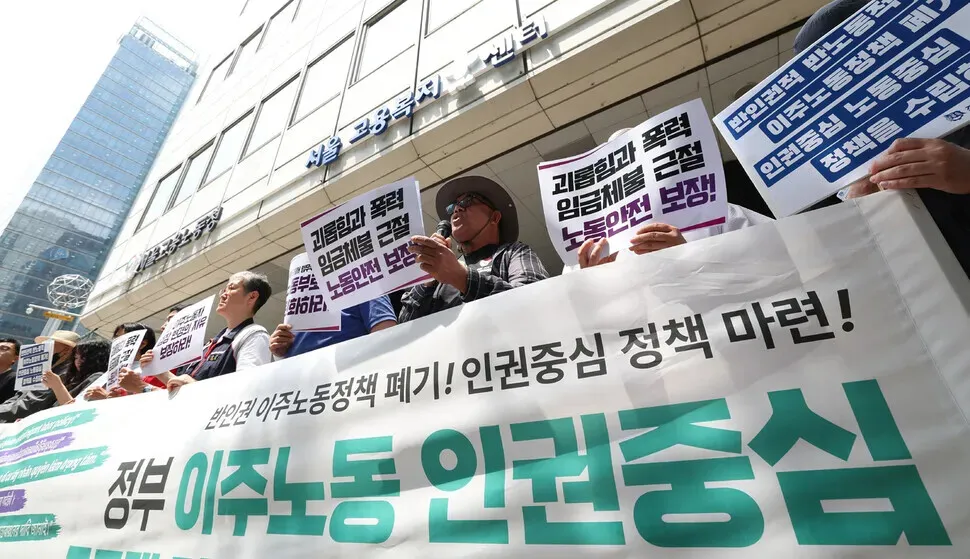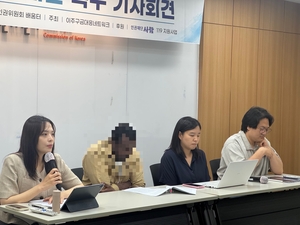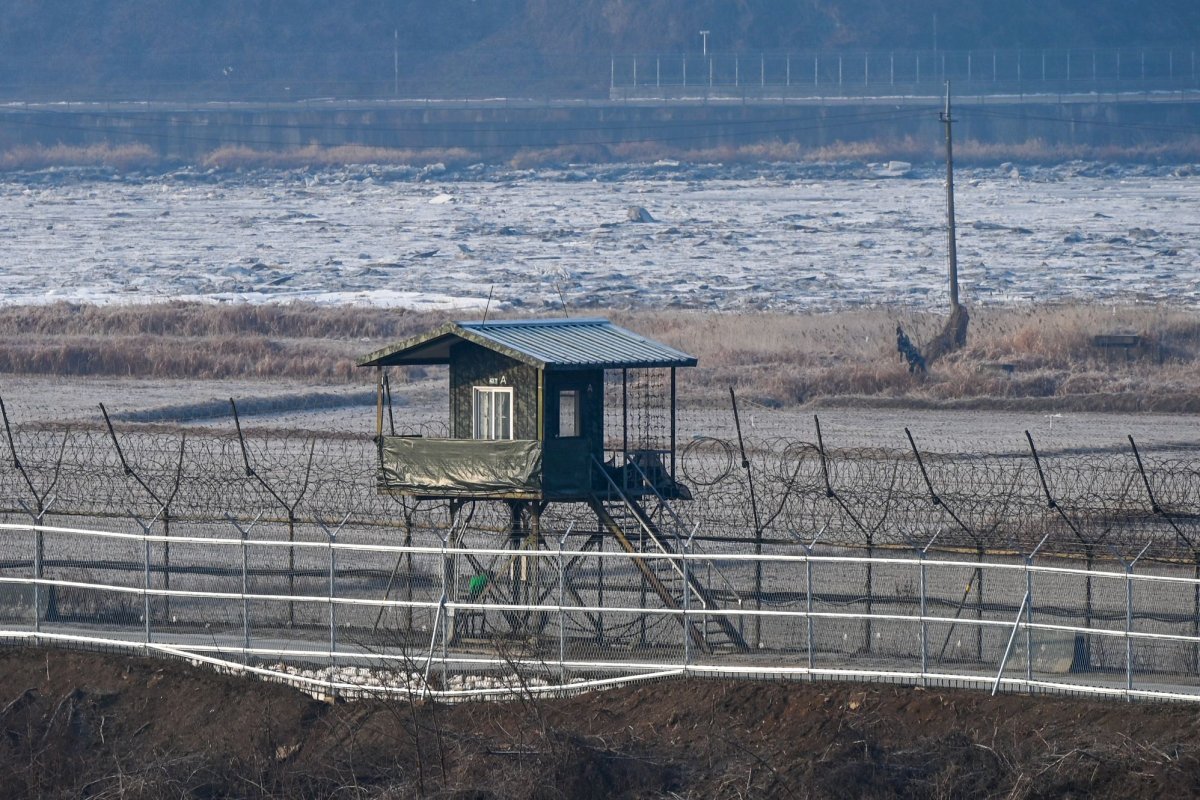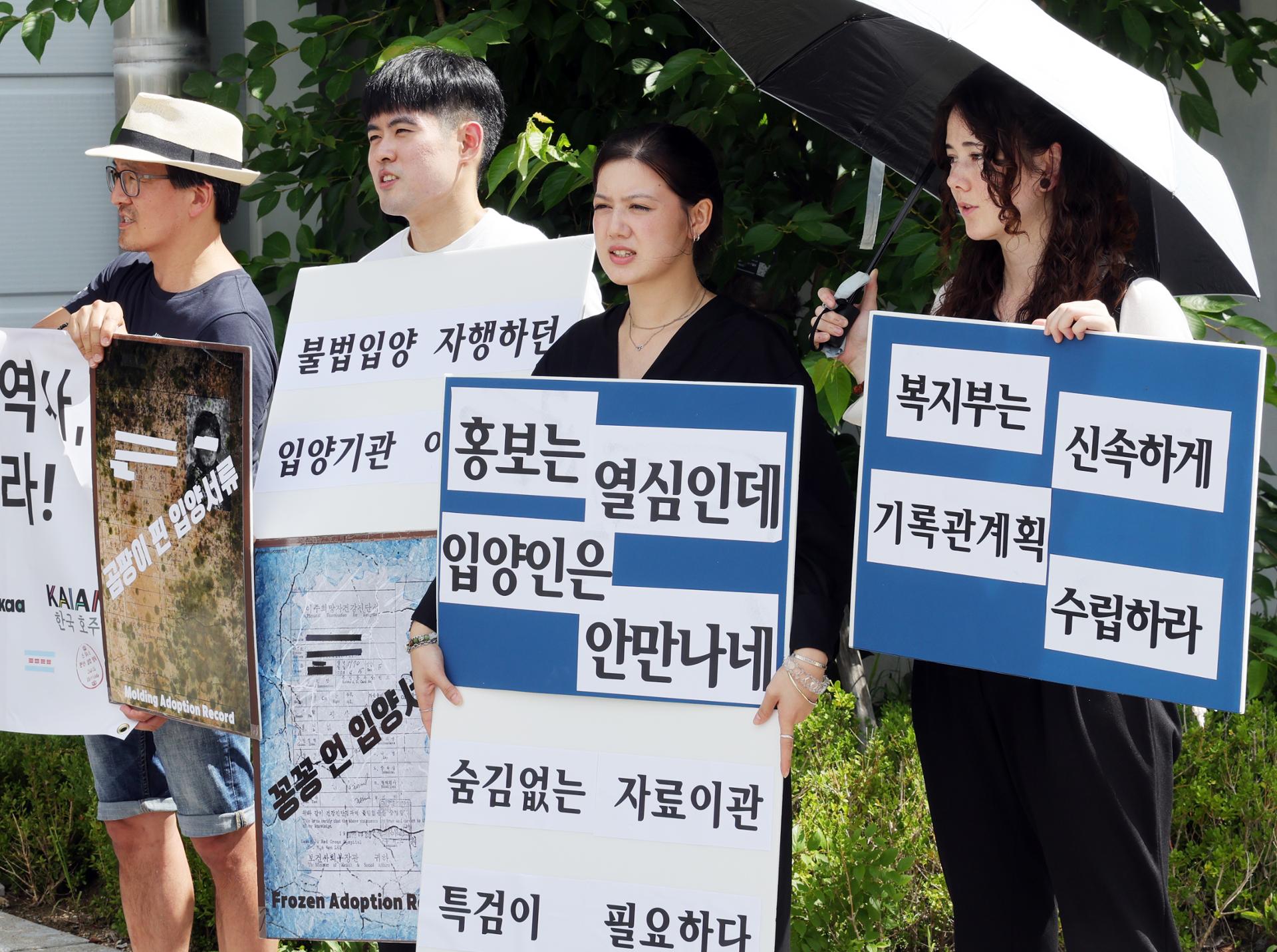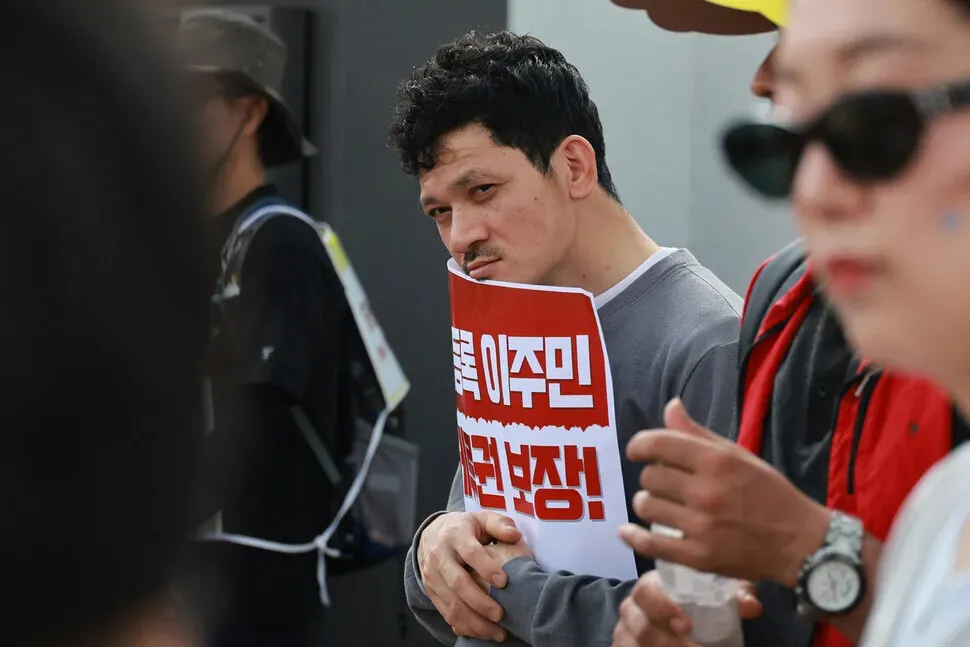
Migrant rights groups hold a press conference outside the central government complex in Seoul on June 14, 2026, to call for pathways for undocumented migrants to obtain legal status in the country. (Jung Yong-il/Hankyoreh)
Editor’s note: The names of all undocumented migrants that appear in the following article are pseudonyms.Amir, 49, left Karachi, Pakistan, and arrived at Gimpo Airport, Seoul, in 1999.In the 27 years since then, he has transitioned from youth to middle age, and his children have become adults.Amir has worked in Korea, made money, pursued his dreams, had children, survived illness, enjoyed success, and dealt with discouragement. In short, he has faced the high and low points of life, just like any Korean, but with one critical difference — he doesn’t have legal status here. He’s an undocumented migrant.What does it mean to spend over two decades of one’s life as an undocumented member of a society? A report examining that experience was presented at Korea’s National Assembly on Monday.Titled “The Lives of Long-Term Undocumented Migrants and Just Migration Policy,” the report was produced by MARCO, a research group consisting of migrant rights researchers and activists, with support from the Finance and Service Ubuntu Fund.The report contains oral accounts from 10 migrants who have been undocumented in Korea for between 12 and 35 years.Their accounts describe an existence that is nearly unimaginable for most Koreans. Many migrants refuse to ride buses or subways for fear of being nabbed by the authorities, spend the daytime hours holed up at home and work in bars after dark, and have to watch helplessly as their children’s health suffers and dreams are dashed.These migrants have adapted to their lives and are no longer able to return home. But the threat of deportation always hangs over their head.