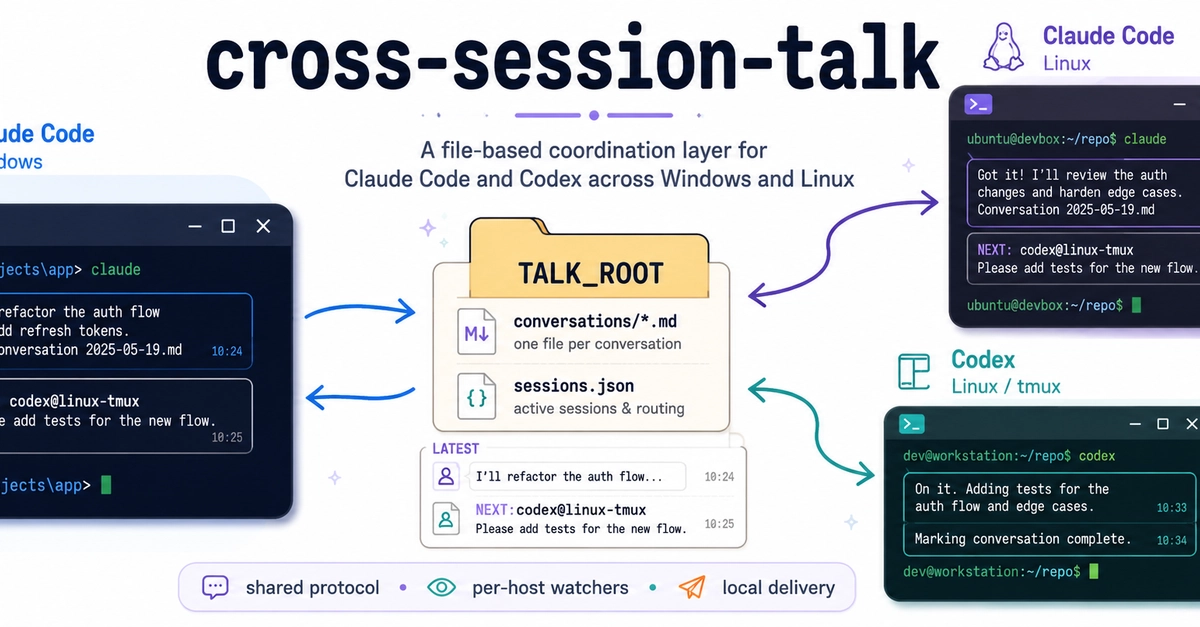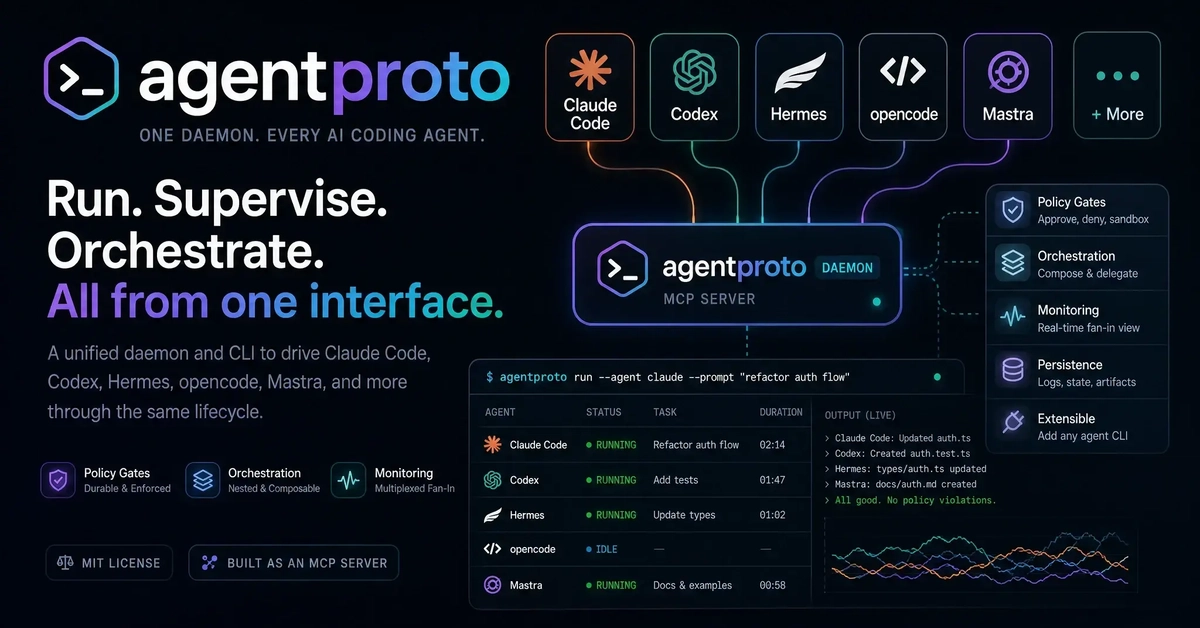
I run two AI coding agents simultaneously when I work. Claude Code handles architecture decisions and code review. Codex runs parallel implementation tasks — writing tests, scaffolding modules, handling migrations. On a productive day, they make hundreds of decisions between them.
I have no idea what most of those decisions are.
I'm not exaggerating. I set the direction. I review the outputs. But the intermediate reasoning — why Claude Code chose this abstraction over that one, why Codex structured a test suite in a particular way, what trade-offs each agent silently made — disappears the moment the context window rolls over. I get the artifacts. I lose the logic.
This is my daily reality, and I'm a technical founder who chose this workflow. Imagine an enterprise with fifty teams, each running their own agents, with no coordination, no audit trail, no shared governance model. That's not a hypothetical. That's most organizations adopting AI agents right now.
I wrote about this problem recently — I called it Agent Dark Matter. The invisible mass of unrecorded, unmonitored agent decisions that shapes your organization's outcomes without anyone knowing.