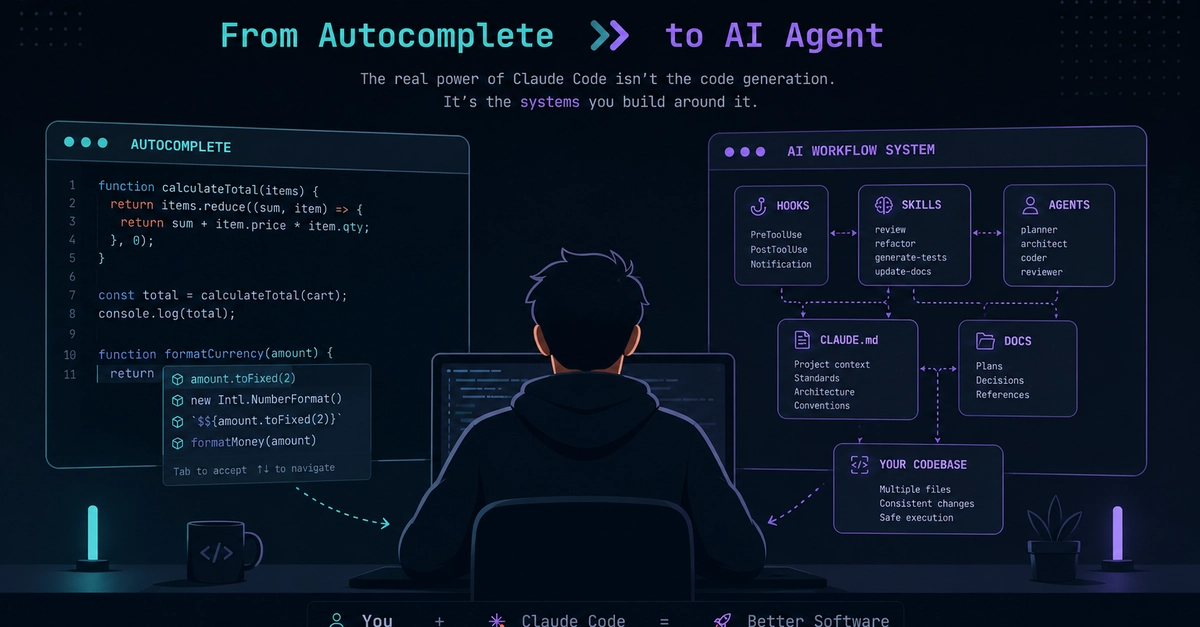
Let me say the honest thing first: an AI types a lot of the code I ship. The offline-first Android app our technicians use at Exequtech, parts of this website, migration scripts, test suites — Claude Code wrote much of it, in my terminal, under my eyes. I don't think that makes me less of an engineer. I think how I do it is what decides that.
A couple of years ago I made it my mission to learn to work with AI properly. Not because it was trendy — because we run a product with real users and a small team, and refusing the leverage would have been malpractice. What I didn't expect is how much actual skill the leverage demands.
Managing the chaos
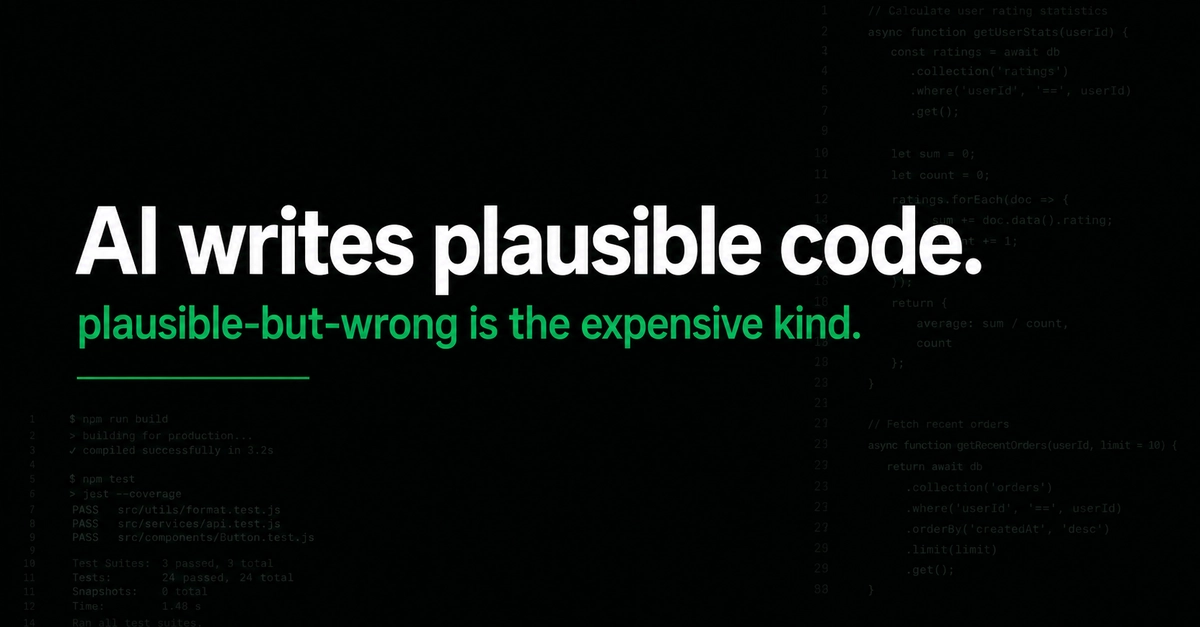
Left alone, an agent produces plausible chaos. It will refactor things you didn't ask about, invent an API that almost exists, and write code that is — as most developers who use these tools will tell you — almost right. Almost right is the expensive kind of wrong: it compiles, it demos, and it detonates three weeks later in a basement with zero signal.
So the job becomes something like being a very hands-on tech lead for a very fast, very confident junior: