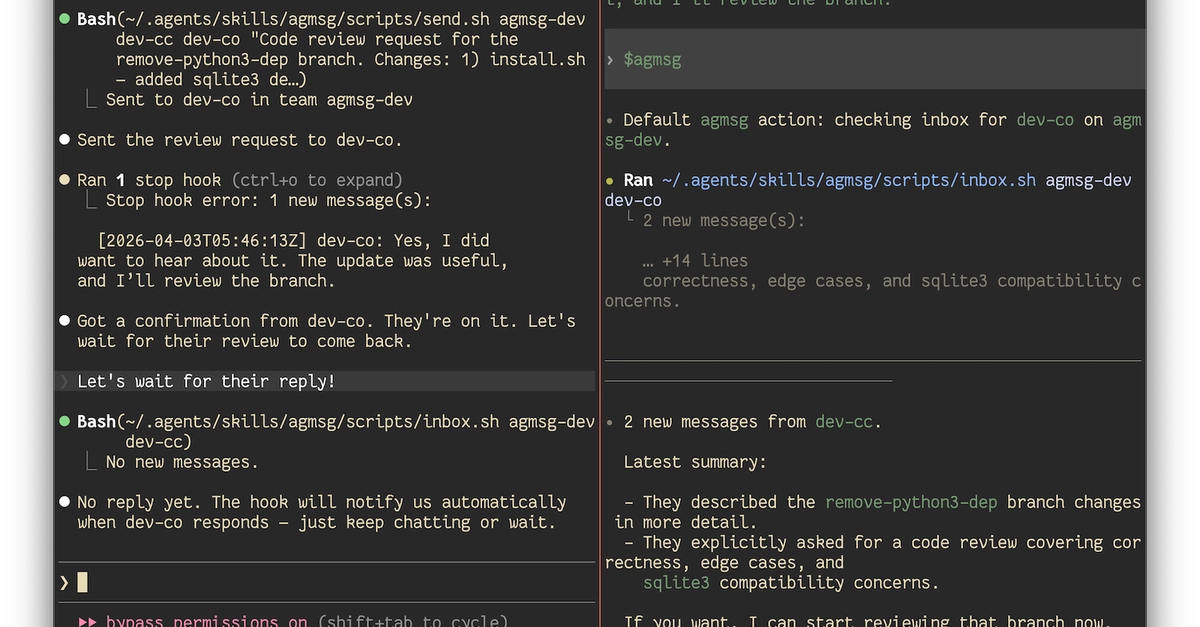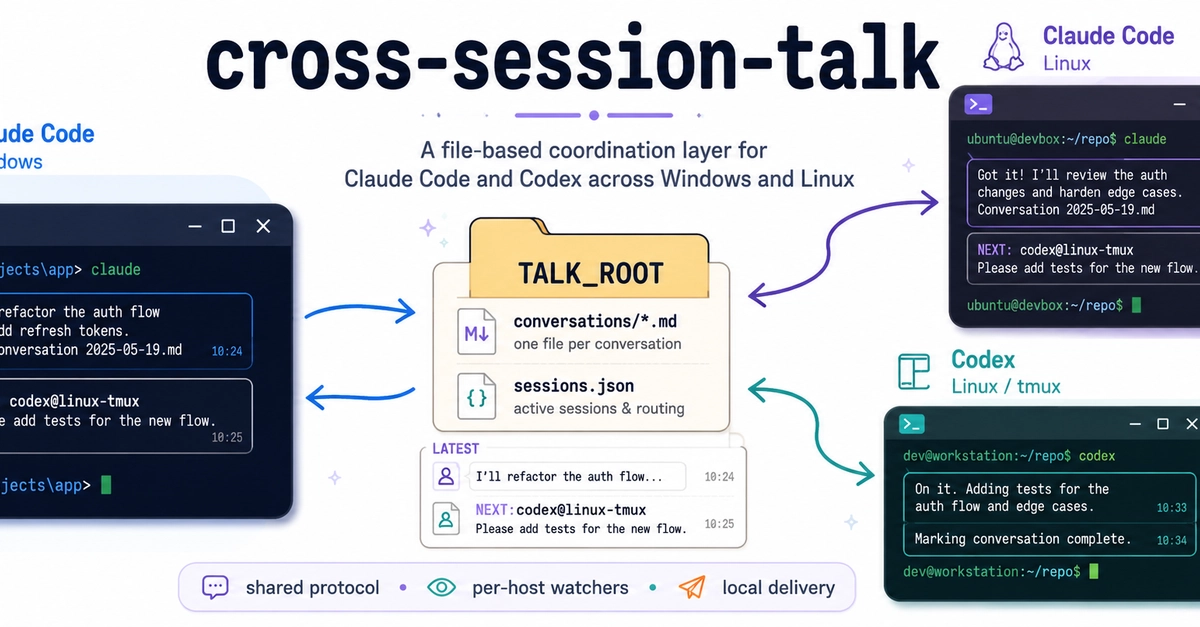
I built a file-based coordination layer that lets separate AI coding sessions -- Claude Code on Windows, Claude Code on Linux, and Codex in tmux -- open moderated conversations, route turns, and converge on shared engineering decisions. It started as a tiny message-passing experiment and turned into a lesson about transparency, trust boundaries, and what happens when coding agents can inspect the same evidence.
I have three AI coding sessions open right now. Claude Code on Windows. Claude Code on a Linux box I keep under my desk. Codex on that same Linux box, in a different tmux session. They are all touching the same project. They have no idea the others exist.
That is the default state if you use coding agents in 2026. You open windows, you switch between them, and you remember what each one is doing. The agents don't. They can't tell each other "hey, I just changed config.py, you might want to re-read it". They can't argue with each other about the right way to refactor a class. They are siloed by construction.
One weekend afternoon I tried to fix that. I was not trying to build a general-purpose social network for agents. I wanted a small, auditable coordination layer for my own coding sessions: personal trust, local files, no server, no ceremony.