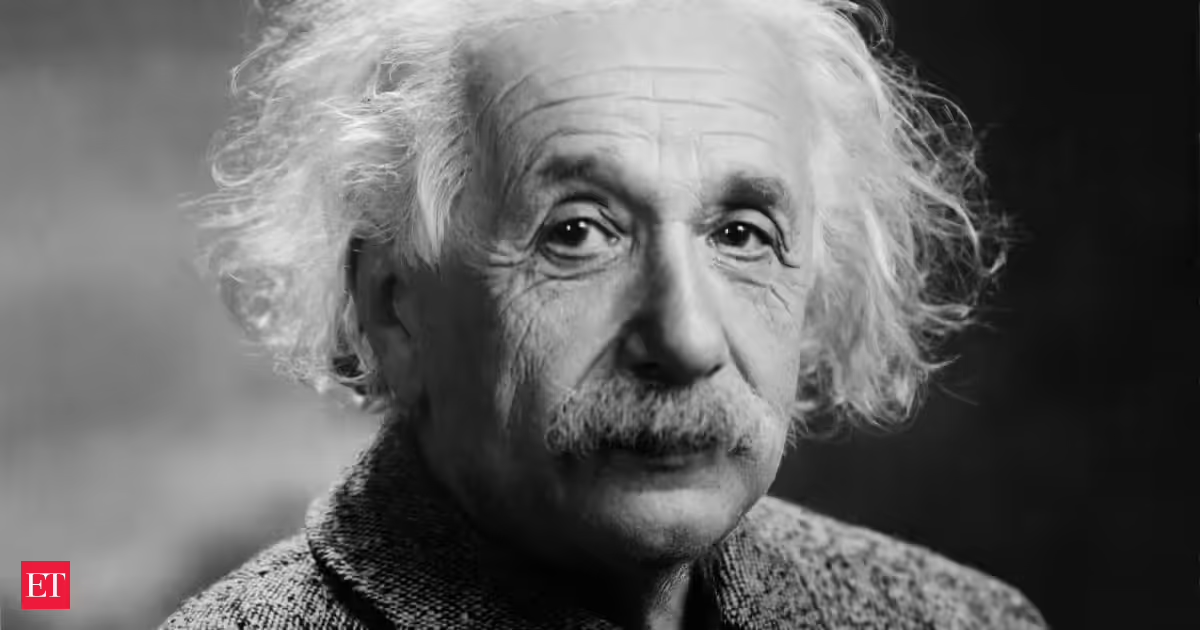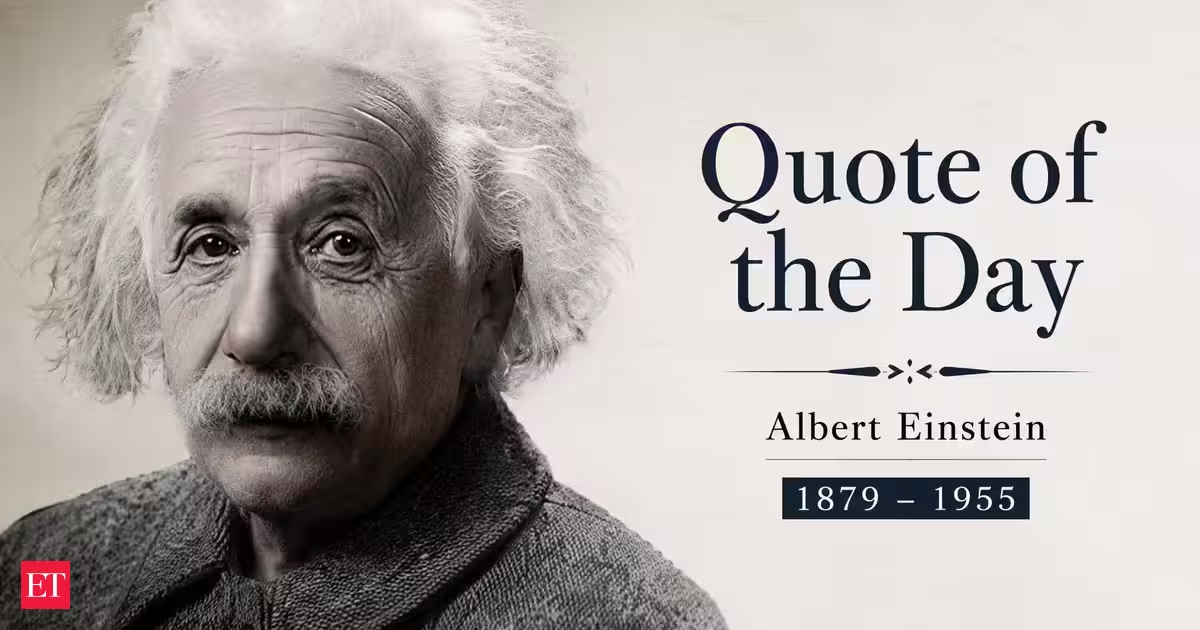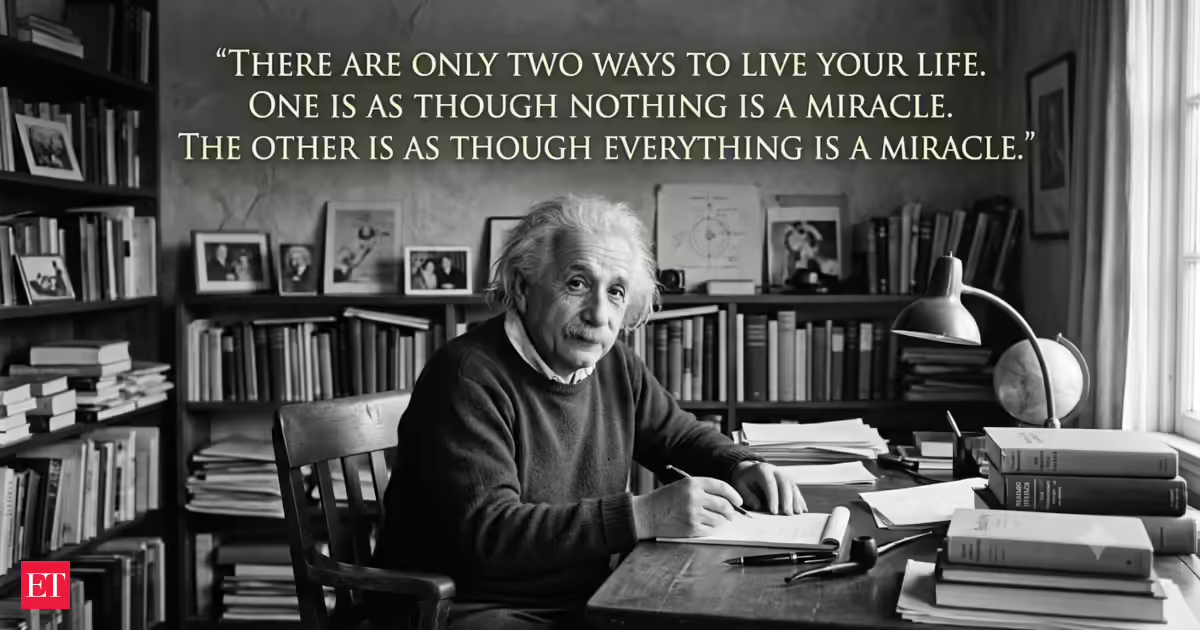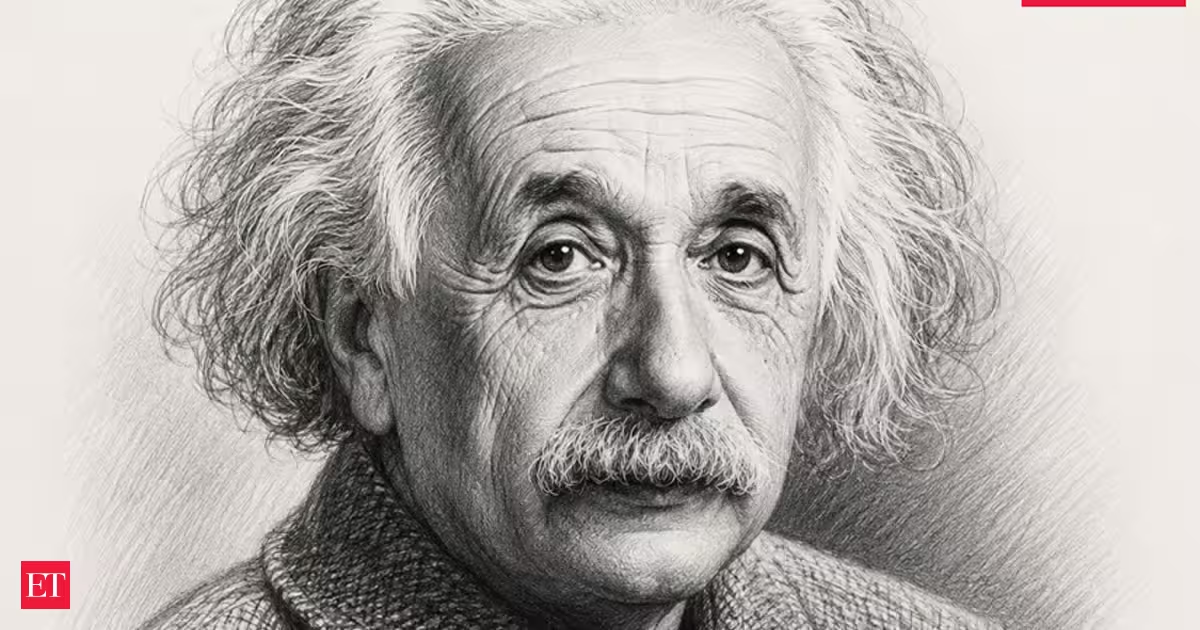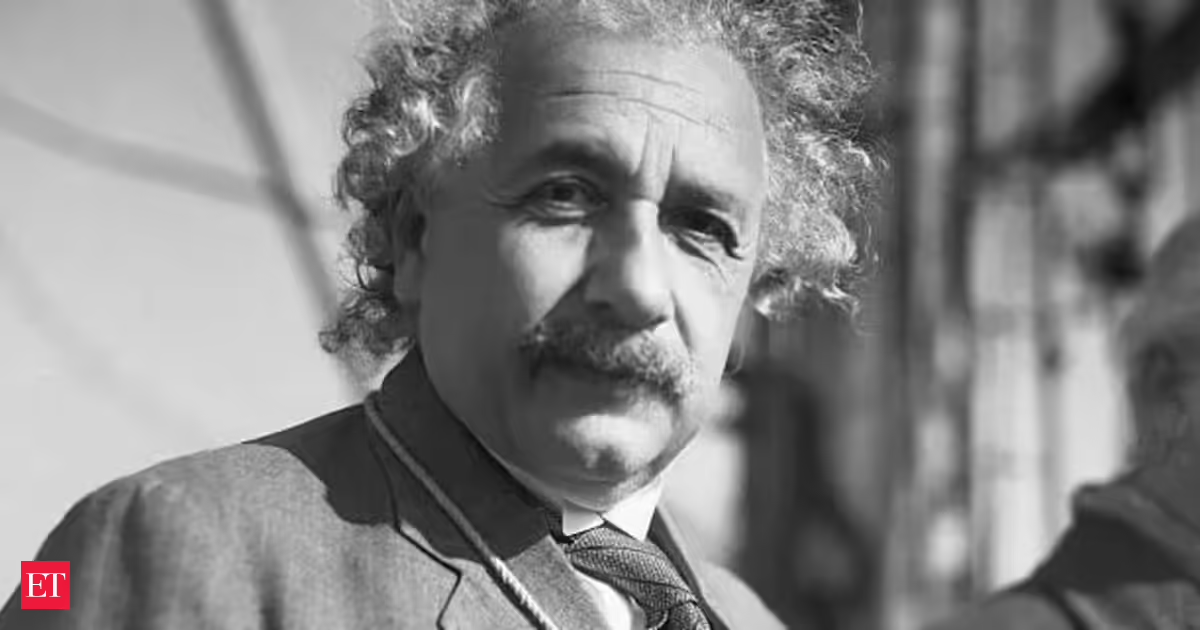
Some quotes have the power to make us stop and rethink everything we know about life. One such profound statement comes from the legendary physicist Albert Einstein: “The distinction between the past, present, and future is only a stubbornly persistent illusion.” At first glance, these words may seem confusing or even impossible to understand. After all, we experience time every day—we remember the past, live in the present, and plan for the future. However, Einstein's quote challenges our ordinary understanding of time and invites us to look at reality from a deeper perspective.This quote is not just a philosophical thought; it is rooted in Einstein’s revolutionary scientific theories that transformed our understanding of the universe. It reminds us that reality may be far more complex and interconnected than it appears.Meaning of the QuoteEinstein believed that time is not as simple as humans perceive it. According to his Theory of Relativity, time and space are connected, forming what scientists call "spacetime." In this framework, the separation between past, present, and future is not absolute. What one person considers the present may be viewed differently by someone moving at a different speed or experiencing a different gravitational field.When Einstein says that the distinction between past, present, and future is an illusion, he suggests that all moments in time may exist simultaneously in the fabric of the universe. Humans experience time in a linear way because of how our minds process events, but the universe itself may not divide time into neat categories.Beyond science, this quote also carries a powerful life lesson. It encourages us not to become trapped by regrets about the past or excessive worries about the future. Since our perception of time is limited, the most meaningful thing we can do is appreciate life and focus on what truly matters. The quote inspires reflection, mindfulness, and a broader understanding of our place in the cosmos.About Albert EinsteinAlbert Einstein was born on March 14, 1879, in Ulm. He is widely regarded as one of the greatest scientists in history. From a young age, Einstein displayed curiosity about the natural world and a passion for understanding how things worked.In 1905, often called his "Miracle Year," Einstein published several groundbreaking papers that changed modern physics forever. Among these was his Special Theory of Relativity, which introduced the famous equation E = mc², demonstrating the relationship between energy and mass. Later, he developed the General Theory of Relativity, which explained gravity as the curvature of spacetime.Einstein's contributions revolutionized science and laid the foundation for many modern technologies. In 1921, he received the Nobel Prize in Physics for his work on the photoelectric effect, which helped establish the foundations of quantum theory.Beyond his scientific achievements, Einstein was known for his humanitarian values, advocacy for peace, and support for education and civil rights. His unique appearance, thoughtful personality, and brilliant ideas made him one of the most recognizable figures of the twentieth century.ConclusionAlbert Einstein's quote, “The distinction between the past, present, and future is only a stubbornly persistent illusion,” continues to inspire scientists, philosophers, and ordinary people alike. It challenges us to rethink our understanding of time and reality while reminding us not to be constrained by conventional thinking. Through his extraordinary contributions to science and his wisdom about life, Einstein left a legacy that continues to influence humanity today. His words encourage us to remain curious, open-minded, and willing to explore the mysteries of the universe.
Best quote of the day by Albert Einstein: 'The distinction between the past, present, and future is only a stubbornly persistent illusion.'
Albert Einstein's profound quote suggests the past, present, and future are an illusion, rooted in his Theory of Relativity where time and space are interconnected. This perspective challenges our linear experience, urging us to appreciate the present moment and embrace a broader understanding of reality and our place within it.
571 words~3 min read