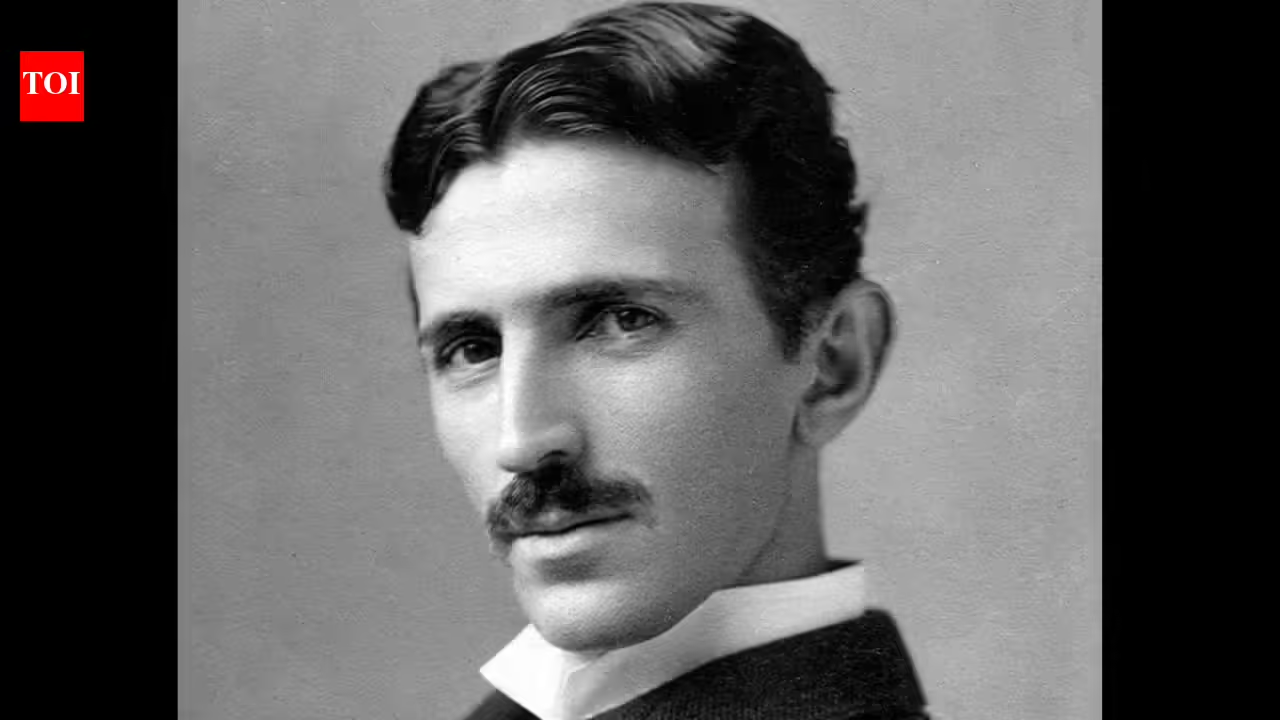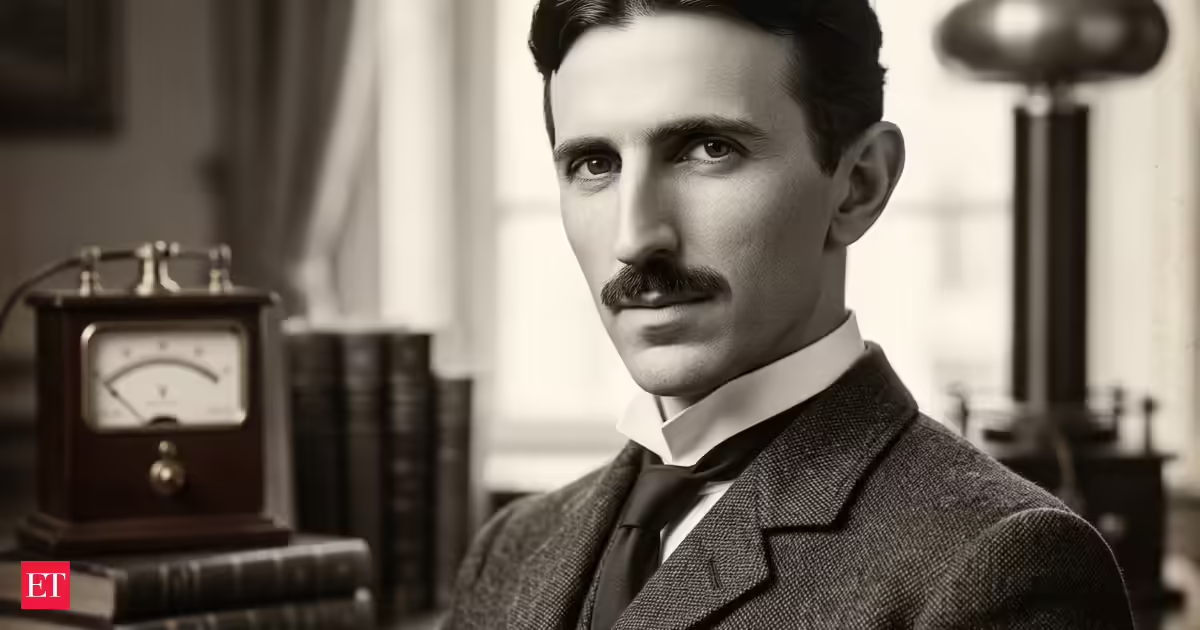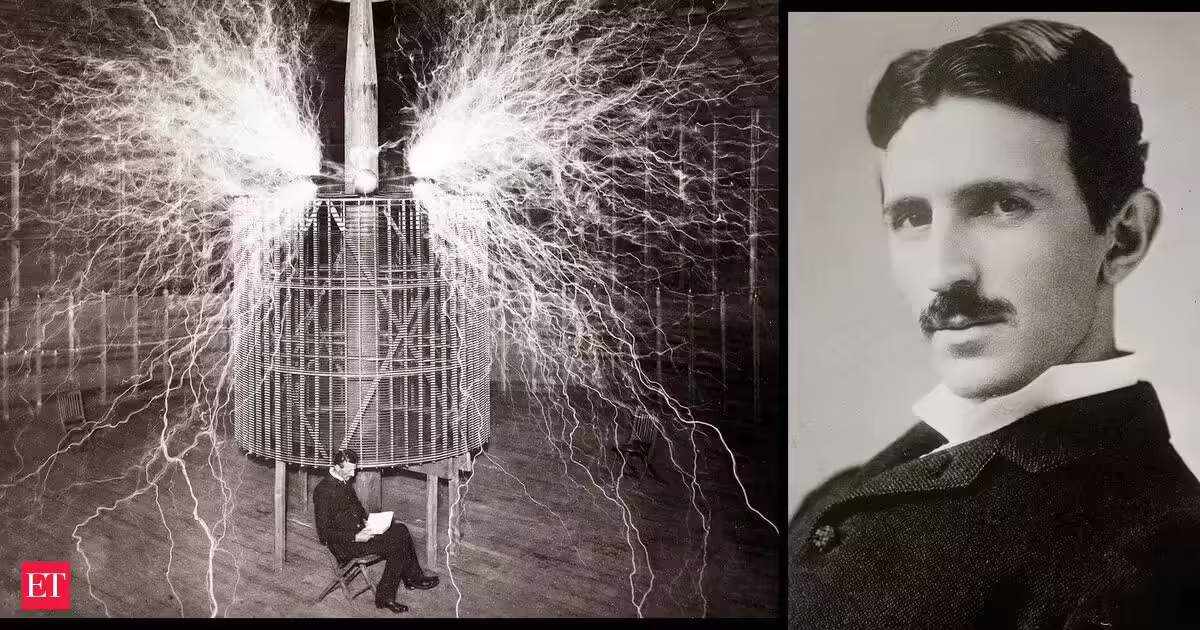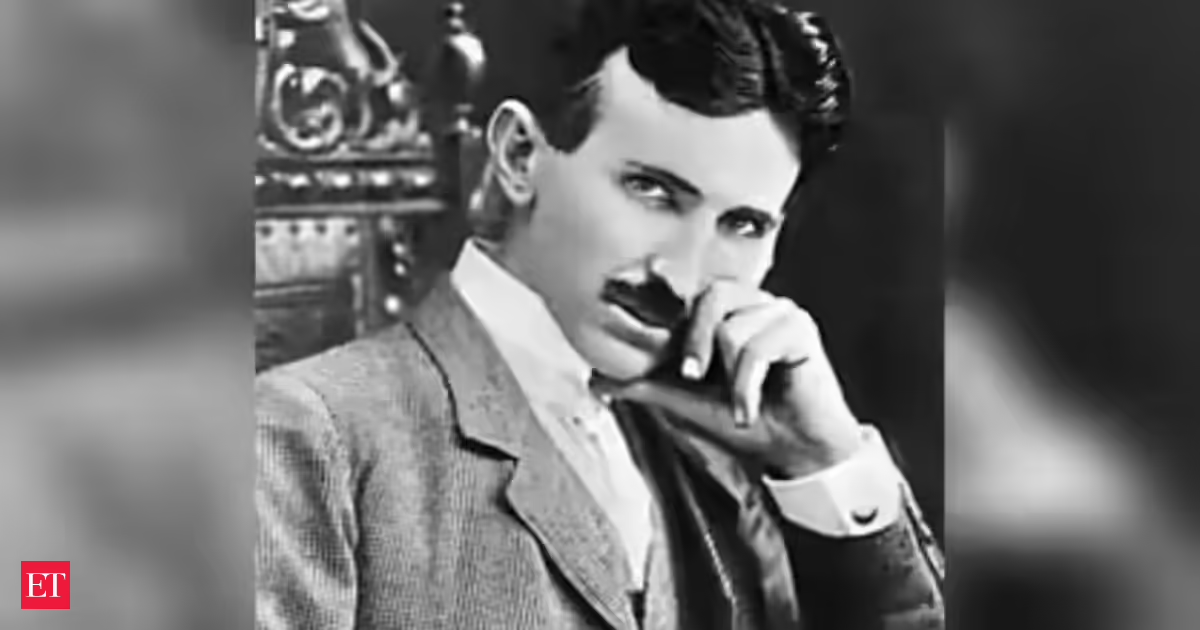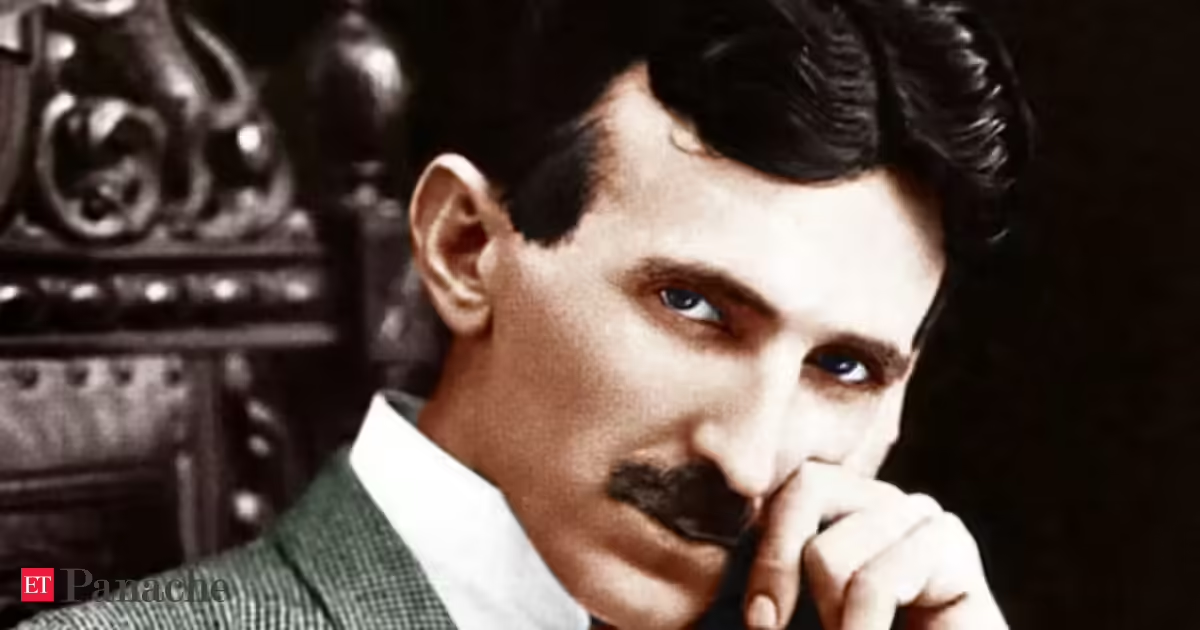
In the world of science and invention, few names carry as much weight as Nikola Tesla. Beyond his engineering breakthroughs, Tesla often spoke in ways that blurred science, philosophy, and human identity. The quote of the day is one of his most striking reflections on existence, which appeared during an interview published by The New York Times in 1931, where he described human individuality and existence in deeply unconventional terms.The quote of the day reads: “We are just waves in time and space, changing continuously, and the illusion of individuality is produced through the concatenation of the rapidly succeeding phases of existence. What we define as likeness is merely the result of the symmetrical arrangement of molecules which compose our body.”This statement has continued to spark debate for decades, not just because of what it says about humans, but because it comes from one of history’s most influential scientific minds.Tesla’s idea of humans being “waves in time and space” reflects a view where identity is not fixed or permanent. Instead, he suggests that what we call a person is actually a continuous process—something always shifting, never truly static. In this framing, individuality is not a solid truth but a kind of mental shortcut the brain creates to understand constant change.He also connects identity to physical structure, stating that what we consider “likeness” or personal identity comes from the symmetrical arrangement of molecules in the body. In simpler terms, Tesla is pointing out that human beings are entirely physical systems, and what we call personality or self may simply be the result of how matter is arranged and behaves over time.The Idea of Illusion and Continuous ChangeThe second layer of Tesla’s thought goes even deeper. He suggests that individuality itself may be an “illusion” created by rapid changes in our existence. Every thought, action, and moment is part of a chain of constant transitions. Because these changes happen so quickly, the mind perceives a stable “self,” even though, according to Tesla, no such permanent self exists.This view aligns with some philosophical traditions that question the permanence of identity. Tesla, however, expressed it through a scientific lens—linking human perception directly to physics and molecular structure rather than abstract spirituality.Context of the 1931 New York Times InterviewTesla made these remarks during a July 11, 1931 interview that was published in The New York Times under the headline discussing his futuristic vision of transmitting energy between planets. At the time, he was celebrating his 75th birthday and reflecting on both his scientific work and his worldview.In the same interview, Tesla also spoke about humanity entering a new era of discovery, where improved observation and technology would dramatically expand human understanding. He even speculated about interplanetary communication and the possibility of transmitting energy across vast cosmic distances.Interestingly, Tesla also expressed the belief that life could exist on other planets, calling it a “mathematical certitude,” and suggested that recognizing this would eventually lead to a form of universal brotherhood among intelligent beings.Tesla’s Scientific Life Behind the PhilosophyWhile these philosophical ideas are fascinating, they came from a man best known for transforming modern electrical systems. Tesla’s real-world achievements include the development of alternating current (AC) systems, which remain the foundation of global electricity distribution today.Born in 1856, Tesla studied engineering in Europe before moving to the United States in 1884. His early work eventually brought him into contact with Thomas Edison, but the two split due to professional disagreements. Tesla later found strong support from industrialist George Westinghouse, who helped bring AC power into widespread use.His inventions, including the Tesla coil and induction motor, helped shape modern electrical engineering. More importantly, his work on AC power systems made long-distance electricity transmission possible, fundamentally changing how cities and industries operate.Visionary Ideas Beyond His TimeTesla was not limited to practical engineering. He also explored ideas that were far ahead of his era, including wireless communication, remote control systems, and even early concepts resembling modern radio and radar technology.One of his most ambitious projects, the Wardenclyffe Tower, was designed to transmit information and energy wirelessly across long distances. Although the project was never completed due to funding issues, it reflected Tesla’s belief that energy and information could one day flow freely across the planet.Despite his groundbreaking contributions, Tesla spent much of his later life in financial difficulty and relative isolation. He continued to think and experiment, often living in hotels and working on ideas that were never fully realized.He passed away in 1943, but his legacy only grew stronger with time. Today, Tesla is remembered not only as an inventor but also as a thinker who tried to understand existence in ways that went beyond traditional science.
Quote of the day by futurist Nikola Tesla: 'We are just waves in time and space, changing continuously, and the illusion of individuality is produced through...' Is individuality real or just an illusion of consciousness decoded by history’s greatest inventor
The quote of the day is from Nikola Tesla, from a 1931 interview, where he offered a striking philosophical view of human existence, describing people as constantly changing “waves in time and space” rather than fixed individuals. He suggested that what we call individuality is an illusion created by the rapid succession of physical and mental changes, and that identity itself is shaped by the molecular structure of the body. Tesla also shared his broader vision of science and the future, including ideas about interplanetary communication, energy transmission, and the possibility of life beyond Earth.