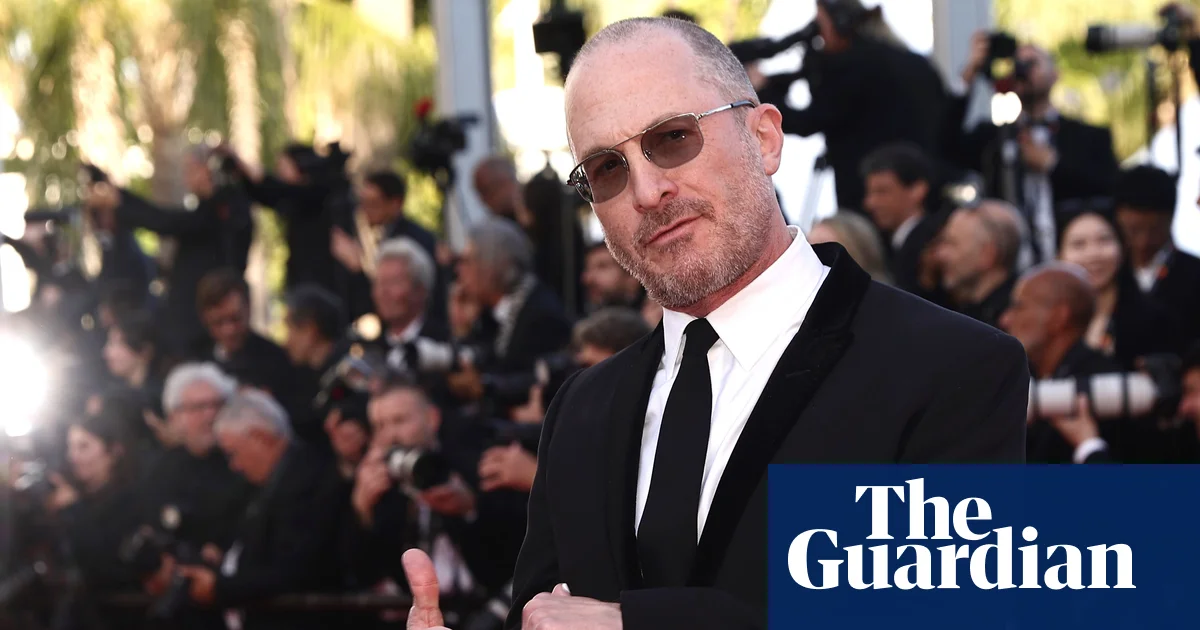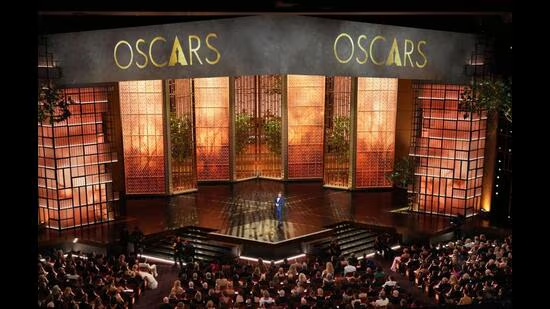
At the Taormina Film Festival in Sicily on Saturday, filmmaker Gore Verbinski said his piece in the ongoing debate on the use of artificial intelligence (AI) and its extent in film-making. Verbinski favoured a rating system for movies, based on the degree of AI use.In an age when film viewing is governed by recommendation algorithms tailored to individual appetites, and consumption is typified as a solitary venture, award ceremonies such as the Oscars persist as a vestige of a time when we celebrated cinema together. (AP)A few weeks ago, filmmaker Martin Scorcese endorsed AI in film-making, to see “how that can push the bounds of creativity”.This has brought back attention to the Academy of Motion Pictures Arts and Sciences (AMPAS)’ rules for Oscars consideration vis-à-vis the extent of AI-use in a candidate film.In an age when film viewing is governed by recommendation algorithms tailored to individual appetites, and consumption is typified as a solitary venture, award ceremonies such as the Oscars persist as a vestige of a time when we celebrated cinema together. The deliciously seductive possibility of participating in a collective consecration of the “best” in cinematic arts continues to draw viewers. The ceremony serves as a liminal site, transmuting commercial success into cultural capital, while simultaneously reaffirming the AMPAS’ own place of prestige as a cultural arbiter.This year’s host Conan O’Brien, in his opening speech, declared he was “honoured to be the last human host of the Academy Awards”. Predicting he would soon be replaced by a “Waymo in a tux,” O’Brien’s seemingly jovial banter underlined the AMPAS’ new set of rules, which restricts the use of AI in cine-authorship.While the Academy remains steadfast on its stand that the use of generative AI and digital tools neither “help” nor “hurt” the chances of nomination, the new rules delineate categories where human authorship is non-negotiable – screenplay writing and acting. AI-generated actors and scripts solely authored by AI are ineligible for nomination in related categories. This decision follows the 2023 unions-led protests, which led to the Writers Guild of America and the Screen Actors Guild-American Federation of Television and Radio Artists securing contractual protection against AI-generated scripts, and safeguards against the use of performers’ likeness and labour in training synthetic doubles. Human creativity is at the heart of this, foregrounding consent in the use of digital aids, even as there is silence on the extent to which AI assistance within these categories is acceptable.The latest rules then demonstrate the need to draw a clear distinction between AI as creative agent and AI as a tool meant to aid, and not replace, human action. Preserving this separation in key Oscar categories presents human agency as the core of cinematic prestige, in line with the long-standing auteur tradition, which positions the director, and, by extension, writers and stars, as the creative source of cinematic genius.The AMPAS is now essaying its role as a conservator of this prestige, while also acknowledging the commercial reality of the film industry.AI as technology can no longer be extricated from filmmaking. From pre-production relying on AI-driven storyboarding, virtual location scouting and matching, shoots simulating VFX on site for review, AI-driven continuity checking and audio leveling, to sped-up rending in post-production and VFX’s almost complete reliance on generative AI, the cost-benefit analysis clearly lobbies in favor of the new technology.Filmmakers such as James Cameron and Darren Aronofsky have already taken stands on the new technology, albeit with varying degrees of enthusiasm. While Cameron began Avatar: Fire and Ash (2025) with the declaration that no gen-AI was used in its production, Aronofsky’s production company Primordial Soup collaborated with Google DeepMind to produce Eliza McNitt’s Ancestra, set to premiere in the Tribeca Film Festival this year. The film is slated as the first in a three-part series exploring AI’s role in filmmaking. Advocacy groups such as the newly formed “Creators Coalition on AI” have emerged to ensure the responsible, i.e., human-centric, integration of AI across entertainment and creative industries. Its founding members include Natasha Lyonne, who is also co-founder of the AI company Asteria and has announced plans for directing an AI-assisted feature, Uncanny Valley. The Academy recognises the need to adapt to these shifting conditions.Many members of the Indian film fraternity have welcomed the Oscars’ new AI ruling as a necessary step to safeguard creative autonomy in an atmosphere where the film industry has already been dealt blows from generative AI. In 2025, Aanand L. Rai’s Raanjhanaa (2013) was re-released in Tamil, with a new AI generated ending, without the consent of its makers. Eros International, the film’s producer, claimed it was within their legal purview as the film’s rights-holder. The Indian judiciary has, however, begun to recognise the threat of AI misuse, with the Delhi High Court passing an ad interim injunction to Allu Arjun to protect his likeness from unauthorised digital duplication.At the same time, the commercial lure of AI “firsts” is unmistakable. S Narasimha Murthy’s Love You and Vivek Anchalia’s Naisha, both released in 2025, have already claimed the mantle as the first AI-generated feature-length Kannada and Hindi releases; while JioHotstar has already released India’s first AI-powered series, Mahabharat: Ek Dharmayudh, and Meta Labs’ microdrama Truth & Lies has proudly cast Naina Avtr, India’s first home-grown synthetic star in the lead. None of the above have generated much in the way of discussion, beyond promoting their AI status in marketing.In this tension between commercial and creative negotiations, the Academy’s gesture towards guarding human authorship can best be read, not as a future-secure solution, but as a performance of prestige in a rapidly shifting landscape. Though the Oscars will, hopefully, persist as an event of shared cine-celebration, the task of defending the creators of cinema will rely on the ability of unions, festivals, and national industries to build coalitions strong enough to decide the direction of AI’s future creative ventures, and, crucially determine, whose authorship is still worth consecrating.Ishani Dey is an independent researcher who works at the intersection of media technologies and image cultures. She has taught film and media studies at AJKMCRC Jamia Milia Islamia and Ambedkar University Delhi. The views expressed are personal
Cinema & AI: Unresolved issue of human creativity
AI can no longer be extricated from filmmaking. The latest rules of the AMPAS demonstrate the need to distinguish between AI as creative agent & AI as a tool
1,020 words~5 min read