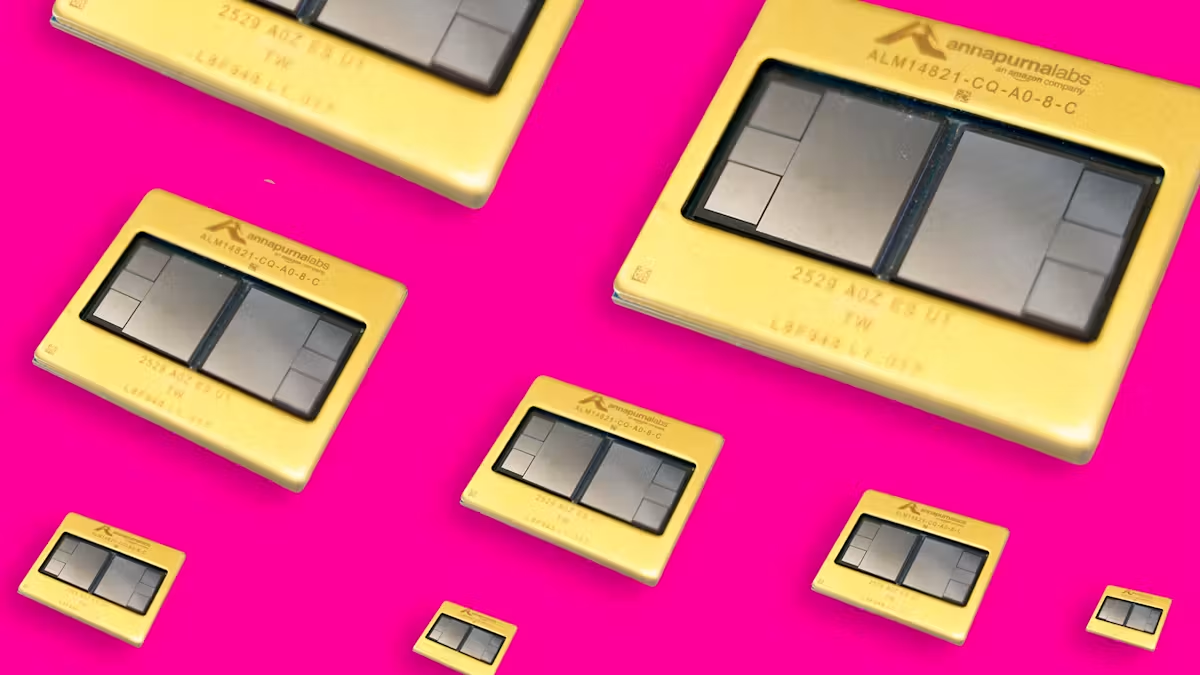
Think of it this way: if you’re running a restaurant, you probably don’t want to build your entire kitchen around a custom oven that only makes one dish for two customers. That’s essentially the argument Hydra Host CEO Aaron Ginn is making about custom hyperscaler chips, and data center operators are starting to listen.
Ginn’s position is blunt. Chips designed by hyperscalers like Google serve a razor-thin customer base and function more as corporate moats than as versatile infrastructure. For data centers trying to maximize returns across a broad client portfolio, that math doesn’t work.
The case against hyperscaler lock-in
Custom silicon from the likes of Google (its TPU line, for instance) was built with a specific purpose: keep workloads inside the hyperscaler ecosystem. These chips are optimized for the hyperscaler’s own services and, by extension, for the small handful of customers running workloads at that scale.
“The orientation around that kind of chip is very isolated to like two customers and it’s really unclear the customer base beyond that… They’re generally a defensive moat strategy. So it doesn’t really make sense for data centers who are in the business to make returns.”