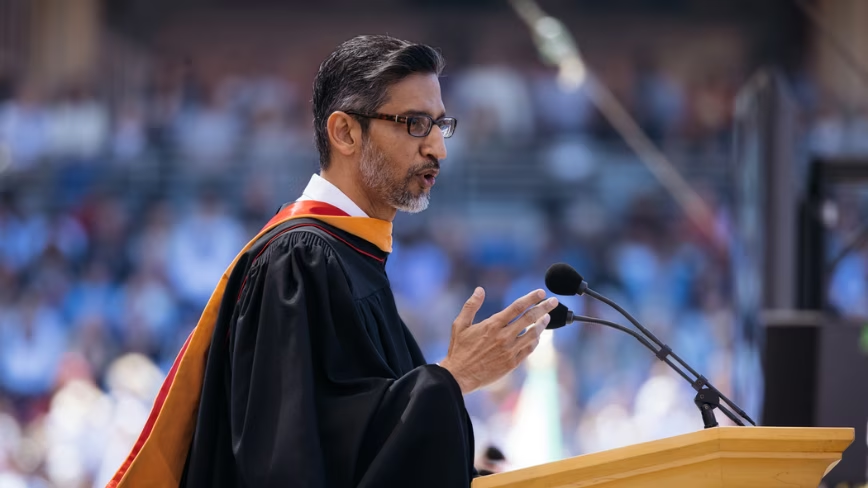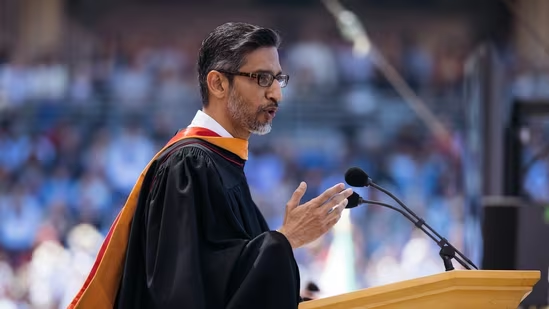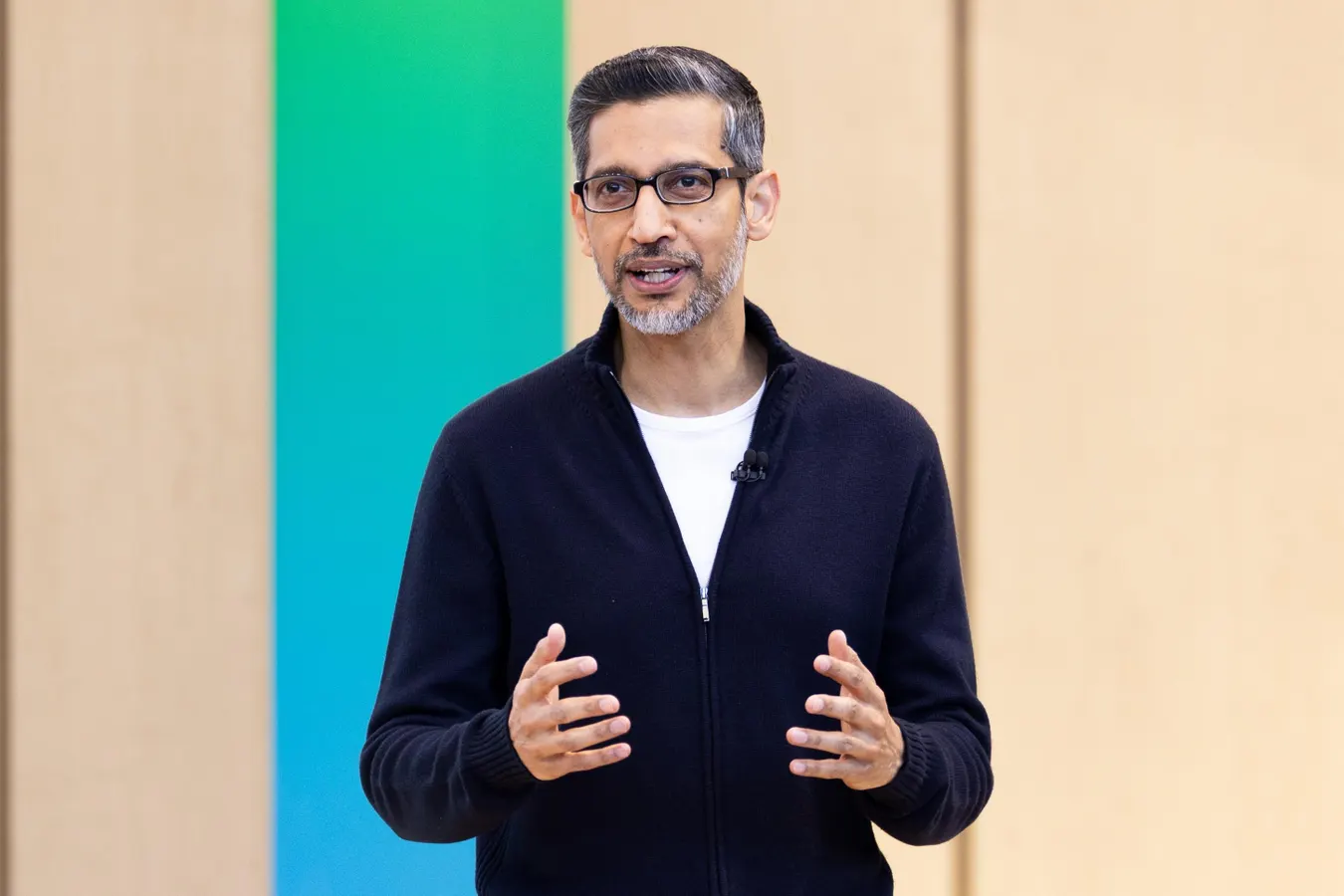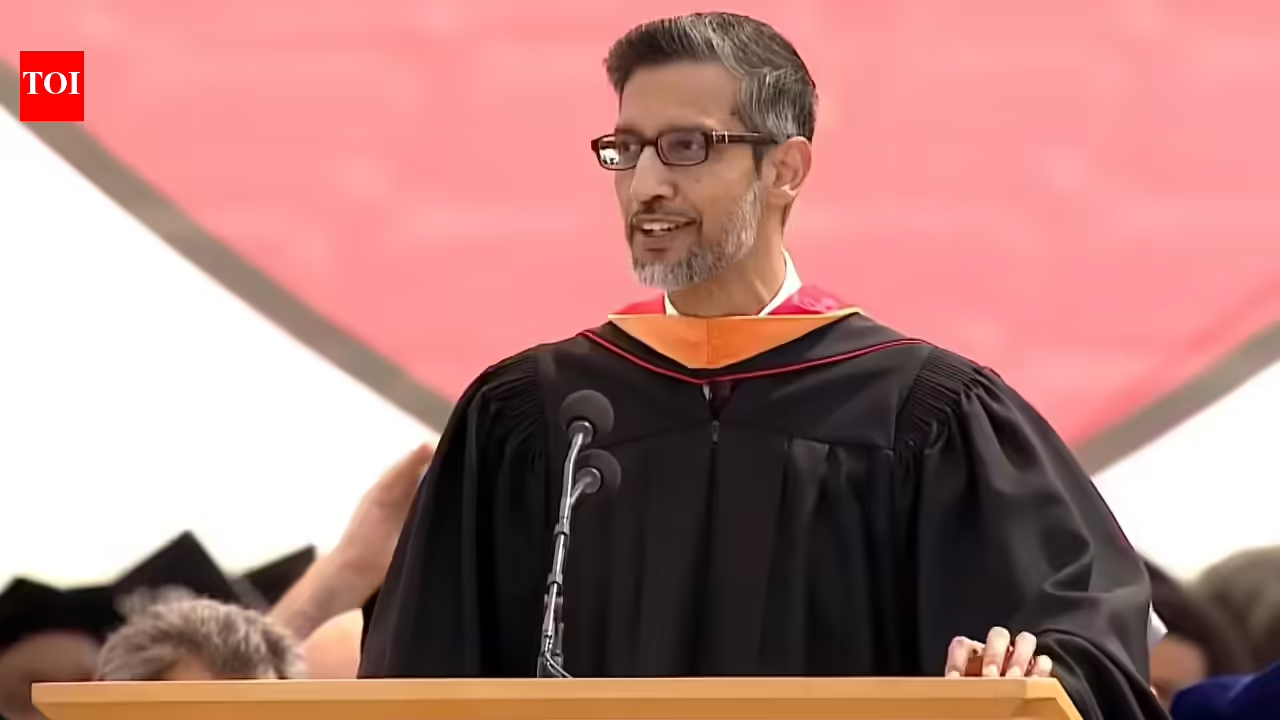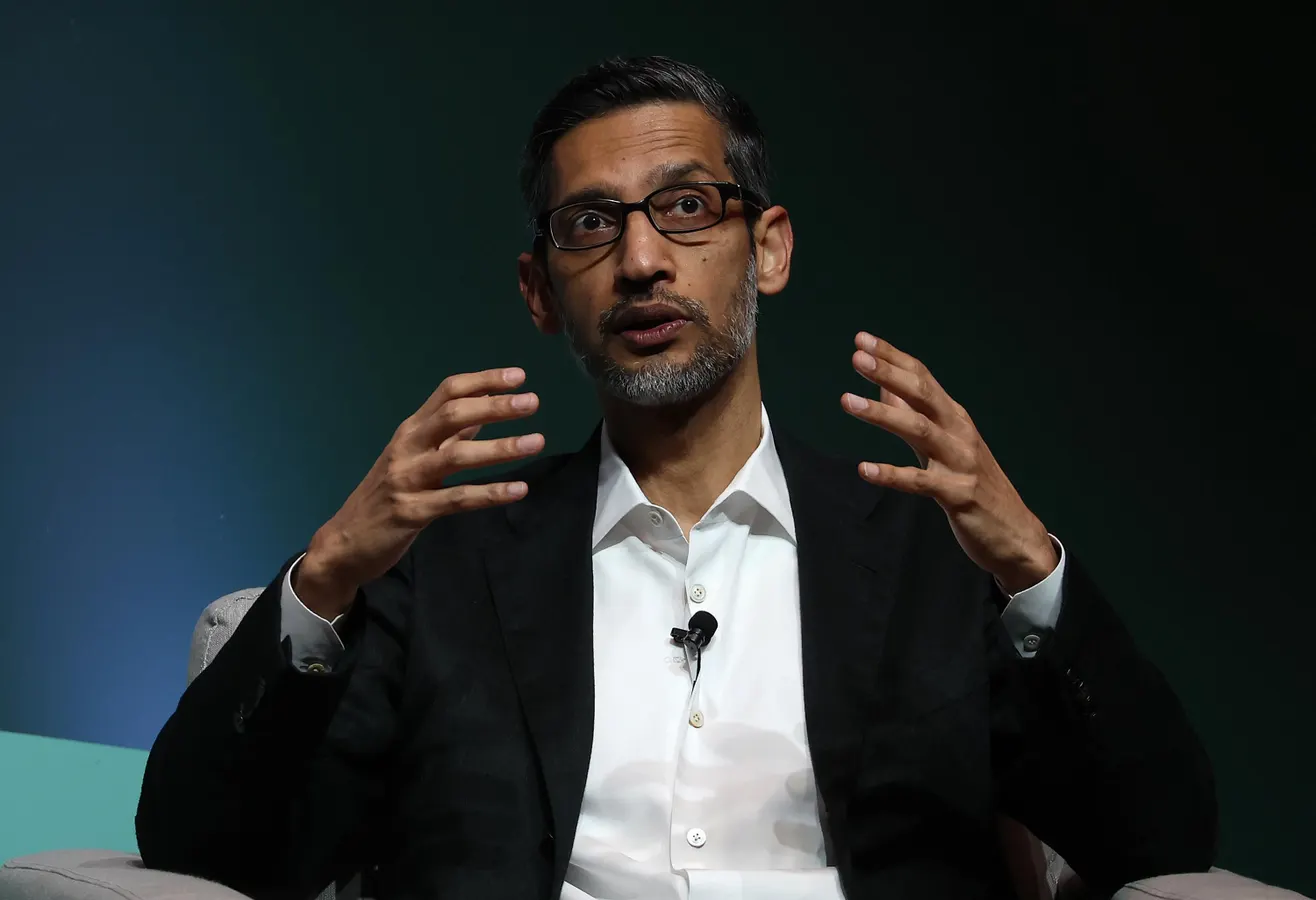
Sundar Pichai, CEO of Google and its parent company Alphabet, delivers commencement speech to Stanford's 2026 graduates.Justin Sullivan/Getty ImagesGoogle and corporate parent Alphabet are at the center of the artificial intelligence revolution. But Sundar Pichai, the CEO of both, made no mention of how AI is reshaping today’s workforce in his commencement address Sunday at Stanford University, a leader in AI research. “The most timeless advice I’ve learned is technology agnostic,’’ said Pichai, whose $1.7 billion net worth earned him a spot on Forbes’ 2026 World’s Billionaires List. “It’s about you, the life you want to build for yourself, and the choices that help you pursue that life.” While Pichai avoided the boos that have greeted other commencement speakers when they touted the technology, his speech unfolded against a backdrop of students walking out in protest of Google’s ties to the Israeli government and its controversial contracts with the U.S. government.Rather than answering those criticisms, or offering predictions about what AI might or might not do, Pichai spoke to the graduating class about the three principles that helped him “get more moments right than wrong” as he went from being a financially strapped Stanford University graduate student from India to leading one of the world’s most valuable and influential tech companies today.Choose OptimismPichai acknowledged that today’s young professionals are facing a lot of challenges including global conflicts, economic anxiety, and a rewiring of technology. “It’s easy to look at the news of the day and think that we are living in uniquely challenging times,” Pichai said. But he argued that every generation has faced their own share of hardship and what matters most is how you respond to it.“We don't get to choose the world we graduate into, but we do get to choose how we frame our circumstances,” said the tech CEO. He shared a story about arriving in California from India and saying in front of his host that the hills surrounding Stanford looked brown when his host gently corrected him and said, "We prefer to call it golden."For Pichai, that small reframing became a larger lesson about perspective and looking at the positive side of things. It was this perspective, he said, that later helped him navigate setbacks, including leaving his doctoral program at Stanford and earning a masters degree instead because he needed a job sooner.Gravitate Toward Hard ThingsPichai, who first joined Google in 2004 as a project manager, talked about leading the development of Google Chrome in his early years at the company. In the beginning, he said many people internally believed that building a browser would require hundreds of engineers and years of effort, but Pichai and his team only had about 10 people.“The consensus was right,” he said. “It was going to be really hard. In some ways we were naive, and it’s good to be a bit irrational when you approach new things.”When it launched in 2008, Pichai recalled, Chrome had eight million users in the first 24 hours, but shortly after that user growth started to stagnate and Google faced criticism from competitors. Though that moment could have been demoralizing, Pichai said he learned that working on hard things teaches you a lot and “it typically attracts other great and optimistic people.”“Even if you miss meeting the high goals you set, you will still achieve something great,” he told the graduates. “So when you have the choice to work on something hard, say yes.”Today, Google Chrome is the world’s dominant browser. Do What Excites YouPichai urged the graduates to pay attention to what energizes them, and explained that for him it has always been technology. “The more access my family had, the better our lives got,” he said. Pichai added that his love for technology is what led him to accept an offer at Google and jump at the chance to work on projects like Chromebooks and Android. “Seeing computing change people’s lives as it had changed mine was the most exciting thing in the world to me,” he said, while reflecting on the many different moments in which he saw every day people using and benefitting from the products he helped to build. “So as you look at your own path, don't focus on the thing your parents want you to do or the thing all your friends are doing or that society expects of you. Instead, think about the things that keep you chatting excitedly with your roommate late into the night and go do those things.”Want to be more successful? Subscribe to the weekly Forbes Careers newsletter to get insider tips and insights.More from ForbesForbesThe Economy Is Still Adding Jobs—So Why Does Finding One Feel So Hard?By Courtney Connley-HamptonForbesAI Is Shrinking Entry-Level Jobs: Here’s How Recent Grads Can Stand OutBy Courtney Connley-Hampton
In Speech To Stanford Grads, Alphabet CEO Sundar Pichai Doesn’t Mention AI
The billionaire tech exec says “the most timeless advice I’ve learned is technology agnostic,’’ and insists every generation has faced its own share of challenges.
794 words~4 min read