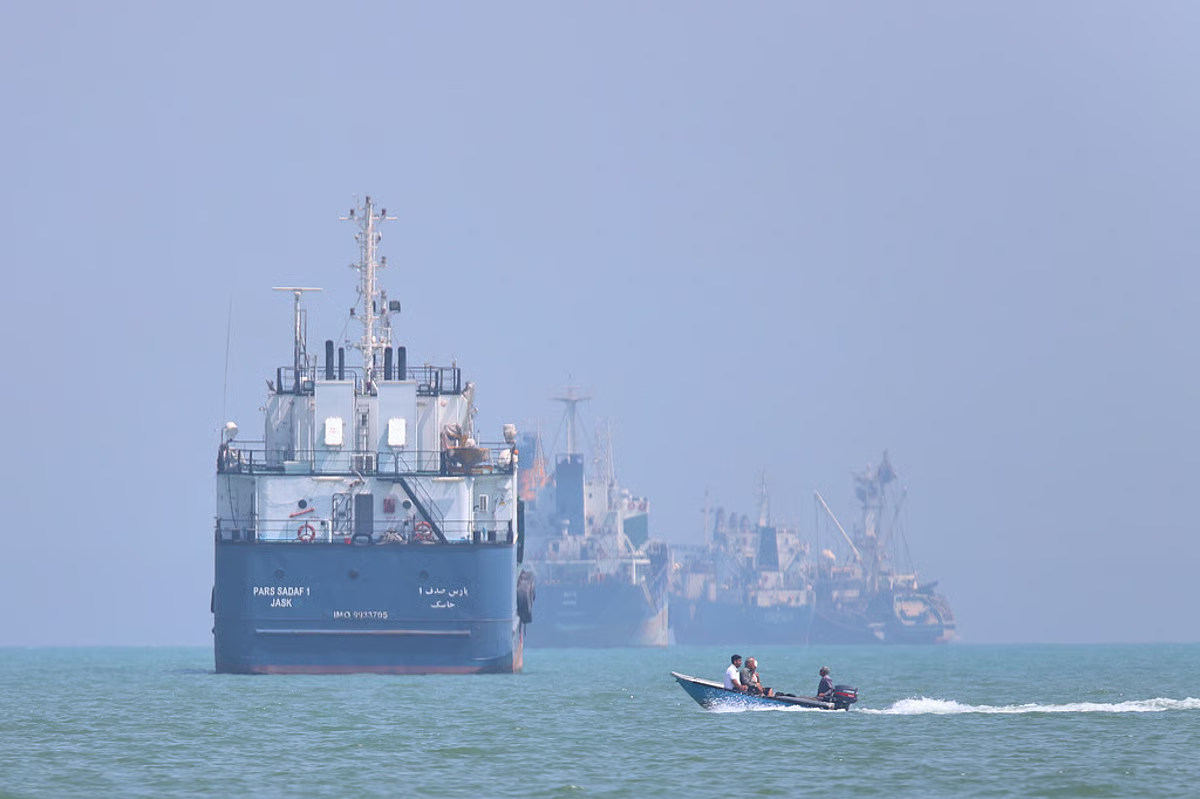
The US-Iran deal that is due to be signed on Friday in Doha is not an agreement to end the war, but to pause it. It is a “memorandum of understanding” to extend the current ceasefire by 60 days, during which all the difficult questions that remain unresolved will be subject to negotiation. Whether these talks happen and are productive is by no means guaranteed and significant barriers to a stable peace settlement in the region still lie ahead.US president Donald Trump boasts of a breakthrough. He hopes it will allow him to extract himself and US forces from this politically unpopular war. But in truth his ill-conceived adventure has achieved almost nothing and Iran’s power to stop energy flows has been strengthened.Iran’s National Security Council claims optimistically the war will end “permanently and immediately on all fronts, including in Lebanon”. This is a measure of the fragility of the deal, as neither Israel nor Hizbullah are parties to the agreement, or fully committed. They will have to be restrained by Washington and Tehran respectively. Further strikes on Lebanon could collapse the ceasefire.The deal will see the toll-free, gradual re-opening of the Strait of Hormuz and the lifting of the American naval blockade, freeing up global oil supplies, the promise of which has already led to oil prices dropping sharply. Iran promises to spend the next 30 days demining the strait.For the people of Iran, Israel and the Gulf States, the almost incidental benefit – as far as US priorities are concerned – will be a respite, at least for now, from the bombing of infrastructure and civilian homes which has so far claimed thousands of lives.The US is committed to withdrawing all its forces from around Iran, though not the region, and to the immediate suspension of sanctions on Iranian oil sales. The return of frozen billions in Iranian assets will be conditional on progress in the discussions about Iran’s nuclear programme and its stockpile of highly enriched uranium.It appears that agreement has already been reached on the principle of dilution of the 440kg of Iran’s enriched uranium, but how remains fraught. Iran had previously renounced any ambition to develop nuclear weapons, reiterated in the 2015 Obama-era nuclear deal agreed with the US, China, Russia, France, Britain, Germany, and repudiated by Trump.After this costly war, a return to a precarious status quo ante looks likely – with little changed beyond the complexion of Tehran’s governing elite. Iran has shown a resilience and capacity to endure beyond what Washington expected. The US has demonstrated that overwhelming military might does not suffice to impose its will. A permanent end to fighting would be welcome, but Trump’s claims of a great victory are the opposite of the truth.
The Irish Times view on the US-Iran deal: Trump accepts defeat
A permanent end to fighting would be welcome, but Trump’s claims of a great victory are the opposite of the truth
TL;DRAI
Trump agreed a 60-day Iran ceasefire (Doha, Friday): US withdrawal, Strait of Hormuz reopens, sanctions lifted. Italian tech leaders should note: declining US power increases supply-chain risk, energy volatility, and infrastructure planning uncertainty.
456 words~2 min read