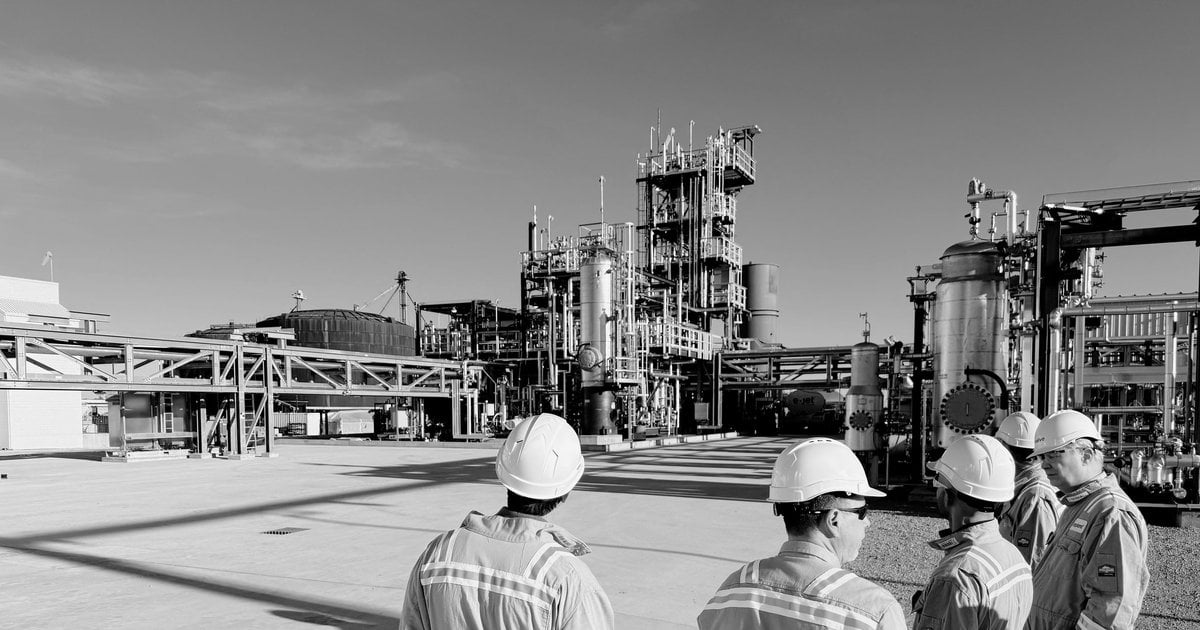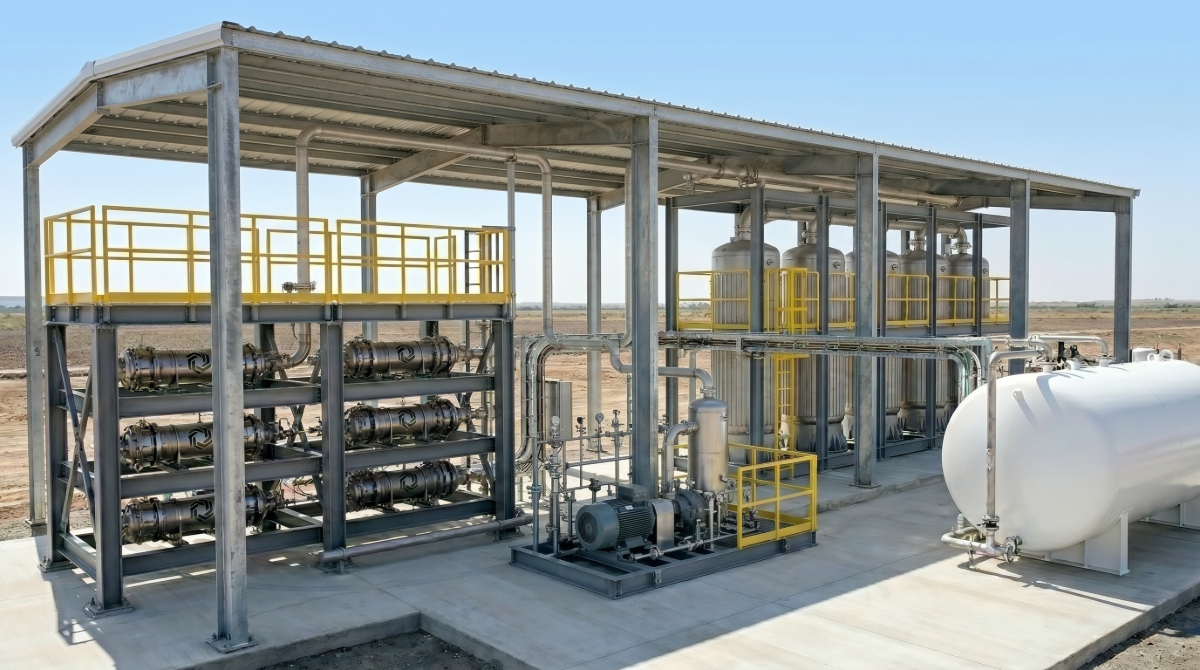
Circularity bio-methane converter. Credit: Circularity Fuels
Support CleanTechnica's work through a Substack subscription or on Stripe.
Manure — regardless of its source — produces methane when it decomposes. Dairy farms have an abundance of cow manure, which they store onsite in large, covered containers called manure digesters. The waste from their cows is pumped into those sealed tanks, where bacteria break it down into methane-rich “biogas” and a nutrient-rich “digestate” that can be used as fertilizer. In most dairy farms today, the methane is released directly into the atmosphere or flared off, which is another way of saying burned.
Instead of being vented or flared, the biogas from the manure digesters can be converted to fuel for aircraft and diesel-powered trucks and that is exactly what Circularity Fuels in California has done. During a recent six-month trial, biogas from a manure digester at a California dairy farm was successfully converted to a drop-in aviation fuel that meets ASTM D7566 Annex A1 specifications. That’s the standard that has to be met to make sure the fuel will not damage the jet engines of commercial aircraft.
Based on the result of the trial, Circularity claims its proprietary technology allows the construction of sustainable aircraft fuel facilities that cost just 20 percent of similar installations in Europe. That would lead to SAF that is cost competitive with jet fuel made from fossil fuels. At the present time, everyone in the industry is looking for ways to increase the supply of sustainable aviation fuel at a price that is affordable. Until that price point is reached, SAF will be nothing more than window dressing while the airline industry continues burning traditional Jet A at the rate of 300 million gallons a day.