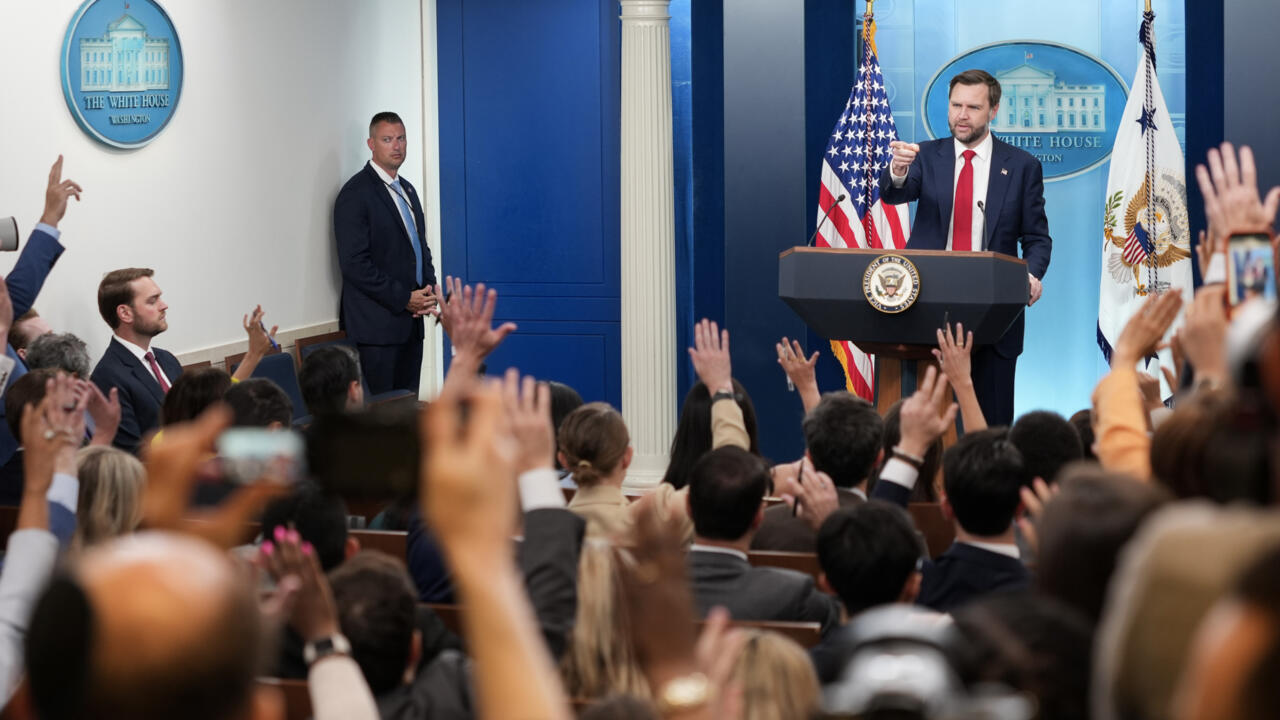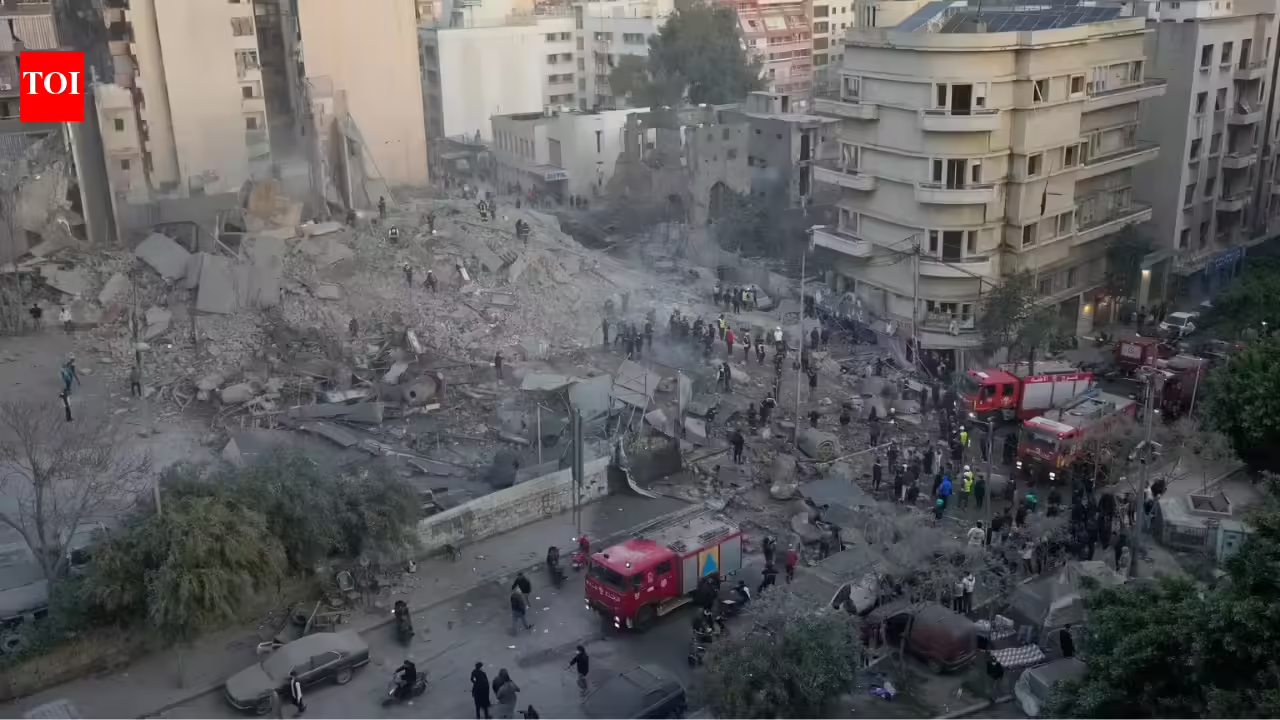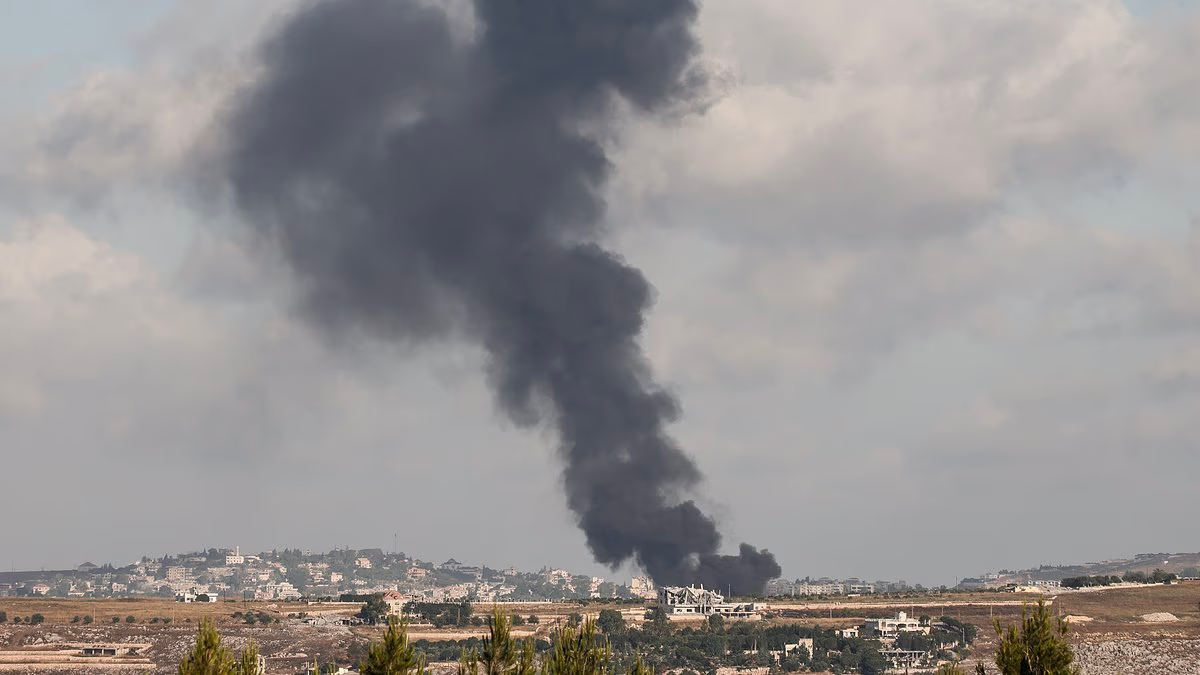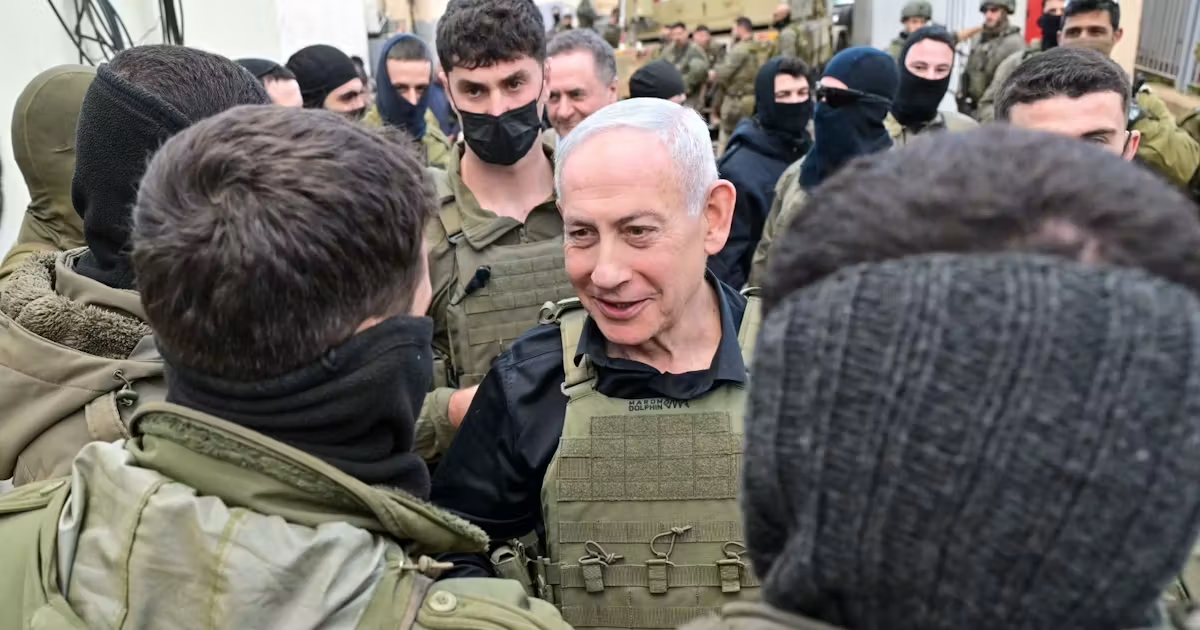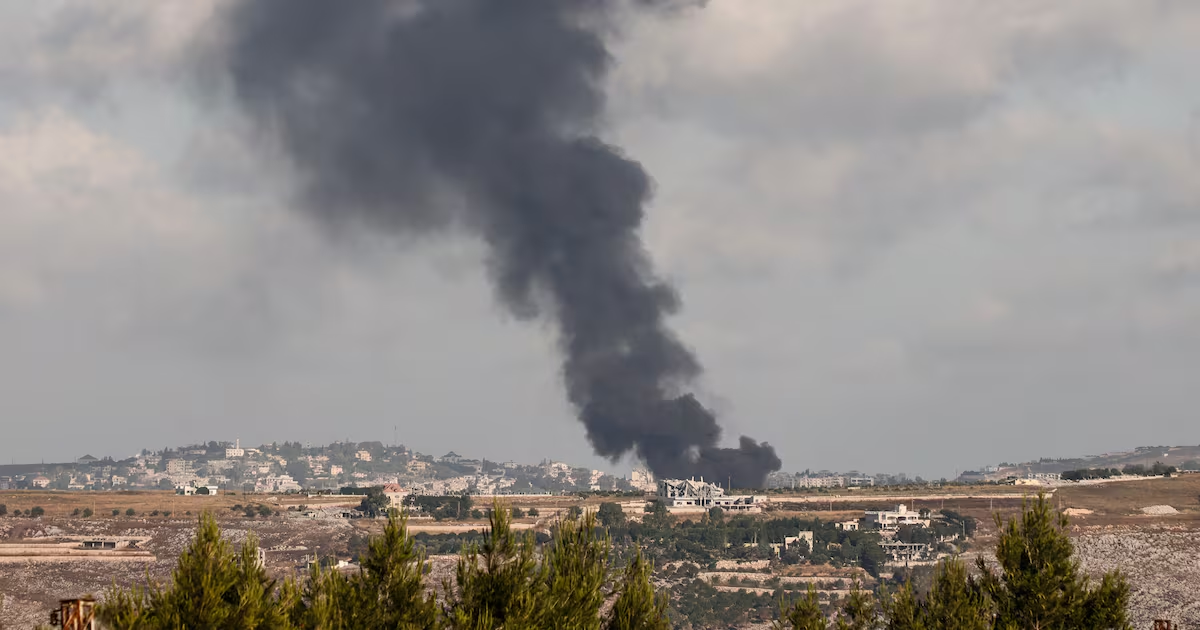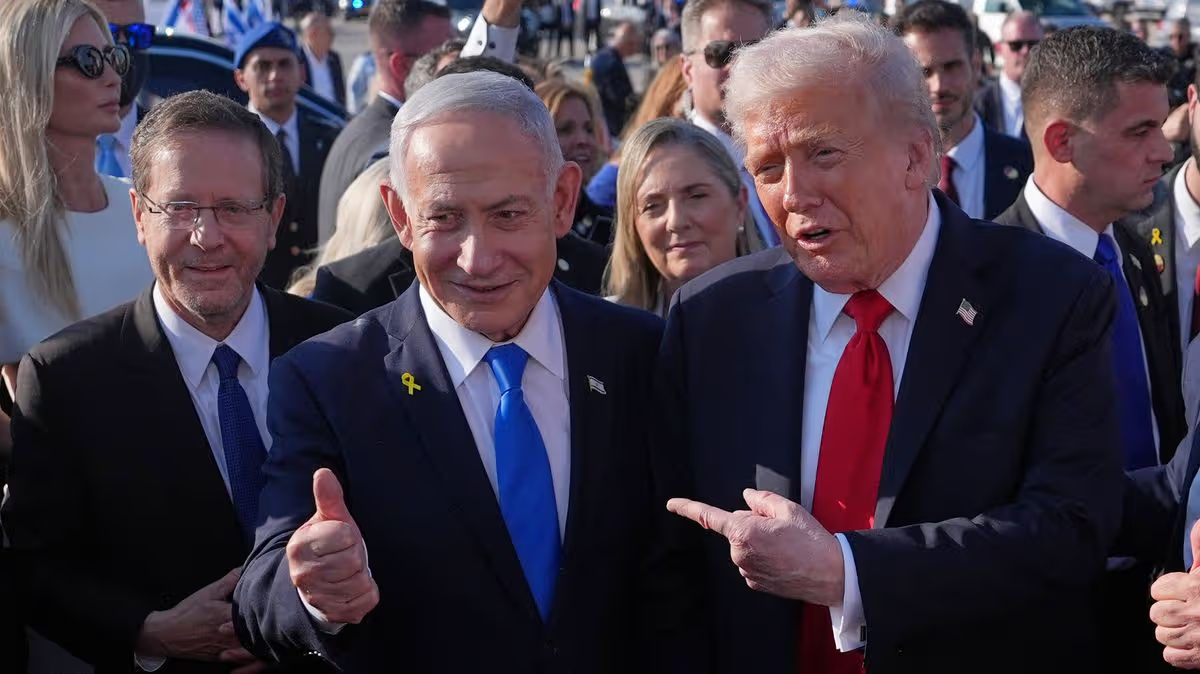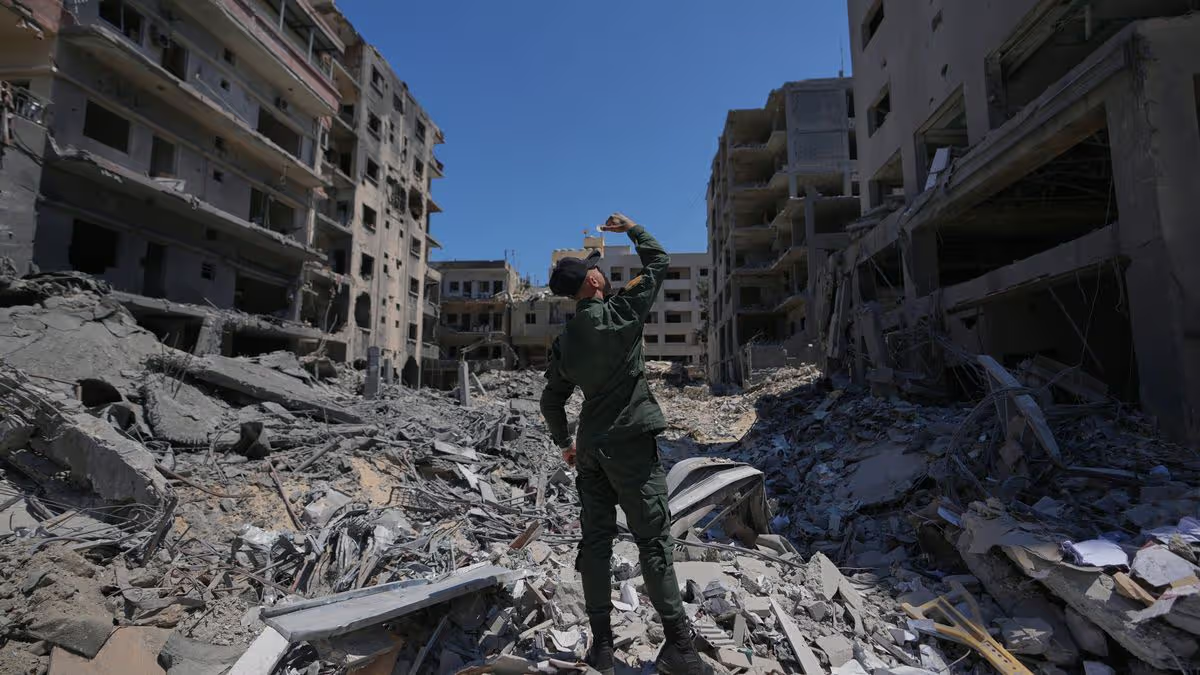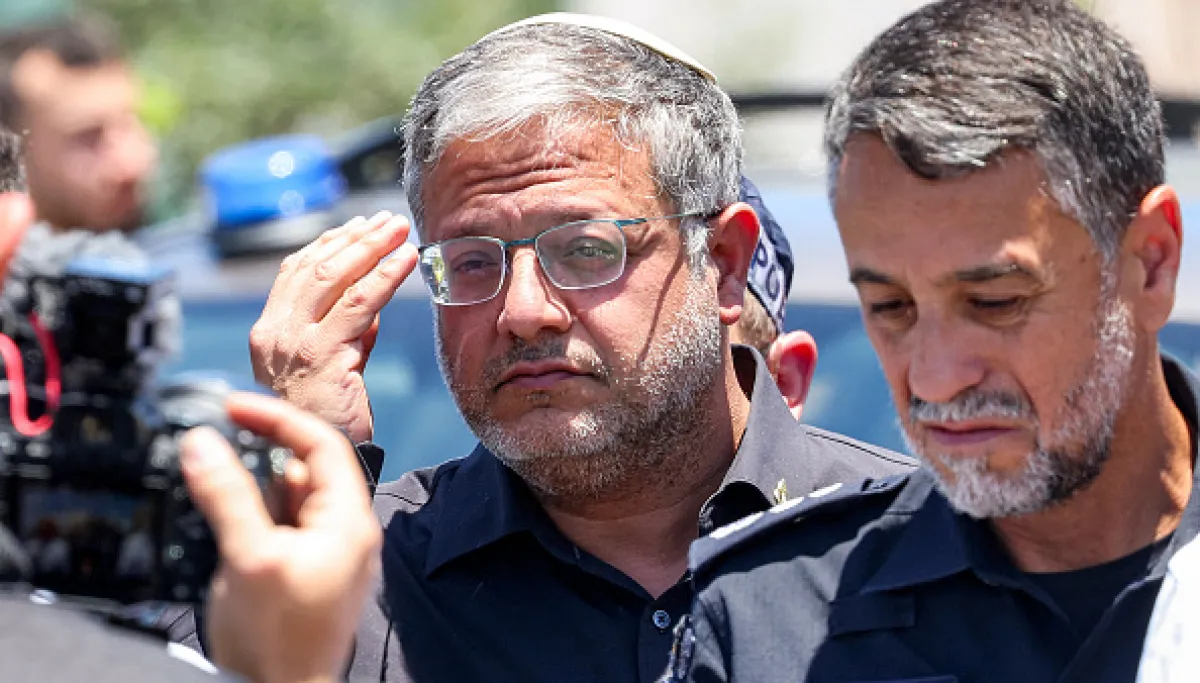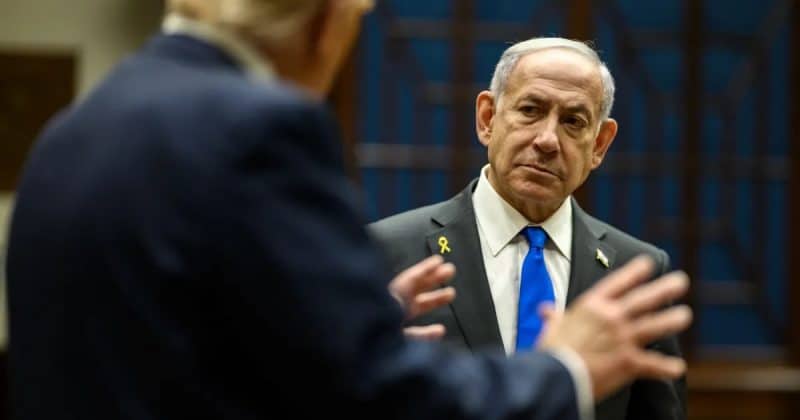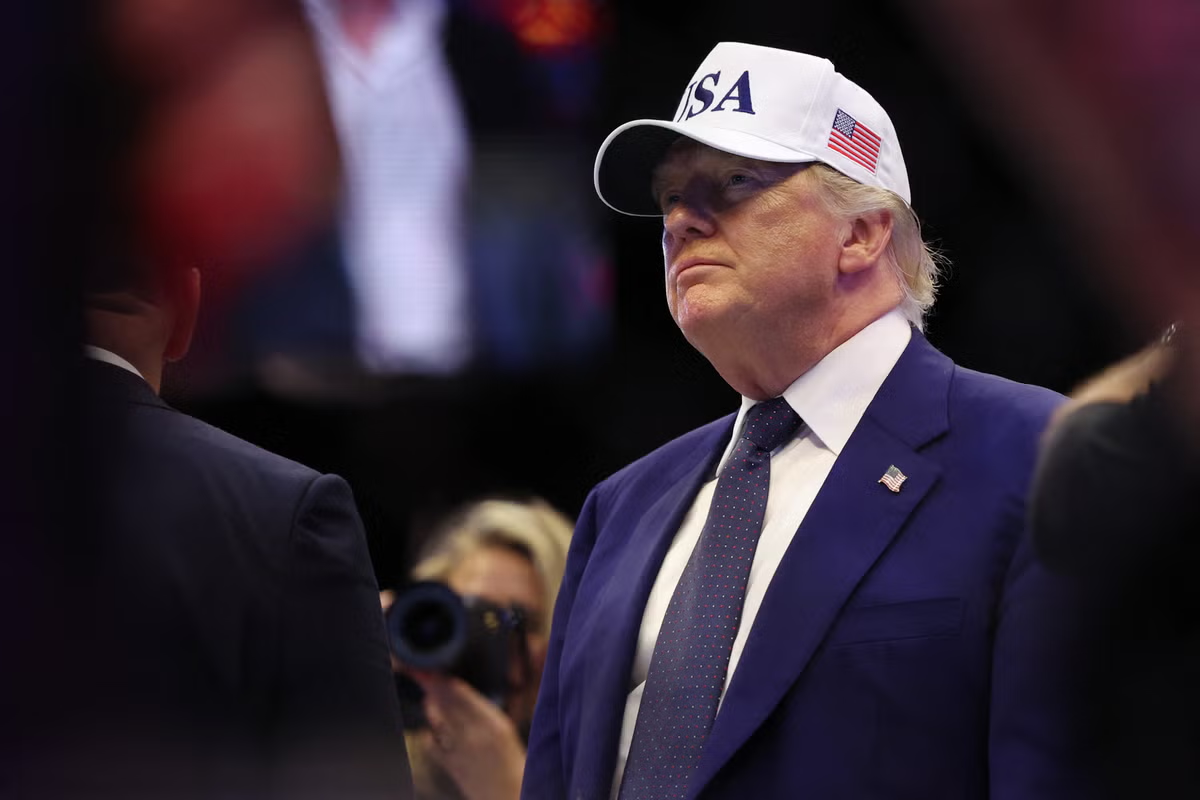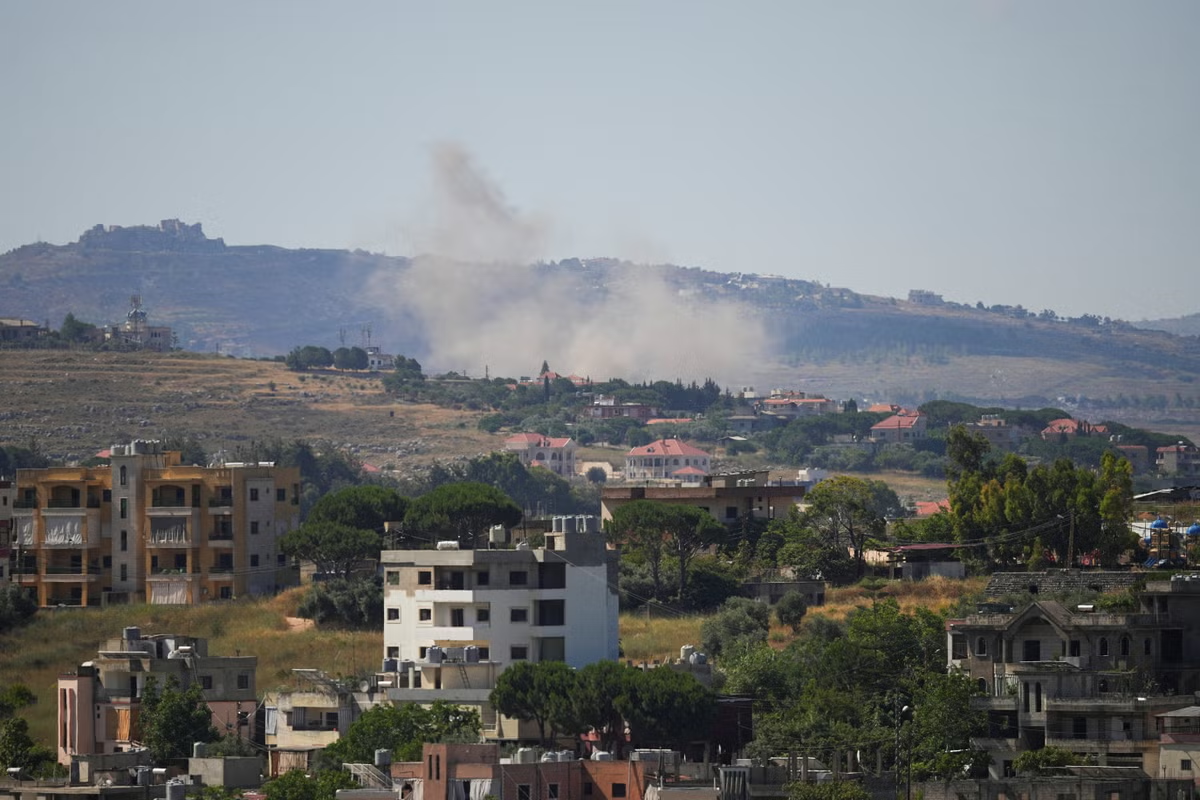
Donald Trump’s newly unveiled peace deal immediately came under strain on Monday as Israel appeared to defy Washington’s pledges to Iran to end the conflict.Nearly four months after the US and Israel launched strikes at Iran, Trump and Iranian officials said a memorandum of understanding had been agreed and the blocked Strait of Hormuz could open up as soon as Friday.But as global markets responded positively to the news and Trump insisted that boats were on the move in the choked shipping channel, Israel threw doubt on the deal.Israeli defence minister Israel Katz, whose country was not part of the US-Iranian agreement, said its military would remain in Lebanon “without any time limit”, putting it on a collision course with the US ahead of sensitive talks with Iran.Iran’s foreign ministry spokesperson Esmaeil Baghaei insisted that Lebanon remained “an integral part of the agreement to end the war with the US”, adding that the agreed draft agreement called for an end to the war on all fronts.Smoke rises following an Israeli strike in Nabatieh, Lebanon, June 15 (Reuters)Israeli prime minister Benjamin Netanyahu has yet to respond publicly to the deal, which emerges only a week after Iran launched missiles at Israel over its conduct in Lebanon.Israel’s hawkish national security minister Itamar Ben-Gvir insisted on Monday that his country “must not compromise on anything less than the dismantling of Hezbollah” or withdraw from captured territory.“My position is clear: We are not partners to this agreement that does not ensure our security, and it does not bind us in any way,” he wrote on social media.One senior Israeli official said on condition of anonymity that the agreement was “terrible for Israel”, an assessment they indicated was shared throughout the government from Netanyahu down.A Lebanese security source told state media on Monday afternoon that an Israeli drone strike on a car in south Lebanon had killed the vehicle’s driver in what would mark the first deadly Israeli attack since the announcement of the US-Iran agreement.Hezbollah welcomed the MOU and claimed it had not carried out any operations since Sunday. But it warned Israel they would not accept any attacks violating Lebanon’s sovereignty or targeting its people.Donald Trump disembarks Air force One after landing at the Geneva airport ahead of the G7 summit, in Geneva on June 15 (AFP/Getty)Iran and the United States, without Israel, declared an immediate end to all military operations and said they were committed to reopening the Strait of Hormuz.As Trump travelled to France on Monday for a summit with G7 leaders, in part to discuss the terms of the Iran deal, he claimed that commercial vessels carrying oil were already starting to transit the waterway.“Ships are starting to move, many loaded up with Oil, out of the Strait of Hormuz. They are going along the Southern 'Highway,' which is totally safe, secure, and pristine,” he wrote in a Truth Social post.The backlog of some 500 ships still stranded in the Gulf will still likely take weeks to clear, further complicated by a mission to find and remove any Iranian mines in and around the Strait.Lebanese soldiers are deployed in the village of Beer al-Salassel, south Lebanon, after people start to return to their villages, on 15 June (AP)French president Emmanuel Macron said that France and Britain were ready to lead a mission in the Strait, with support from the Netherlands and Italy.With conflicting information already emerging around the details of an agreement, US vice president JD Vance said he hoped a full text would be released this week, pending further negotiations.He also said that the United States expects the Strait of Hormuz to reopen without tolls on a long-term basis, after Iran’s semi-official Fars news agency reported that marine traffic would still be regulated by Iran in coordination with Oman.A drone view shows vessels in the Strait of Hormuz, as seen from Musandam, Oman, June 15 (Reuters)“That's the sort of thing that we're going to figure out in these technical negotiations,” Vance said in comments to CNBC.The Swiss foreign ministry told The Independent that they were “currently in close contact with the US, Iran, Pakistan and Qatar to facilitate the signing of this Memorandum of Understanding in Switzerland at the end of the week”.Once the agreement is signed, thorny issues like Iran’s nuclear programme and sanctions relief will be negotiated over a 60 day period. Those issues had been in focus during talks in February, before the US and Israel attacked Iran.
Iran peace deal already under strain as Israel vows to stay in Lebanon ‘indefinitely’
Israel and the United States appeared at odds over Lebanon, where the Israeli military continued to operate on Monday
TL;DRAI
Trump and Iran agreed a peace deal to reopen the Strait of Hormuz, clearing 500 blocked ships. Israel rejected the framework and pledged indefinite presence in Lebanon, creating geopolitical uncertainty that threatens regional stability and energy market confidence.
742 words~3 min read