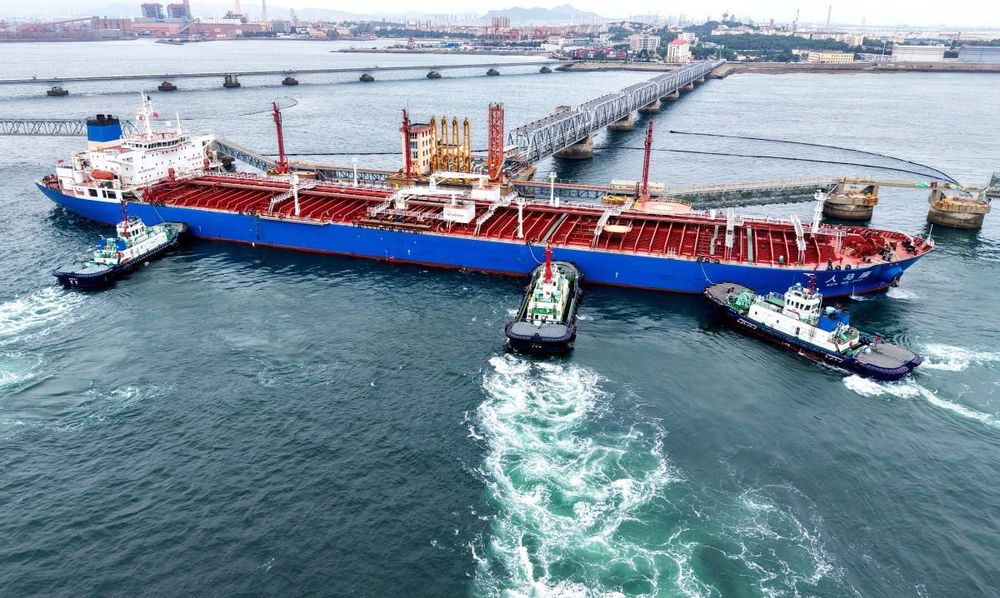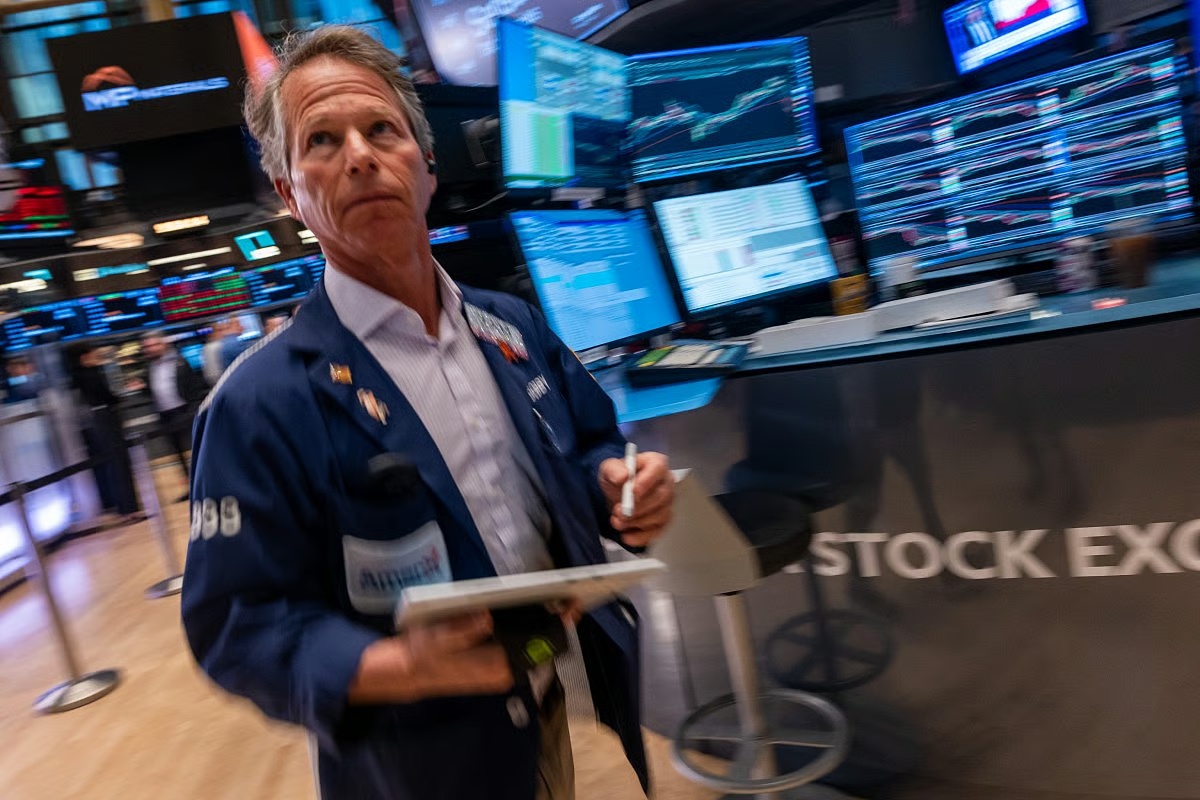
Markets rally after Hormuz reopening plan eases inflation and supply fearsLast updated: June 15, 2026 | 16:147 MIN READAFPDubai: Global markets rallied on Monday after the US and Iran reached an interim agreement to end hostilities and reopen the Strait of Hormuz, easing concerns over energy supplies, inflation and the risk of further pressure on interest rates.Oil fell, gold rose, Bitcoin climbed to its highest level in nearly two weeks and global equities advanced, as investors moved quickly to reprice the risks that had dominated markets since the conflict began in late February.Get updated faster and for FREE: Download the Gulf News app now - simply click here.The deal is expected to reopen one of the world’s most important energy corridors, although traders remain cautious because the full text has not yet been released and the next stage of talks on Iran’s nuclear programme could still prove difficult.President Donald Trump said he was authorising the “toll free opening” of Hormuz and ending a blockade of Iran, while Iran’s Deputy Foreign Minister Kazem Gharibabadi confirmed that an agreement had been reached.The pact sets up a 60-day negotiation period aimed at addressing Tehran’s nuclear programme, with sanctions relief on Iranian oil sales also expected to form part of the arrangement.Oil loses its war premiumOil saw an immediate reaction, with Brent crude falling as much as 5.3% to below $83 a barrel and West Texas Intermediate briefly dropping below $80.The move reflects a rapid unwinding of the geopolitical premium built into energy prices during the conflict, when the closure of the Strait of Hormuz threatened a route that carries about a fifth of global oil flows in normal conditions.“The United States and Iran have found common ground, allowing a ceasefire extension, safe Hormuz shipping, and sanctions relief to pave the way for a more lasting agreement later this year,” said Norbert Rücker, Head Economics and Next Generation Research at Julius Baer.He added that energy markets had proved more resilient than feared, with alternative export routes and flexible supply chains helping to limit the wider economic damage.“There will be hiccups along the way, but the direction out of the crisis seems clear. The energy crisis has been much less threatening than feared, as markets once again have proven their resilience,” Rücker said.His view is that oil markets are now heading back to an environment where supply is likely to dominate, keeping pressure on prices if the agreement holds.Antonio Di Giacomo, Senior Market Analyst at XS.com, said the fall in WTI reflected a clear shift in investor sentiment towards geopolitical risk in the Middle East.“The sharp decline in WTI reflects the rapid erosion of part of the geopolitical risk premium that had supported oil prices in recent months,” he said.He added that a reopening of Hormuz, together with possible sanctions relief for Iranian oil exports, could add more barrels to global markets over time and keep crude prices under pressure in the near term.Gold returns as dollar and yields fallGold and silver moved in the opposite direction, with bullion rising as much as 3% to above $4,345 an ounce and silver climbing as much as 4.1%.In Dubai, the 24-karat variety stood at Dh522.75 a gram at 4:00 pm on Monday, compared with Dh508.50 on Sunday. The 22-karat variety rose to Dh484 a gram from Dh470.75.The rally came as the dollar weakened and global bond yields eased, creating a more supportive backdrop for precious metals after a difficult run during the conflict.Gold had traded in an unusual pattern since the war began, often moving against crude because higher energy prices had fed inflation fears and raised expectations that central banks would keep rates higher for longer.That had reduced the appeal of gold, which does not pay interest. Bullion remains down about 18% since the conflict began and last week touched its lowest level since November.“Gold posted strong gains on Monday, benefiting from a broad decline in global bond yields and the US dollar following the latest geopolitical developments in the Middle East,” said Tony Sage, CEO of Critical Metals.He added that the rally could continue if the agreement proves durable, although attention is now shifting to central bank decisions from the Bank of Japan, Reserve Bank of Australia, Federal Reserve and Bank of England.Any signal of a less restrictive policy path could give gold further support, while a hawkish tone from policymakers may limit gains.Stocks get relief from inflation fearsEquity markets also moved higher as investors bet that lower oil prices would reduce inflation risks and ease pressure on central banks.Nasdaq 100 futures rose around 2%, while S&P 500 futures advanced more than 1%. European stocks also climbed, with the Stoxx 600 reaching a record for the first time since late February.Technology shares led the rebound, supported by the view that lower energy costs and softer bond yields could help long-duration growth stocks.“Asia, as an oil-importing region, should benefit from the deal to reopen the Strait of Hormuz,” said Richard Tang, Head Equity Research Analyst Asia at Julius Baer.He said early trading showed strong gains across North Asia, with Japan, South Korea and Taiwan among the main beneficiaries, while India could also rebound after underperforming this year.“Most Asian economies are net oil importers. We believe that the deal between the US and Iran to halt the war and reopen the Strait of Hormuz is highly beneficial to stock markets in the region, especially in North Asia,” Tang said.Lower oil prices are particularly important for India, where energy imports weigh on inflation, the currency and corporate margins. Tang said India remains an overweight market in the region as pressure from oil begins to ease.Bitcoin joins the risk rallyBitcoin climbed to its highest level in nearly two weeks, rising as much as 3.1% to $65,958 before easing slightly. Ether gained as much as 3.7% to $1,731, while Solana and XRP posted stronger gains.The rebound followed a volatile period in crypto markets, after Bitcoin briefly fell below $60,000 earlier this month and touched its lowest level since October 2024.Risk appetite improved after Trump said a peace deal with Iran “is now complete”, prompting investors to move back into assets that had been hit by war-related caution.Crypto markets remain sensitive to the Fed’s next message, however, because higher interest rates usually weigh on speculative assets. A clear signal of further tightening could slow the rebound, while softer guidance may support another leg higher.Food and crop prices easeThe agreement also fed through to agricultural markets, where grain and vegetable oil futures declined on expectations that a reopening of Hormuz would improve access to fuel and fertiliser."The positive impact will likely be seen in phases," explained Kamal Vachani, Deputy CEO, Partner Director, Almaya Group. "The first benefit is improved market confidence, which can be felt immediately by businesses and investors. Over the coming months, as shipping schedules normalise and logistics efficiencies improve, retailers may begin to experience better freight rates and more predictable supply chains."Hormuz is an important trade route for key crop inputs, and the war had pushed up costs for farmers. Higher energy prices had also made crop-based fuels more attractive, supporting demand for products such as corn, soybean oil and sugar-linked ethanol.Wheat, corn and soybean oil futures fell more than 1% in Chicago, while soybeans posted smaller losses and palm oil declined in Kuala Lumpur.White sugar also weakened in London, as lower oil prices reduced the appeal of ethanol in Brazil and increased the incentive for mills to produce more sugar."For consumers, the benefits are expected to gradually translate into improved product availability, enhanced promotional activities, and more stable pricing across various categories," Vachani added. "Given the UAE’s strong retail infrastructure and strategic location, the market is well-positioned to capitalise on these positive developments relatively quickly. We remain optimistic that increased regional stability will support continued growth, investment, and consumer confidence across the retail sector."Central banks now move into focusThe market reaction is now pivoting from geopolitics to monetary policy, with the Federal Reserve set to meet this week under newly appointed Chairman Kevin Warsh.Investors are watching whether the fall in oil prices changes the inflation outlook enough to reduce the risk of further rate hikes later this year.Lower crude prices could offer relief to policymakers after months of concern that energy costs would keep inflation elevated. That would help households and businesses by limiting the pressure on fuel, transport and financing costs.The risk is that the agreement may still face delays or political setbacks. Traders are waiting for the formal signing in Switzerland and for clearer details on shipping, sanctions relief and the nuclear negotiation timeline.A breakdown in talks could quickly return volatility to oil, equities, gold and crypto markets, especially if shipping through Hormuz is disrupted again.- With inputs from Bloomberg. Nivetha Dayanand is Assistant Business Editor at Gulf News, where she spends her days unpacking money, markets, aviation, and the big shifts shaping life in the Gulf. Before returning to Gulf News, she launched Finance Middle East, complete with a podcast and video series.
Gold, stocks and Bitcoin rally as oil drops after US-Iran deal eases market fears
US-Iran interim deal reopens the Strait of Hormuz, sending oil prices lower while boosting gold, global stocks and Bitcoin as markets reprice geopolitical risk.
1,619 words~7 min read