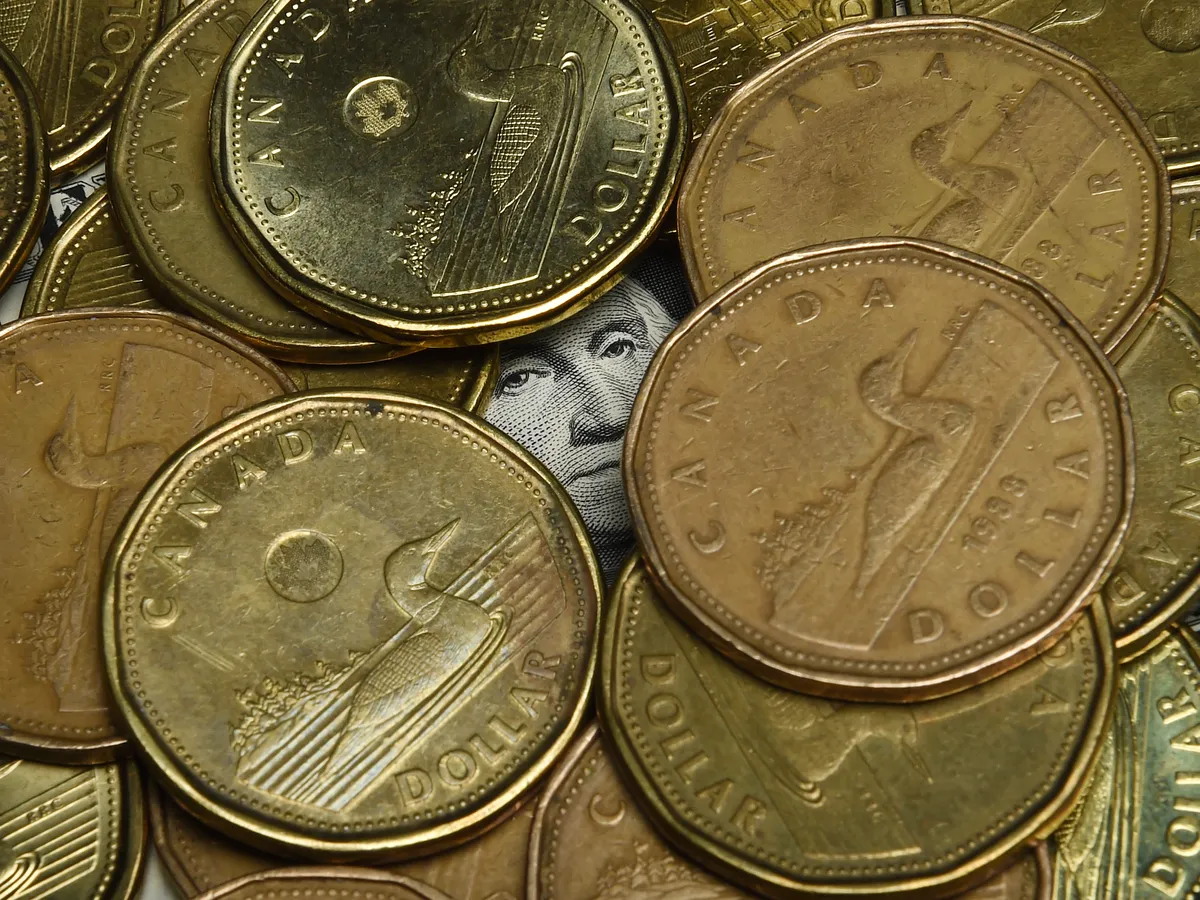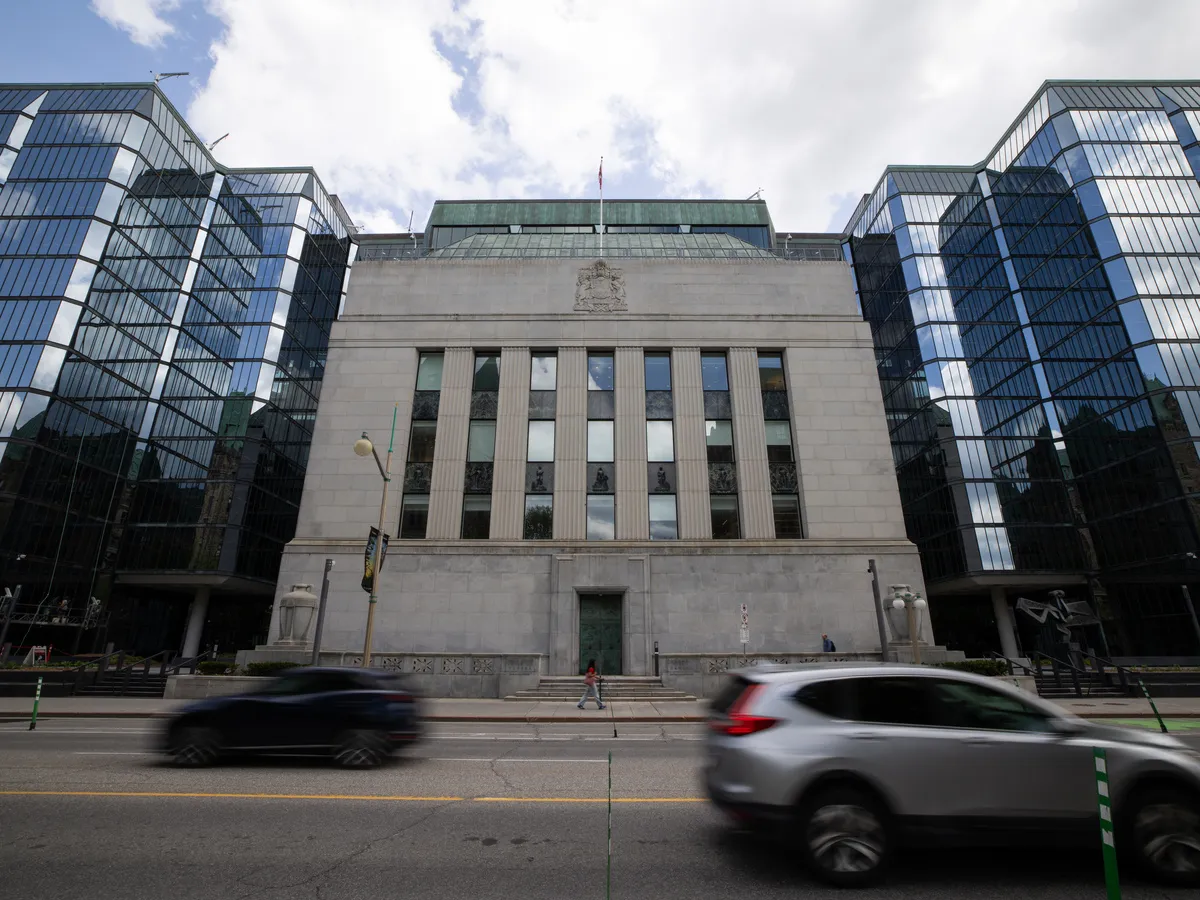
Skip to Content News Archives Economy Energy Oil & Gas Renewables Electric Vehicles Mining Commodities Agriculture Real Estate Mortgages Mortgage Rates Finance Banking Insurance Fintech Cryptocurrency Work Wealth Smart Money Wealth Management Investor Personal Finance Family Finance Retirement Taxes High Net Worth FP Comment Executive Women Puzzmo Newsletters Financial Times Business Essentials More Innovation Information Technology FP500 Podcasts Small Business Lives Told Tails Told Shopping Financial Post Store Obituaries Place a Notice Advertising Advertising With Us Advertising Solutions Postmedia Ad Manager Sponsorship Requests Classifieds Place a Classifieds ad Working Profile Settings My Subscriptions Saved Articles My Offers Newsletters Customer Service FAQ News Economy Energy Mining Real Estate Finance Work Wealth Investor FP Comment Executive Women Puzzmo Newsletters Financial Times Business Essentials HomeInvestorA lower loonie would have direct implications for Canadian investorsMartin Pelletier: A worsening economic picture is creating risks that could weigh on growth, portfolio returns and living standardsLast updated 1 hour ago You can save this article by registering for free here. Or sign-in if you have an account.Increasingly, it looks like the Canadian currency, and ultimately the standard of living tied to it, is where economic pressure will surface first. Photo by Brent Lewin/BloombergWhile Prime Minister Mark Carney and Bank of Canada Governor Tiff Macklem may not appear overly concerned about the Canadian economy, particularly given recent comments suggesting we are not clearly in a recession, I take a different view as an investment manager.Subscribe now to read the latest news in your city and across Canada.Exclusive articles from Barbara Shecter, Joe O'Connor, Gabriel Friedman, and others.Daily content from Financial Times, the world's leading global business publication.Unlimited online access to read articles from Financial Post, National Post and 15 news sites across Canada with one account.National Post ePaper, an electronic replica of the print edition to view on any device, share and comment on.Daily puzzles, including the New York Times Crossword.Subscribe now to read the latest news in your city and across Canada.Exclusive articles from Barbara Shecter, Joe O'Connor, Gabriel Friedman and others.Daily content from Financial Times, the world's leading global business publication.Unlimited online access to read articles from Financial Post, National Post and 15 news sites across Canada with one account.National Post ePaper, an electronic replica of the print edition to view on any device, share and comment on.Daily puzzles, including the New York Times Crossword.Create an account or sign in to continue with your reading experience.Access articles from across Canada with one account.Share your thoughts and join the conversation in the comments.Enjoy additional articles per month.Get email updates from your favourite authors.Create an account or sign in to continue with your reading experience.Access articles from across Canada with one accountShare your thoughts and join the conversation in the commentsEnjoy additional articles per monthGet email updates from your favourite authorsSign In or Create an AccountorWhat concerns me even more is the level of complacency among parts of Carney’s voter base, largely because many have not yet felt the impact of the cracks forming beneath the surface. Those cracks are already there, just not evenly distributed. The strain is increasingly concentrated among lower-income Canadians, particularly younger people, immigrants, single parents and seniors, many of whom are already showing up in record numbers at places like our food banks.Let me start with monetary policy. The Bank of Canada recently held its overnight rate at 2.25 per cent, one of the lower policy rates in the G7 at a time when inflation risks are clearly re-emerging. At the same time, the European Central Bank just raised rates by 25 basis points, its first hike since 2023, in response to renewed energy-driven inflation pressures. South of the border, United States producer prices are now running at 6.5 per cent year over year, the highest level since November 2022, highlighting that inflation pressures are beginning to build again in the system. It’s naive to assume those pressures stop at the border.Canada's best source for investing news, analysis and insight.By signing up you consent to receive the above newsletter from Postmedia Network Inc.A welcome email is on its way. If you don't see it, please check your junk folder.The next issue of Investor will soon be in your inbox.We encountered an issue signing you up. Please try againCanada, by contrast, is effectively trying to hold rates lower into this backdrop. The rationale is clear, given its significant debt load, as higher interest rates would only add to an already growing fiscal burden. But that doesn’t eliminate the risk, it just redirects it, and increasingly the Canadian dollar is where that pressure shows up.Debt servicing costs are already becoming a meaningful drag. Ottawa’s interest charges are running at roughly $54 billion annually, consuming about 11 per cent of federal revenue and rising. That is before factoring in what happens if rates need to move higher again. In effect, monetary policy is increasingly constrained by fiscal realities.This is where the currency comes into play. Interest rate differentials matter. When a country keeps rates lower relative to its peers, capital tends to flow elsewhere in search of higher returns, putting downward pressure on the currency. We are already seeing this dynamic unfold, with the Canadian dollar weakening meaningfully this year and, in my view, at risk of soon breaching $0.70 against the U.S. dollar again if the gap persists.This has direct implications for Canadian investors and portfolio managers. A weaker currency doesn’t just reflect underlying economic pressure, it actively shapes outcomes by eroding purchasing power, distorting returns, and increasing reliance on foreign assets to preserve real wealth. For those managing capital, it forces difficult decisions around currency exposure, asset allocation and where best to deploy capital.Now overlay that with what I believe is a largely underappreciated risk: the future of the Canada-United States-Mexico Agreement (CUSMA, or the USMCA, depending on your perspective).Based on the comments to my social media posts on X, there appears to be a profound misconception that the agreement locks in North American trade stability through 2036. It does not. Under Article 34.6, any member, including the United States, can exit with six months’ notice. The 2026 review and 2036 timeline only matter if all parties choose to stay in the agreement so that distinction is critical.We have seen this playbook before. The United States used the threat of withdrawal to force the transition from the North American Free Trade Agreement (NAFTA) to CUSMA. There is nothing preventing a similar strategy from being used again, particularly if the U.S. administration prefers bilateral agreements where it can negotiate from a position of strength.If that scenario plays out, the implications for Canada are significant. A unilateral U.S. withdrawal would temporarily push trade back to World Trade Organization rules, introducing tariffs, disrupting supply chains and eliminating the preferential access Canadian exporters rely on. Negotiations for new bilateral deals could take months, if not years, and the U.S. would hold the leverage throughout.More importantly, it creates a competitive risk with Mexico.A large portion of foreign investment into Canada has historically been predicated on access to the U.S. market through NAFTA and now CUSMA. If that framework breaks down and the U.S. prioritizes a bilateral deal with Mexico first, capital flows could quickly shift south. Mexico’s cost structure is already more attractive in many industries, and with preferential access re-established there first, it could become the default destination for manufacturing and supply chain investment.The economic implications for Canada, particularly in manufacturing-heavy regions such as Ontario and Quebec, would be material. Supply chains could reorient. Export competitiveness could erode. And the downstream effects on employment and growth would not take long to follow.Even Alberta, which is often viewed as somewhat insulated given its resource base, is not immune. The province remains constrained by a lack of pipeline capacity to tidewater, largely the result of years of excessive regulatory hurdles that have limited its ability to diversify export markets beyond the United States. Industry leaders, including the chief executive of Cenovus, have been vocal about how these structural bottlenecks still remain in place, leaving Canadian crude effectively captive.At the same time, the United States has already begun diversifying its supply, including re-engaging with producers such as Venezuela. That combination weakens Canada’s negotiating position and reduces the strategic advantage Alberta has historically relied on.Taken together, this is a more fragile setup than headline policy messaging suggests and perhaps the real reason why the Carney government is happy to see interest rates stay where they are. Canada is attempting to balance a softer economy, rising fiscal constraints and a shifting global trade landscape, all while maintaining relatively accommodative policy.That combination tends to show up somewhere though. Increasingly, it looks like the currency, and ultimately the standard of living tied to it, is where the pressure will surface first. And maybe then, we can start caring again about those in line at our food banks.Martin Pelletier, CFA, is the author of Investing Through the Storm and a senior portfolio manager at TriVest Wealth, a team that is part of Wellington-Altus Private Counsel Inc. TriVest provides discretionary risk-managed portfolios, investment audit/oversight and advanced tax, estate and wealth planning. The opinions expressed are not necessarily those of Wellington-Altus._____________________________________________________________If you like this story, sign up for the FP Investor Newsletter. Join the Conversation This website uses cookies to personalize your content (including ads), and allows us to analyze our traffic. Read more about cookies here. By continuing to use our site, you agree to our Terms of Use and Privacy Policy.
A lower loonie would have direct implications for Canadian investors
Martin Pelletier: A worsening economic picture is creating risks that could weigh on growth, portfolio returns and living standards. Read on
1,575 words~7 min read