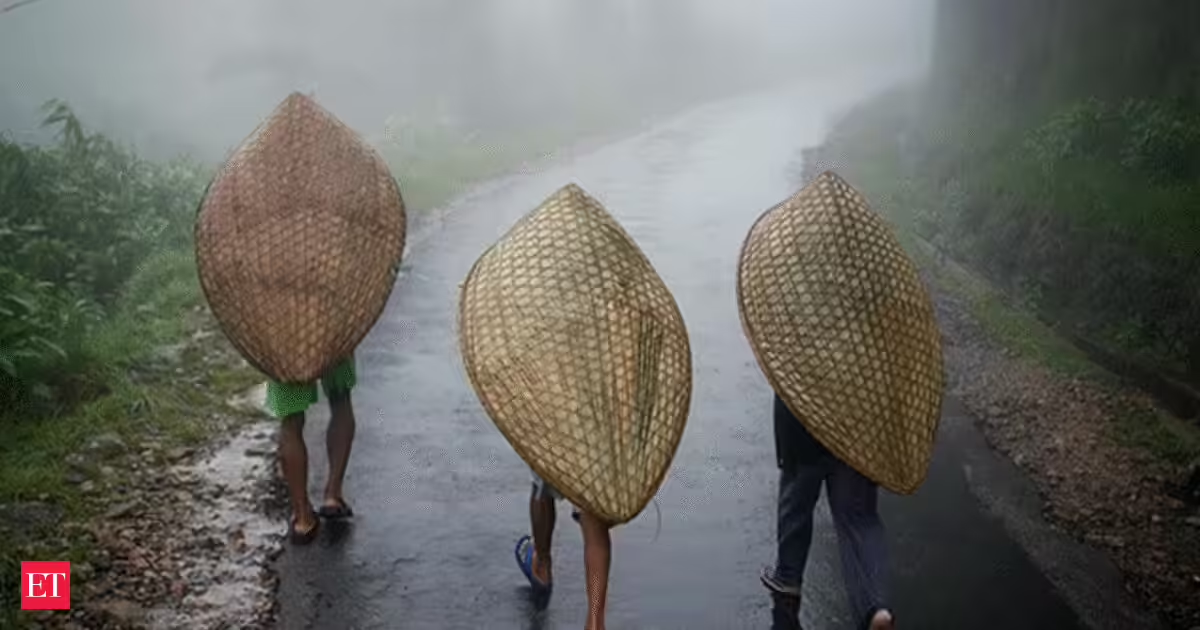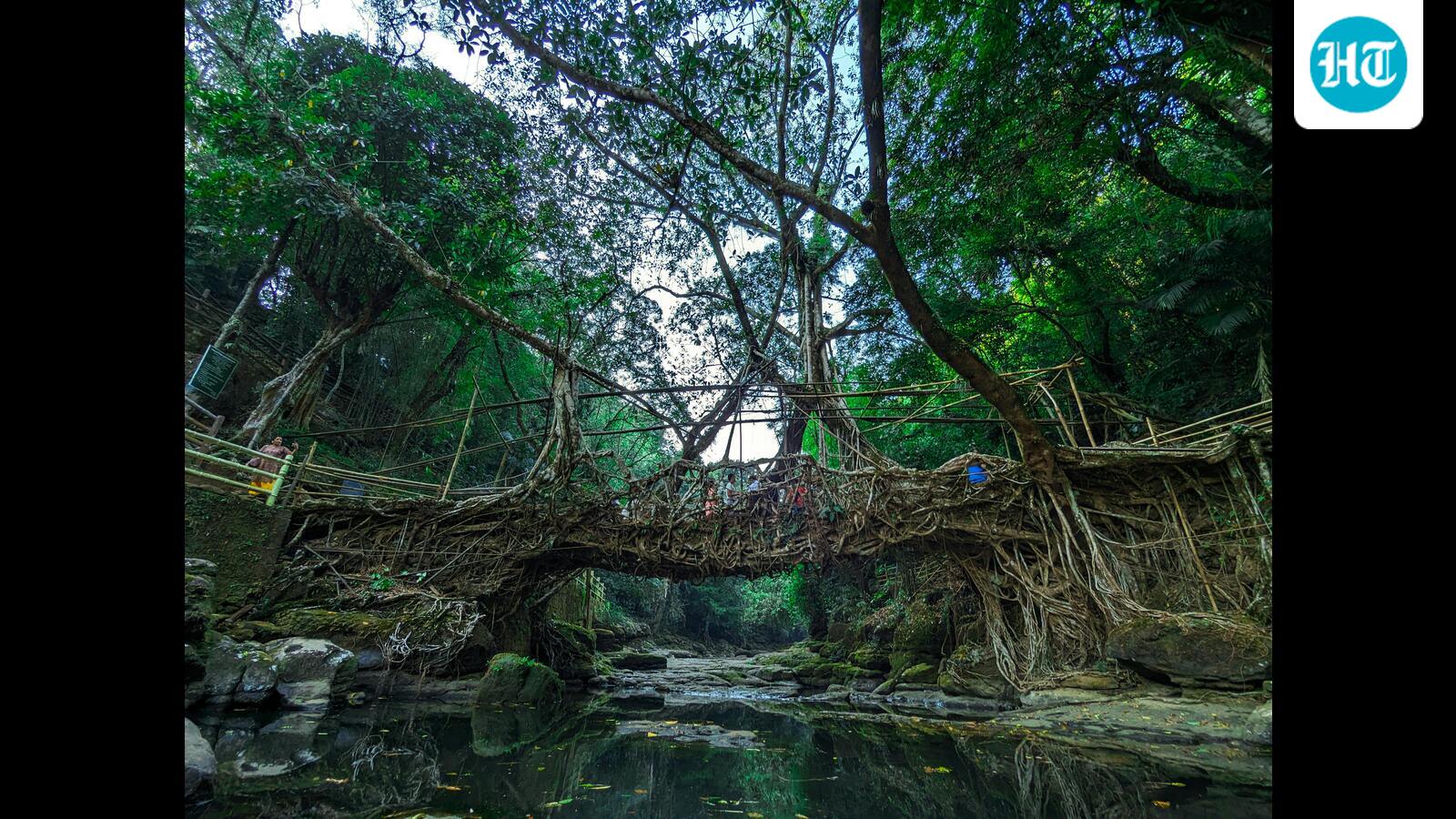
If you ever dreamed of a place where clouds literally greet you, you are thinking of Meghalaya. Nestled in Northeast India, this lush paradise boasts verdant green hills, cascading waterfalls, and breathtaking landscapes, featuring wonders like the crystal-clear Dawki River and iconic Living Root Bridges. However, as home to the wettest places on the planet, Meghalaya receives torrential monsoon rains that make daily life quite difficult for residents. Yet, the locals have found a brilliant hack to beat the downpours, using an eco-friendly tool that has been a part of the state for over a century. And no, it isn’t your average umbrella. Umbrellas without a handleMeghalaya residents have long leaned on hand-crafted rain shields, locally called knups, that protect them from relentless rainfall, especially in the monsoon months. Although they act like traditional umbrellas, their shields are made not from plastic or metal but bamboo and palm leaves, making them a sustainable alternative that has stood the test of time. What’s more, you do not need to hold them as knups come without any handle. You simply slip them on your back and the shield covers your head, shoulders, and upper body, leaving both hands free to carry out daily tasks. These naturally-made Khasi rain shields also find a mention in traditional Khasi agricultural folksongs as well as in tales and legends, as per a report by Chalo Hoppo. How Meghalaya’s natural umbrellas are made You Might Also Like:The cone-shaped ‘raincoats’ or ‘umbrellas’ that come in an array of sizes are made from locally available resources based on the region. For example, Mawsynram uses a local bamboo variety known as slew. To create the shield, palm leaves are first dried before they are flattened uniformly under heavy objects to construct the conical shape in the desired size and pattern. After that, the reed bamboo strips are woven in an open-hexagonal pattern and arranged with 2 layers of palm leaves for waterproofing. Once done, the edges are sewn together with fine splits of bamboo and held together in place by bamboo pins. When the knup is put on, the curved, conical part of this ‘inverted teardrop’ rain shield rests perfectly in balance on the head. The elongated surface covers up to the ankles, protecting people when they are out in the paddy fields during incessant rain. The knup comes in handy for women working on steep hill slopes, areas where terrace farming is common. The bamboo framework carefully guides rainwater away from the wearer, allowing it to flow down the sides instead of collecting on the surface. Thanks to its clever design, the shield can also be used to protect oneself from the harsh sunrays in summer. Interestingly, there is also a smaller version known as the "knup rit", which covers only the head. This miniature variant is often displayed as a decorative piece in homes and local shops, reflecting the region's rich cultural heritage and craftsmanship.
No plastic or metal, only bamboo and palm leaves: Meghalaya’s 100-year-old umbrellas do not have a handle but can protect you from heavy rains
Meghalaya, India's wettest region, faces heavy monsoon rains. Locals have a unique solution: knups, hand-crafted rain shields made from bamboo and palm leaves. These sustainable, handle-less shields cover the body, leaving hands free. They are woven and layered for waterproofing. The clever design protects from rain and sun. A smaller version, knup rit, is also used.
487 words~2 min read