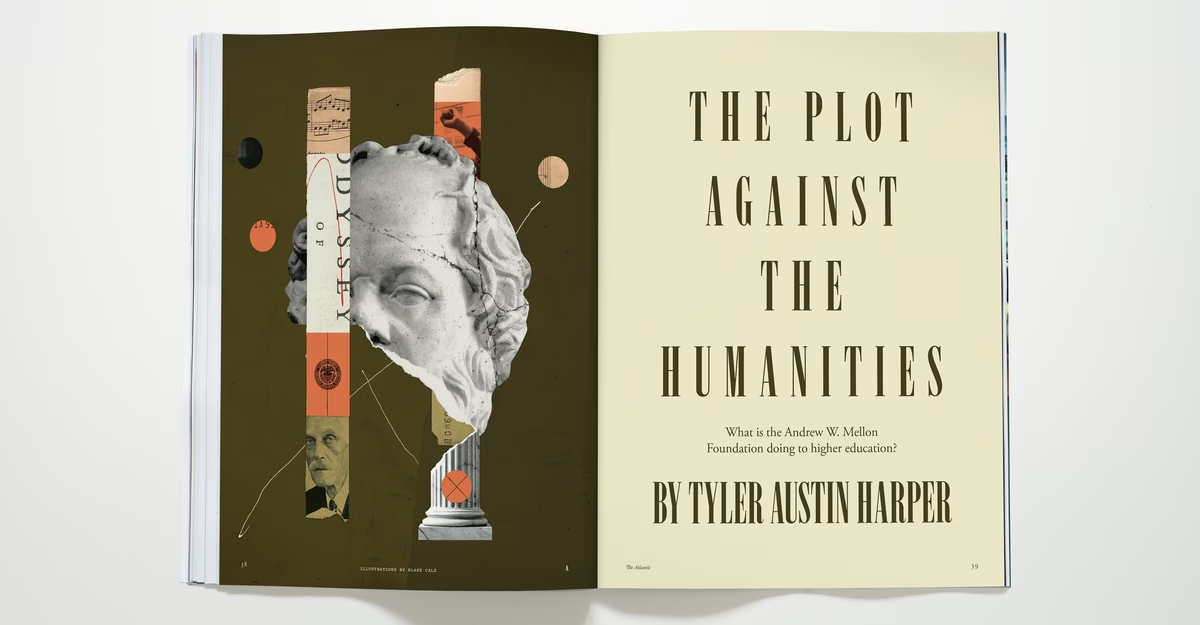
The recent “Report on the State of Scholarship in the Humanities and the Humanistic Social Sciences” opens with a familiar complaint: that contemporary scholarship has become overly concerned with social justice and insufficiently committed to objectivity, rigor and the pursuit of truth. The report’s authors are careful to qualify their claims, but the central concern remains clear—they worry that political commitments have increasingly displaced scholarly ones.
Many of the responses to the report (known colloquially as the Vanderbilt/Washington University of St. Louis report) have focused on its methodology, its use of evidence and its characterization of particular disciplines. Those critiques are important. The American Anthropological Association, for example, argues that the report reaches sweeping conclusions without sufficient engagement with the field it criticizes. Others have questioned the report’s reliance on internal assessments that are unavailable for public scrutiny.
Yet there is a more fundamental issue that deserves attention.
IU Professor Investigated for Graphic About White Supremacy Loses Job
Professors Say Vanderbilt Report Misrepresents Their Work