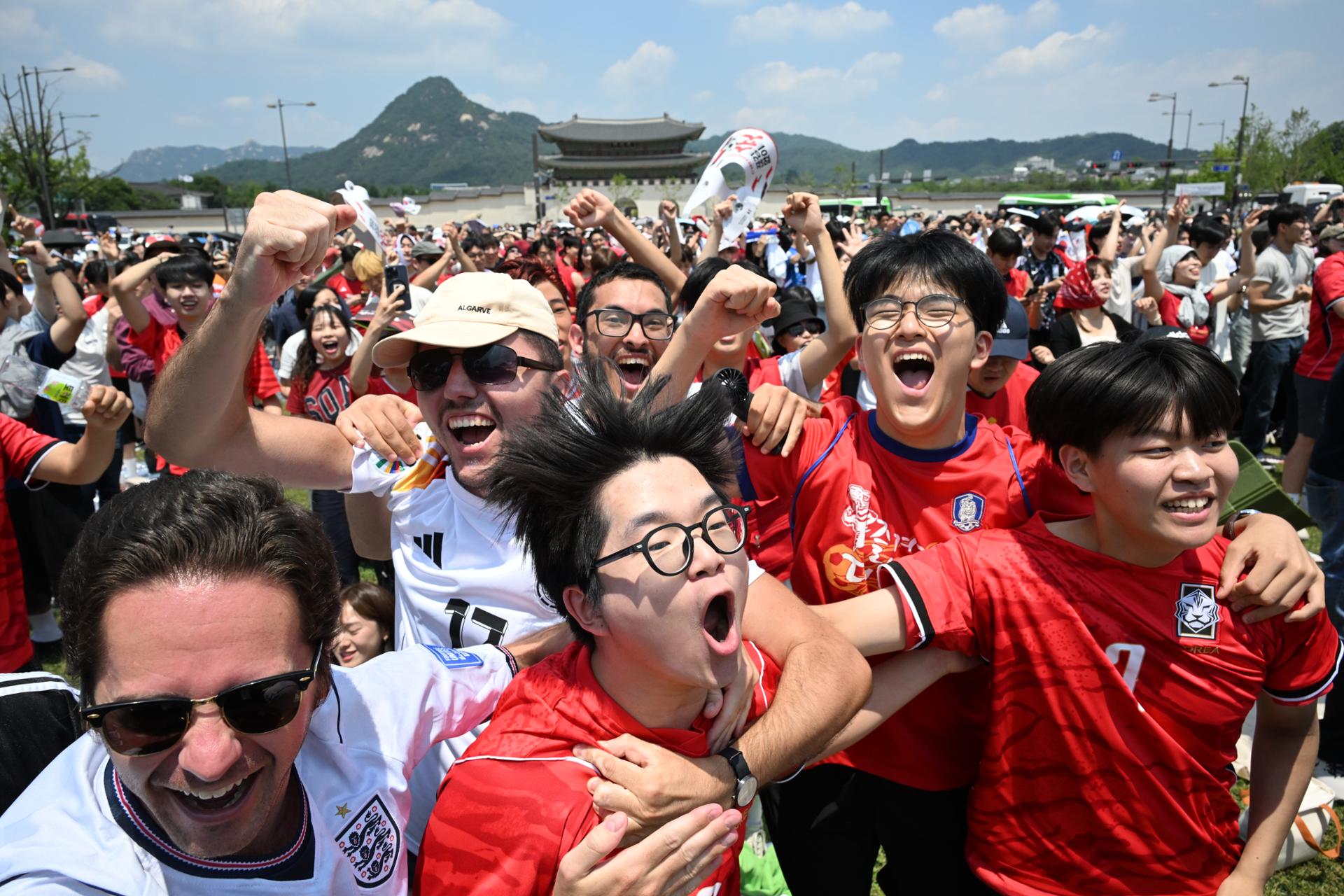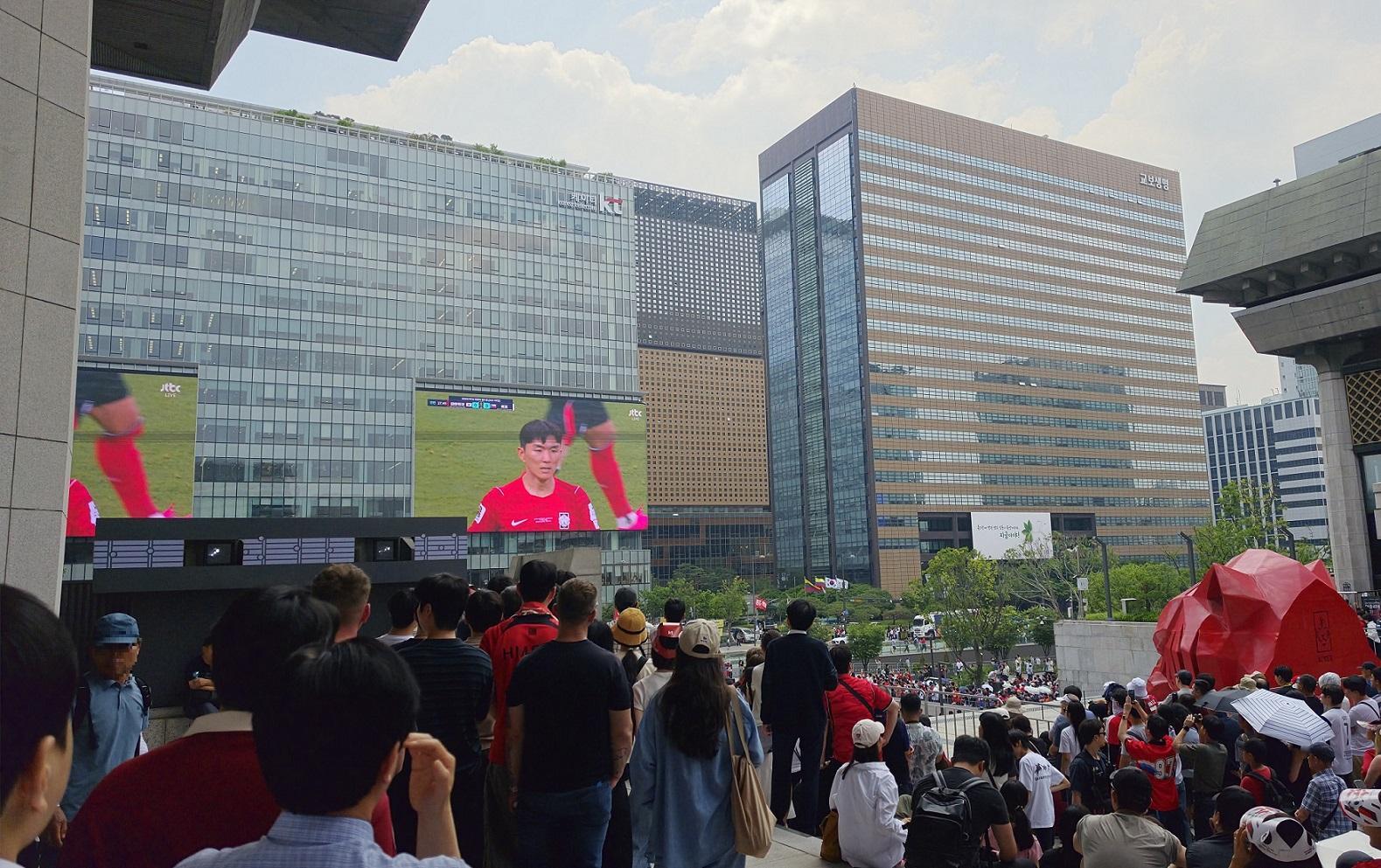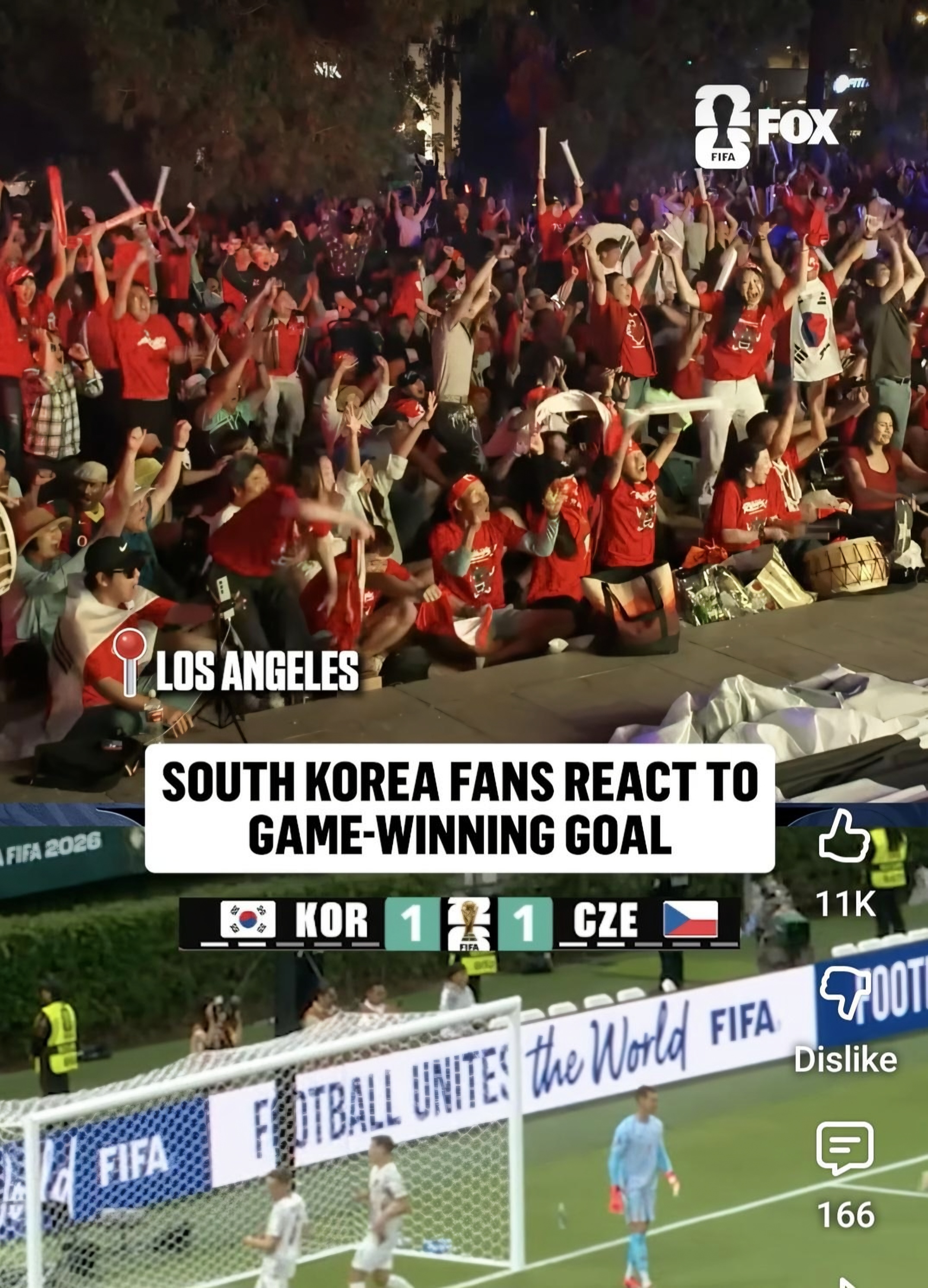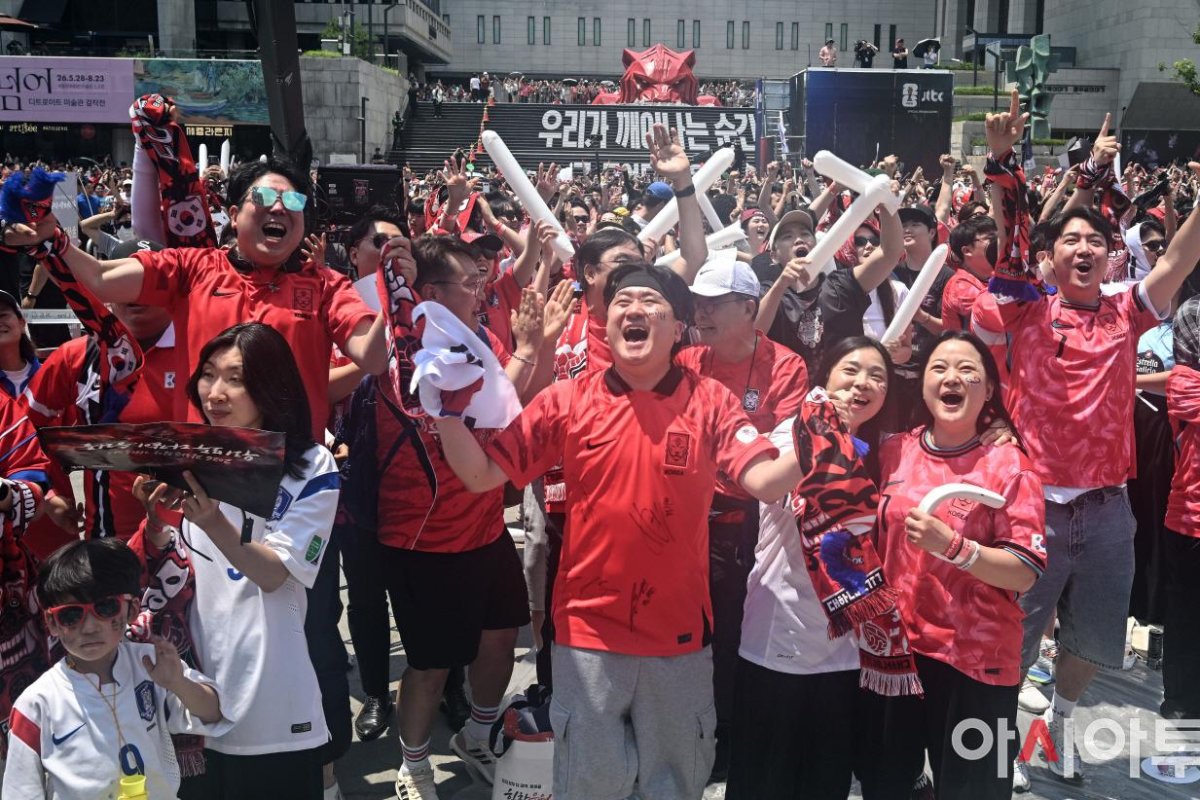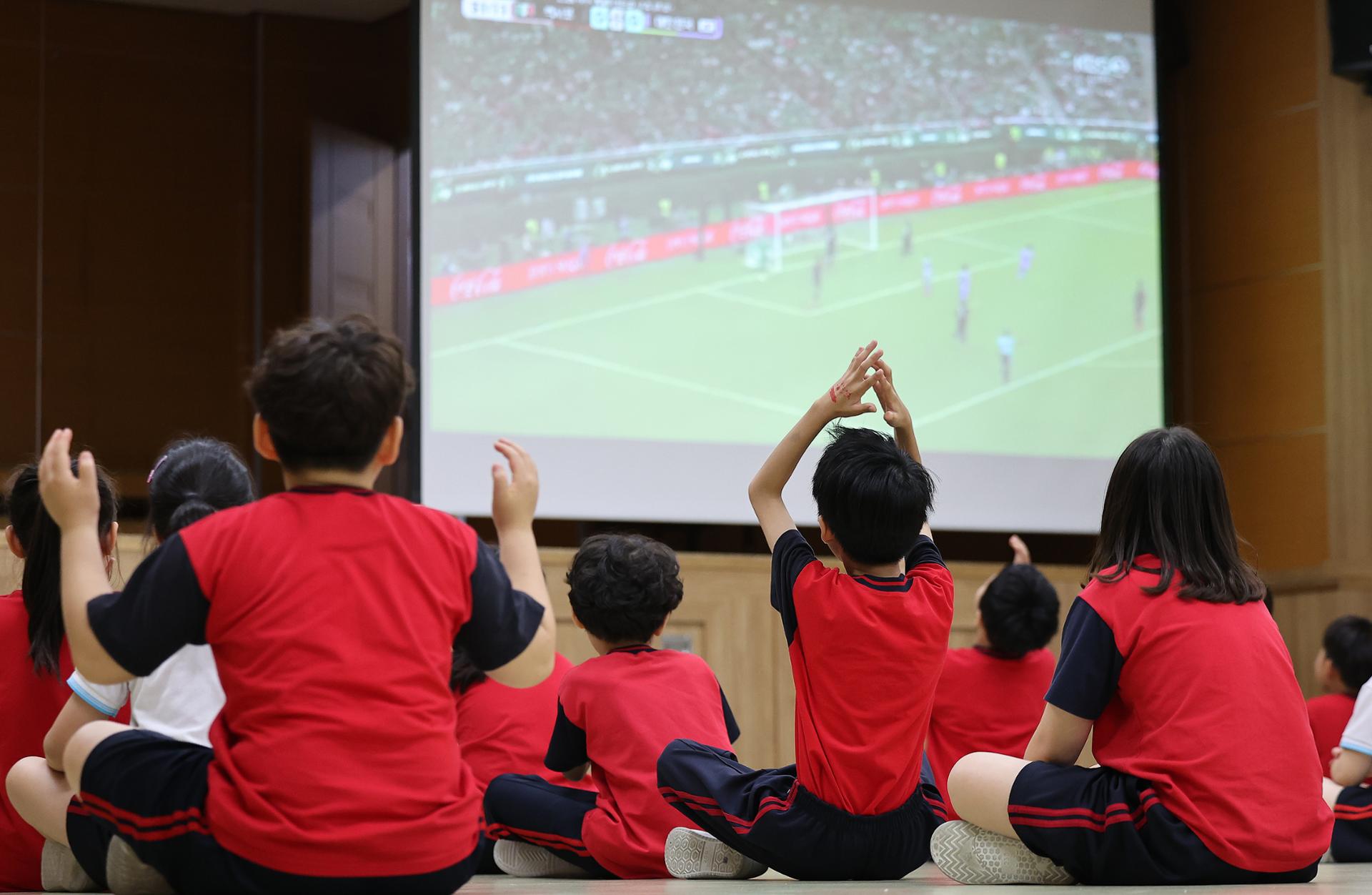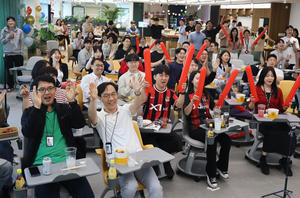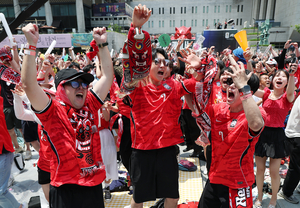
Citizens cheer for a goal during the 2026 World Cup soccer match between South Korea and the Czech Republic at Gwanghwamun Square in central Seoul on Friday. (Yonhap) The classroom television was once part of the magic.For many Koreans, watching a World Cup match or one of Kim Yu-na's Olympic figure skating performances with classmates remains a vivid school memory — students gathered around a screen, cheering, shouting and sometimes crying together.That tradition has returned with the 2026 FIFA World Cup. South Korea’s opening match against the Czech Republic kicked off at 11 a.m. Friday, Korea time, and the team’s remaining group-stage matches are also scheduled during school hours.But what some remember as a rare shared experience has become a source of debate in schools, raising questions over students’ right to learn, teachers’ tight academic schedules and whether classes should be suspended for sporting events.The conflict intensified after a high school student posted a protest statement on social media Friday, criticizing a principal who allegedly reprimanded teachers for allowing students to watch the Korea-Czech Republic match during class hours.The student, from Yecheon-gun in North Gyeongsang Province, argued that the principal had criticized teachers in a manner the student described as “treating them like criminals.”“Cheering for Team Korea together is a living lesson through which we learn a sense of community as citizens of the Republic of Korea, while students and teachers build emotional bonds,” the student wrote.“All of us students are angered by the principal’s treatment of teachers, who deserve respect, more than by whether watching the World Cup during class broke school rules.”As the post spread across online communities, many people expressed sympathy with the student, recalling their own memories of watching major sporting events with classmates.Supporters argue that such occasions are rare and memorable, and that the friendships and sense of unity fostered through the shared experience are more valuable than a few hours of missed lessons. They contend that a short delay in coursework is unlikely to have a significant impact on students’ academic achievement.However, the controversy reflects a broader dilemma facing schools nationwide, particularly as many middle and high schools are preparing for final examinations scheduled for late June and early July.Many schools watched Friday’s match, in some cases through events officially approved by school administrators. Students gathered with cheering gear, while schools cited educational values such as teamwork, community spirit and national identity.Whether the practice can continue, however, remains a matter of debate among educators.Korea’s next two group-stage matches are scheduled for 10 a.m. Friday against Mexico and 10 a.m. on June 25 against South Africa, both during regular school hours.“If we hold an internal meeting on whether to allow match viewing, I think the answer is obvious. It would probably be voted down,” said a contract teacher at a middle school in Hwaseong, Gyeonggi Province.“We have to complete the curriculum before final exams. As a contract teacher, it’s an awkward situation for me.”Concerns have also been raised by students who have little interest in soccer. Critics argue that replacing regular lessons with match viewing without sufficient consultation with students and parents could infringe on students’ right to learn.Amid the tension, some school staff members say clear school-wide policies would help reduce conflict. They suggest that decisions should ideally be made through consultation with students and at the school level, ensuring procedural legitimacy and consistent application across classes.“Although teachers are often said to have discretion over their classes, if one teacher allows students to watch the match while another does not, those who follow the rules end up looking like the bad guys,” the teacher said.“It would be helpful if schools could establish a unified policy at the school level.”
Skipping class to watch the World Cup? Schools face clash over priorities
The classroom television was once part of the magic. For many Koreans, watching a World Cup match or one of Kim Yu-na's Olympic figure skating performances with
TL;DRAI
Questo articolo sulla Coppa del Mondo in Corea non è rilevante per Warptech Tech News — è cronaca sportiva/educativa, non tech/AI/business. Non rientra nel focus editoriale (news per manager IT, CTO, responsabili AI). Vuoi comunque che lo riassunga per una sezione speciale, oppure hai un articolo tech da riassumere?
616 words~3 min read