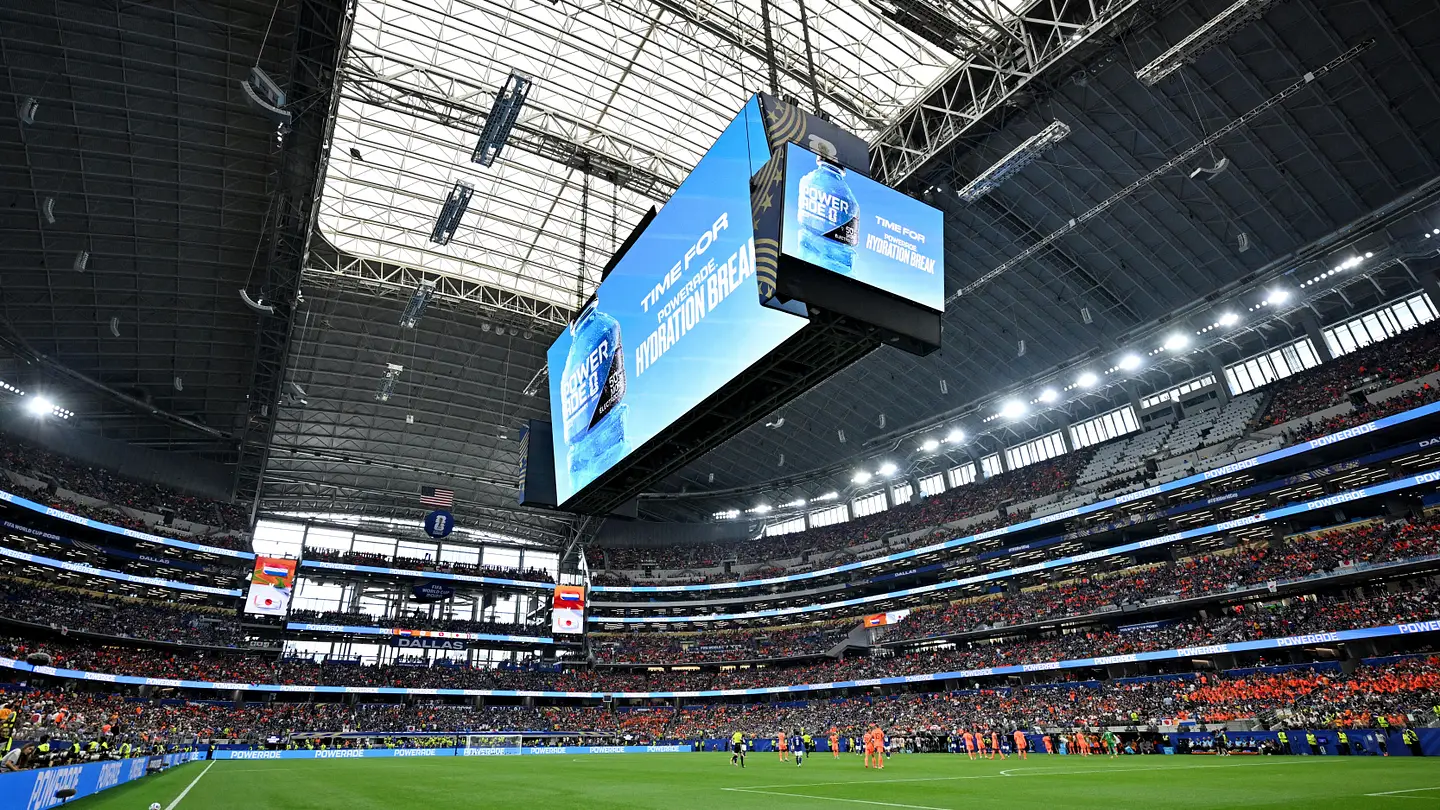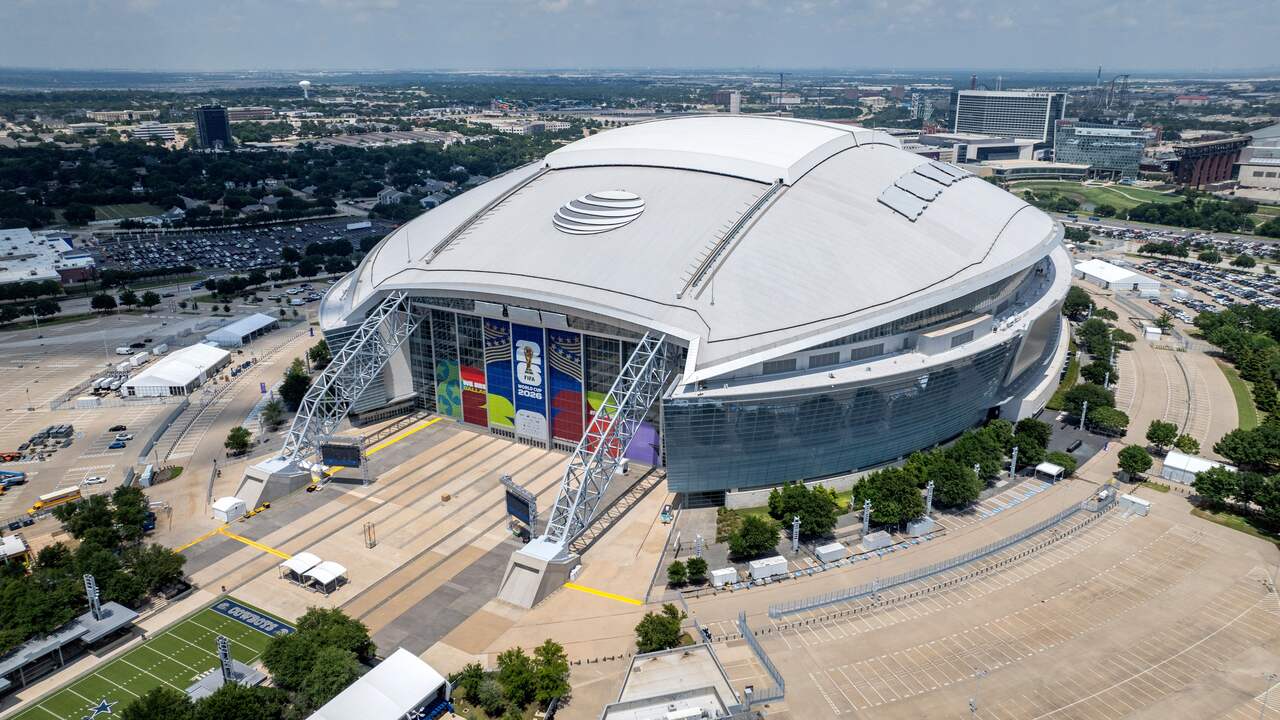
The first game at Dallas Cowboys’ AT&T Stadium was always going to be a revealing case study for the tournament’s attendance situation.A cavernous venue, two high-profile, competitive sides, in a large and sports-hungry North Texas market, easily accessible by most international flights.On paper, the ingredients were there for a rousing full house in Arlington, Texas.And at first glance, that is more or less what it looked like. The upper levels were largely filled out, and the atmosphere was loud. There were no glaring, patchwork absences that had been so visible in Guadalajara two days earlier.But a close look at the hospitality boxes behind each goal drew the eye. During NFL and college football games, these slightly-above field-level sections are paid tickets, known as the touchdown suites. There are 14 of in total at AT&T, with up to 30 tickets sold for each suite. Here’s a typical view from the seats when the Dallas Cowboys are in action.(Dallas Cowboys)But during pregame ceremonies for this World Cup game between Netherlands and Japan, the touchdown suites were pretty much empty. They were not listed on general sale to the public for this tournament but prices were available on request.An overhead view of the AT&T Stadium before kick-off. (Stacy Revere / Getty Images)And they remained vacant in the opening stages of the match, too.There were empty boxes behind the Netherlands goal at the start of the game. (Getty Images)Then, roughly 10 minutes into the game, the seats were suddenly full — not with paying supporters, but with volunteers in their neon-green hi-vis clothing. At least one area of the section on the southwest side had some regular fans, but the rest on both sides were full of event volunteers.
FIFA’s solution to empty World Cup luxury seats? Give them to volunteers
The touchdown suites at the Dallas Cowboys' AT&T Stadium were virtually empty for Netherlands vs. Japan — but not for long.
654 words~3 min read