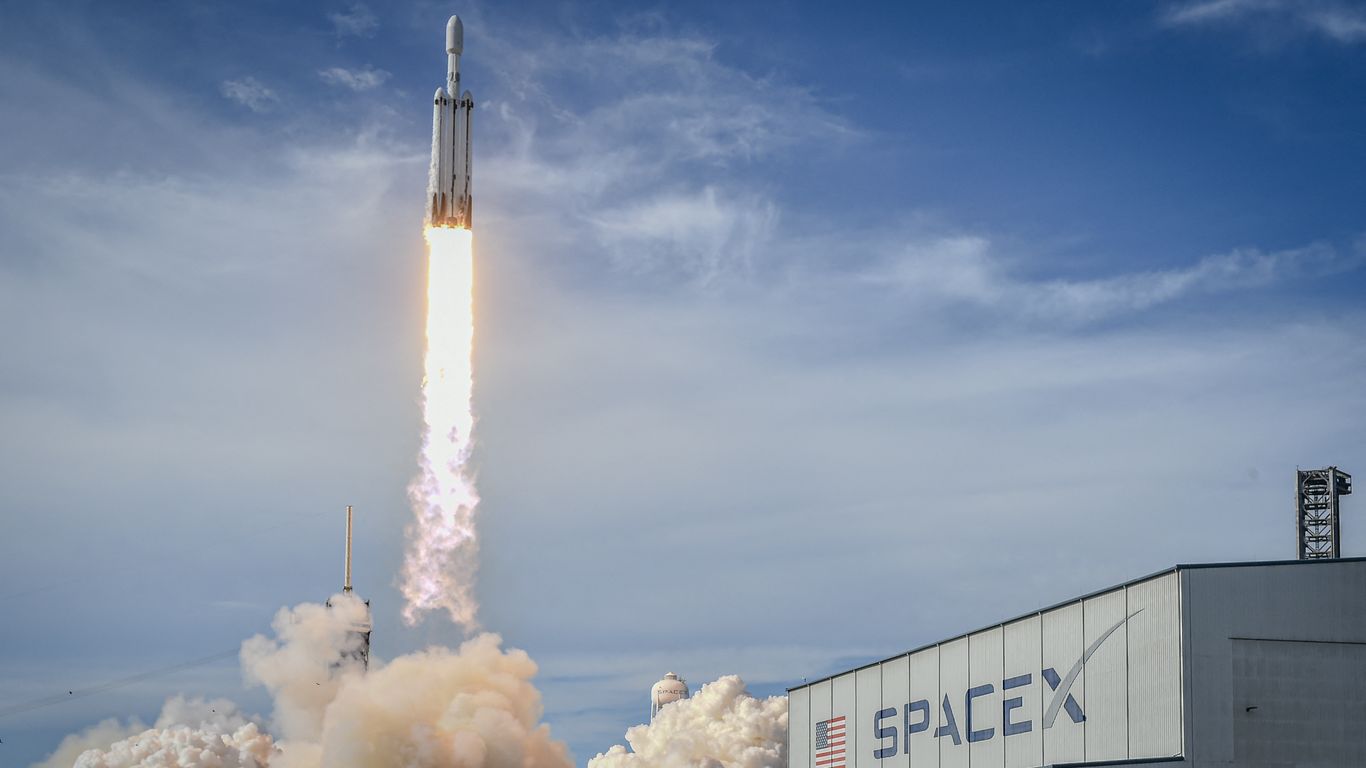
SpaceX just went public, and it wasn’t subtle about it. The company priced 555.5 million shares at $135 each on June 12, raising $75 billion in what is now the largest IPO in history. Early trading pushed the valuation past $2 trillion, making SpaceX not just the most valuable aerospace company on Earth but one of the most valuable companies, period.
The ticker is SPCX. The ambition is interplanetary. And the money is earmarked for something that sounds like science fiction: putting data centers in orbit.
SpaceX has filed with the FCC to deploy up to 1 million satellites designed to function as space-based AI compute nodes. Not communication relays. Not GPS helpers. Full orbital data centers.
Initial demonstration tests are targeted for late 2027, with broader satellite deployment planned as early as 2028. The company’s internal roadmap calls for 1 GW of orbital computing power by the end of 2026 and a scale-up to 100 GW within roughly 3.5 years after that.
The IPO proceeds are being channeled into three core areas: expanding the Starlink satellite constellation, increasing launch capacity across the Falcon and Starship fleet, and building out this orbital compute layer.