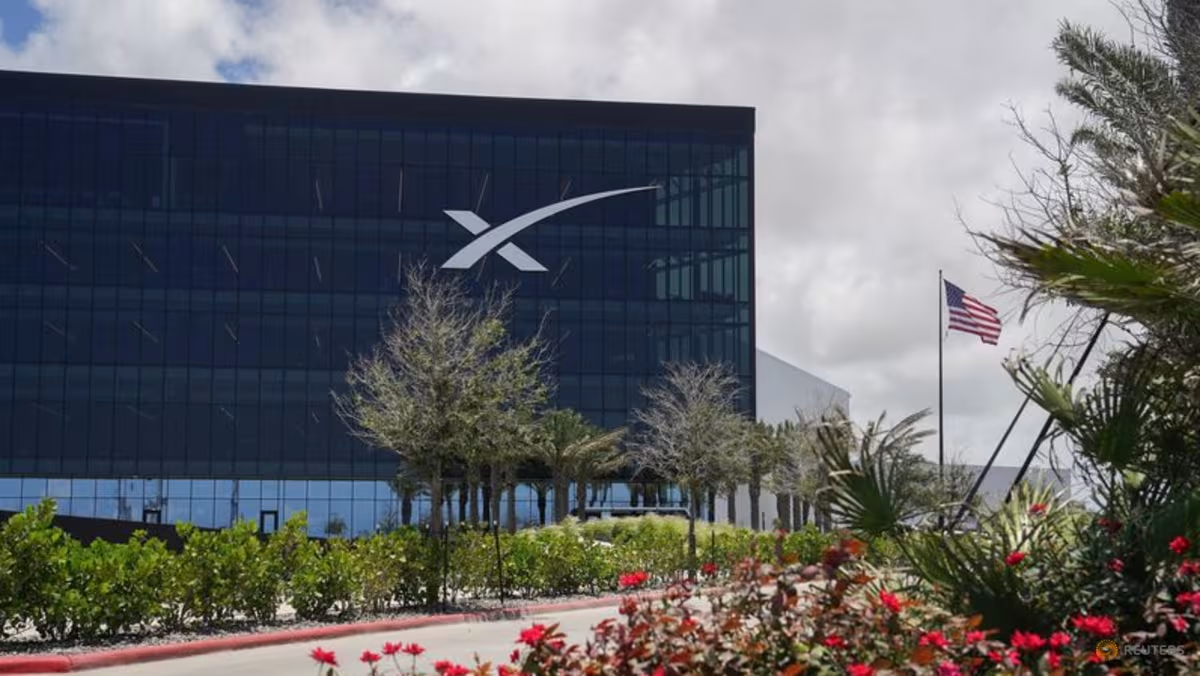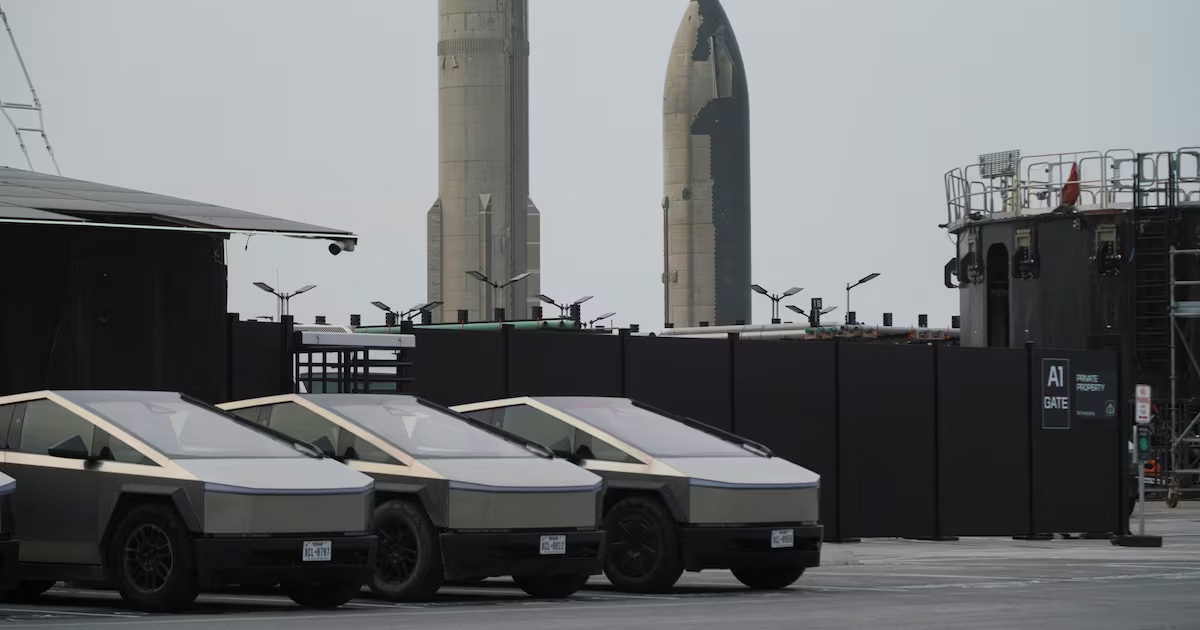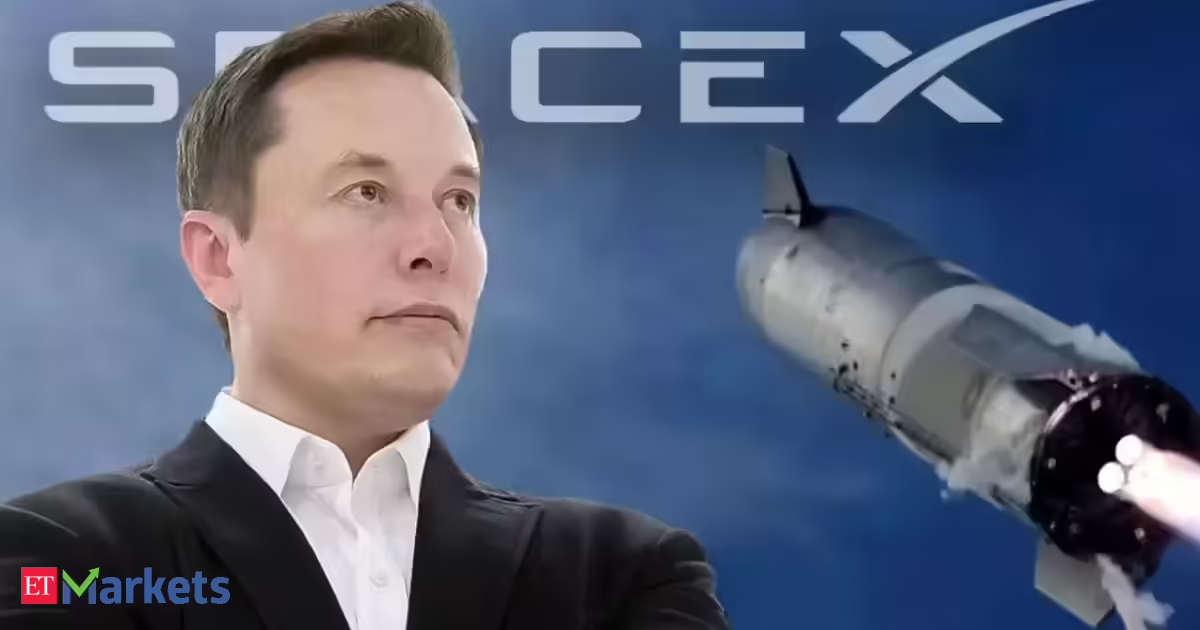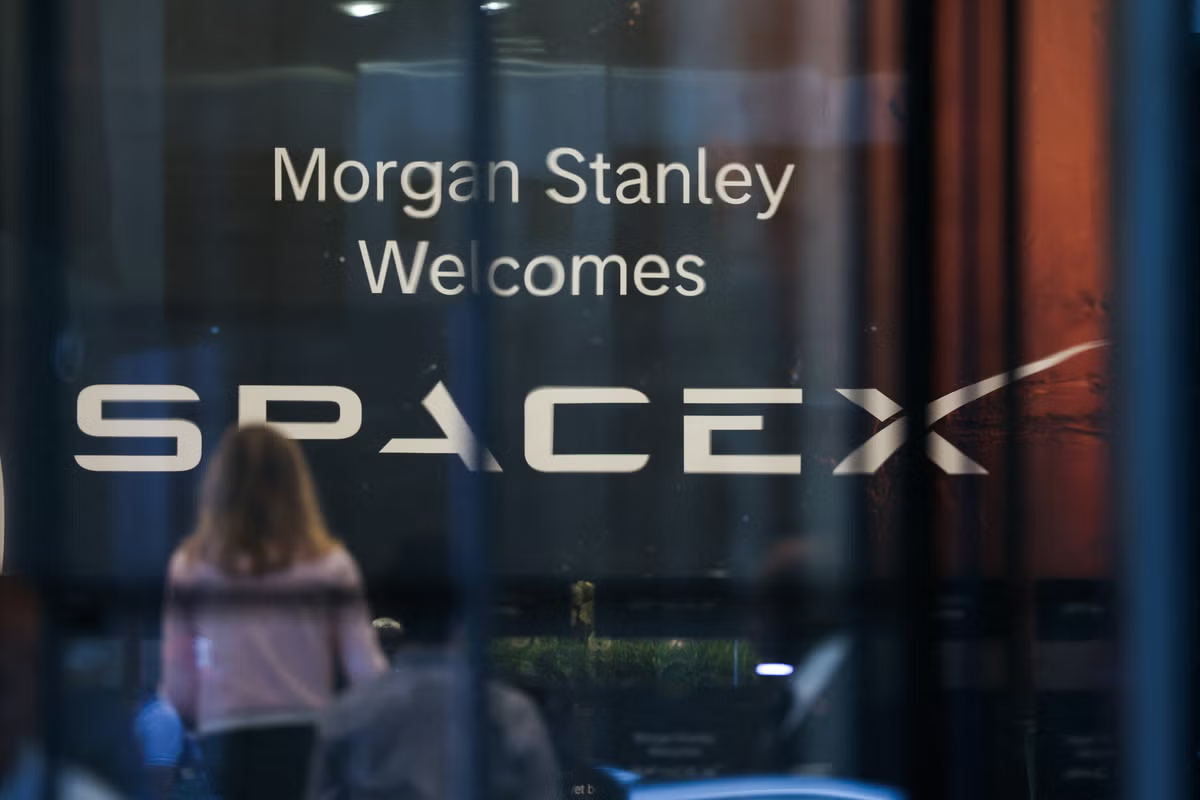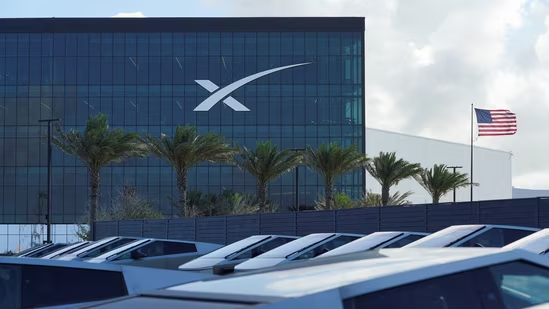
NEW YORK - SpaceX on June 11 priced the biggest-ever US initial public offering at US$135 a share, making Elon Musk’s rocket and spacecraft manufacturer one of the world’s most valuable companies.The IPO raised a record US$75 billion (S$96 billion) on the sale of 555.56 million shares, valuing the space, satellite and AI provider at US$1.77 trillion, a record for an initial offering.SpaceX will rank seventh among US-listed firms when its shares begin trading on the Nasdaq on June 12, though it lost money in 2025 and other mega-caps outpace its revenue by several magnitudes.The June 11 pricing culminates a months-long effort that realised Musk’s most ambitious project yet, even as he stood a handful of financial traditions on their head and as some analysts question whether its lofty valuation is justified.With the pricing, SpaceX shares will open for trading on June 12 valued more highly than firms as varied as JPMorgan Chase, Berkshire Hathaway and Eli Lilly, as well as tech giants such as Meta Platforms and Musk’s own Tesla.The largest-ever IPO before SpaceX was the December 2019 offering of Saudi Aramco, which raised US$25.6 billion at a US$1.71 trillion valuation. In inflation-adjusted terms, Aramco raised US$33.2 billion at a US$2.21 trillion value.SpaceX’s US$1.77 trillion valuation, based on 13.08 billion shares outstanding, could rise further should the underwriters exercise their right to sell additional shares, a decision typically made within 30 days after the offering. Reuters reported previously that SpaceX was seeking a US$1.75 trillion valuation.The company communicated the IPO price just after 3pm EDT (3am on June 12 in Singapore), when its pricing meeting with bankers concluded and US markets were still open, in a “free-writing prospectus” filed with the Securities and Exchange Commission.SpaceX issued a press release half an hour later. Typically, the pricing meeting and the announcement of the IPO price take place after regular trading closes at 4pm, because securities issuers are wary of price-moving macroeconomic or news events affecting a share sale during regular trading.The communication is the latest example of Musk executing the most-ballyhooed Wall Street debut on his own terms. SpaceX set aside 30 per cent of shares for retail buyers, an unusually large number, and decided on the June 11 offering price before the roadshow that bankers and investors have long used to negotiate IPO terms.Musk also pushed, with mixed results, for early index inclusion that would create a broader base of buyers of SpaceX stock, and structured the company’s governance to preserve strong founder control. Musk will hold 82 per cent of SpaceX after the IPO.The US IPO market is set to rebound sharply this year after an earlier bout of volatility. Goldman Sachs has forecast proceeds could quadruple to a record US$160 billion in 2026, driven by a pipeline that includes not just SpaceX, but also artificial intelligence companies OpenAI and Anthropic.SpaceX said last week it has entered into a multi-year cloud services agreement with Alphabet’s Google, locking in computing capacity at a time of increasing competition.Founded in 2002, SpaceX defines its mission as “to build the systems and technologies necessary to make life multiplanetary, to understand the true nature of the universe, and to extend the light of consciousness to the stars.”SpaceX said its market opportunity spans US$28.5 trillion, a figure it called the largest in human history.Its space operation is responsible for more than four-fifths of the mass launched into orbit over the past three years, it said, while its Starlink internet unit connects “millions of consumer, enterprise, and government customers across 164 countries, territories and other markets.” Starlink currently accounts for most of SpaceX’s revenue.The lion’s share of its putative addressable market comes from xAI, which is widely viewed as an also-ran to OpenAI and Anthropic, though SpaceX says the combination of its AI computing infrastructure, its model and access to its real-time data on X “creates a significant strategic advantage.”The hurdles for the company at its enormous valuation include efforts by rivals such as Jeff Bezos’ Blue Origin to accelerate the commercialisation of space and pursue government contracts in a bid to unlock new markets beyond Earth.Goldman Sachs, Morgan Stanley, BofA Securities, Citigroup and J.P. Morgan are joint book-running managers for the offering. REUTERS
Elon Musk’s SpaceX prices record US$75 billion IPO at US$135 a share
The IPO values the space, satellite and AI provider at US$1.77 trillion, a record for an initial offering. Read more at straitstimes.com. Read more at straitstimes.com.
699 words~3 min read